Loading...
Erich Honecker vs Paul Keating
Paul Keating leads by 7.1 pts · 2 figures compared
…

Erich Honecker
Politician · Modern
52.2Total
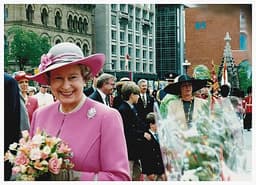
Paul Keating
Politician · Modern
59.3Total
Basic Information
Born
1912
1944
Died
1994
—
Era
Modern
Modern
Nationality
East Germany
Australia
Occupation
Politician
Politician
Civilization
Western
Western
Score Comparison
Military (10%)
49.9
49.4
Political (20%)
39.4
72.0
Influence (20%)
54.9
62.0
Legacy (20%)
49.2
52.0
Leadership (15%)
74.0
72.0
Strategy (15%)
41.7
42.8
TOTAL
52.2
59.3
Erich Honecker — Complete Timeline
1961 AD
Construction of the Berlin WallPolitical Action
As head of state, Honecker oversaw the construction of the Berlin Wall, a fortified barrier dividing East and West Berlin. The wall was built to stop the mass emigration of East Germans to the West and became a symbol of the Cold War.
Cold WarBerlin Wall
Impact: globaldestructive
1971 AD
Implementation of the 'Unity of Economic and Social Policy'Reform
Honecker introduced a policy focused on increasing consumer goods and social welfare to improve living standards in East Germany. While popular, this policy strained the economy and increased dependence on West German loans.
Economic policySocial welfare
Impact: nationalconstructive
Appointment as General Secretary of the SEDPolitical Action◆ Major
Honecker succeeded Walter Ulbricht as General Secretary of the Socialist Unity Party of Germany (SED), becoming the de facto leader of East Germany. He consolidated power and pursued a policy of hardline communism.
Communist leadership
Impact: national
1989 AD
Fall of the Berlin WallPolitical Action
Following mass protests and a mistaken announcement by a party official, the Berlin Wall fell. Honecker, who had refused to use force against demonstrators, was forced to resign shortly afterward. The event marked the beginning of the end for East Germany.
Cold WarGerman reunification
Impact: global
Paul Keating — Complete Timeline
1991 AD
Became Prime Minister of AustraliaPolitical Action◆ Major
Keating successfully challenged Bob Hawke for the leadership of the Australian Labor Party, becoming prime minister. His victory marked the beginning of a period of intense economic reform and a push for an Australian republic.
LeadershipLabor PartyPrime Minister
Impact: national
1992 AD
Introduced Superannuation GuaranteeReform◆ Major
Keating's government introduced the Superannuation Guarantee, requiring employers to contribute to employees' retirement savings. This policy created a compulsory national savings system, transforming Australia's retirement income landscape.
SuperannuationRetirementEconomic Reform
Impact: nationalconstructive
Delivered the Redfern SpeechCultural◆ Major
Keating delivered a landmark speech at Redfern Park in Sydney, acknowledging the dispossession and suffering of Indigenous Australians. The speech was a powerful call for reconciliation and marked a shift in official discourse on Aboriginal issues.
IndigenousReconciliationSpeech
Impact: nationalprogressive
1993 AD
Promoted Australian RepublicanismPolitical Action◆ Major
Keating established the Republic Advisory Committee to explore options for Australia becoming a republic. He argued that a republic was necessary for Australia to have a fully independent identity, though the proposal was not implemented during his term.
RepublicConstitutional ReformIdentity
Impact: nationalprogressive
1996 AD
Defeated in 1996 ElectionPolitical Action◆ Major
Keating's Labor government was defeated by John Howard's Liberal-National coalition in the 1996 federal election. The loss ended 13 years of Labor rule and marked the beginning of a long period of conservative government.
ElectionDefeatLiberal Party
Impact: nationaltragic
Expert Analysis
Origins
Erich Honecker was born on August 25, 1912, in Neunkirchen, Germany, into a mining family. His father was a coal miner and communist activist. Honecker joined the Communist Party of Germany in 1929 at age 17, and by the 1930s he was involved in anti-Nazi resistance, leading to his imprisonment from 1937 to 1945. After World War II, he rose through the ranks of the Socialist Unity Party (SED) in East Germany, becoming a protégé of Walter Ulbricht. His early life was shaped by ideological commitment and authoritarian structures.
Paul Keating was born on January 18, 1944, in Sydney, Australia, to a working-class Irish Catholic family. He left school at 14 to work, but joined the Australian Labor Party (ALP) at 15. Keating’s early career included working as a research officer for a trade union and later as a political advisor. He was elected to the House of Representatives in 1969 at age 25, representing the seat of Blaxland. His background in labor activism and his sharp intellect defined his early trajectory.
Rise to Power
Honecker’s rise was methodical within the SED apparatus. After Ulbricht’s death, Honecker became General Secretary of the SED in 1971, consolidating power by aligning with Soviet leadership under Leonid Brezhnev. He oversaw the construction of the Berlin Wall in 1961 as head of state, which became a symbol of Cold War division. His key ally was the Soviet Union, while opponents included reformist elements within the party.
Keating’s rise was more dramatic. He served as Treasurer under Prime Minister Bob Hawke from 1983 to 1991, where he implemented economic reforms like deregulation and floating the Australian dollar. In 1991, he challenged Hawke for party leadership, winning by a narrow margin and becoming Prime Minister on December 20, 1991. His rise was marked by internal party battles and a reputation for aggressive oratory.
Leadership & Governance
Honecker’s leadership was authoritarian and centralized. He implemented the 'Unity of Economic and Social Policy' from 1971, focusing on consumer goods and social welfare to improve living standards, but at the cost of economic inefficiency and debt. He maintained a hardline stance against dissent, using the Stasi secret police to suppress opposition. For example, he refused to allow perestroika-style reforms in the 1980s, insisting on orthodox communism. His governance was marked by rigid control and isolation.
Keating’s leadership was reformist and ambitious. He pursued a legislative agenda including the Superannuation Guarantee (1992), which required employers to contribute to workers’ retirement funds, creating a national savings pool. He also pushed for indigenous reconciliation, delivering the Redfern Speech in 1992 acknowledging dispossession. His advocacy for Australian republicanism led to the establishment of the Republic Advisory Committee in 1993. Keating’s style was confrontational and visionary, but his reforms often faced strong opposition.
Triumph & Tragedy
Honecker’s greatest success was the construction of the Berlin Wall, which stabilized East Germany’s population loss in the short term. His social policies improved living standards, with East Germany achieving the highest standard of living in the Eastern Bloc. However, his greatest failure was the fall of the Berlin Wall in 1989, which he refused to prevent through force, leading to the collapse of the regime. He was later charged with manslaughter for the deaths of escapees, though the trial was halted due to his health.
Keating’s greatest success was the Superannuation Guarantee, which transformed Australia’s retirement system and now covers over 16 million workers. His Redfern Speech was a landmark in indigenous affairs. However, his failure was the loss of the 1996 election to John Howard, partly due to backlash against his republicanism and economic reforms. His push for a republic ultimately failed, as the 1999 referendum was defeated.
Character & Destiny
Honecker was disciplined, dogmatic, and loyal to the Soviet line. His character was shaped by his early imprisonment and ideological rigidity. He believed in the inevitability of communism and resisted change, which led to his downfall when the Soviet Union collapsed. Historical assessments describe him as a loyal functionary rather than a visionary. His destiny was to preside over a regime that crumbled due to its own contradictions.
Keating was charismatic, combative, and intellectually sharp. He was known for his withering wit and willingness to take risks. His character drove him to push for major reforms despite opposition, but also made him enemies. His destiny was to be a transformative but polarizing figure, remembered for economic reforms but defeated before completing his vision.
Legacy
Honecker’s legacy is tied to the Berlin Wall and the failure of East German communism. He scored 49.2 in Legacy, reflecting his negative historical assessment. The wall fell in 1989, and East Germany dissolved in 1990. His policies of social welfare were overshadowed by the Stasi’s repression. Today, he is remembered as a symbol of authoritarian stagnation.
Keating’s legacy is more positive. His Superannuation Guarantee remains a pillar of Australian finance, with funds now exceeding AUD 3.5 trillion. His advocacy for indigenous rights influenced later policies, though reconciliation remains incomplete. He scored 52.0 in Legacy, higher than Honecker. His republicanism failed, but he shifted the national conversation. Keating is remembered as a reformer who modernized Australia’s economy and identity.
Conclusion
Paul Keating had greater impact than Erich Honecker. Keating’s reforms—particularly the Superannuation Guarantee—continue to affect millions of Australians daily, while Honecker’s regime collapsed and left a negative legacy. Keating’s total score of 59.3 against Honecker’s 52.2 reflects his stronger political and influence scores. Although Honecker’s Berlin Wall was historically significant, its impact was negative and temporary. Keating’s economic and social reforms endure, making him the more consequential leader.
Rankings
🥇
Paul KeatingLeader
Mil: 49.4Pol: 72.0Inf: 62.0
59.3
🥈
Erich Honecker
Mil: 49.9Pol: 39.4Inf: 54.9
52.2
+7.1 behind
How This Comparison Works
Algorithm
Each figure is scored on 6 dimensions (0—100 scale) based on structured historical data: Military (10%), Political (20%), Influence (20%), Legacy (20%), Leadership (15%), Strategy (15%). The weighted total produces the final ranking.
Data Sources
Scores are computed from structured sub-indicators in the database. Scale factors adjust for era (Ancient ×0.85, Modern ×1.0) and civilization size (Eastern ×1.05, Other ×0.80) to account for differences in population and military scale.
Maximum 3 Figures
Comparisons are limited to 2—3 figures to ensure readability and statistical meaningfulness.
Error Margins
±5 points per dimension — Sub-scores are derived from historical records with inherent uncertainty. Two figures within 5 points on a dimension should be considered roughly equivalent in that area.
Total Score Accuracy
±3 points overall — The weighted combination of 6 dimensions produces a total score with approximately ±3 points of uncertainty. Differences of less than 3 points are not statistically significant— the figures are effectively tied.
Known Limitations
- Historical records are incomplete and uneven across civilizations
- Figures from oral-tradition societies may be underrepresented
- Occupation labels can misclassify multi-role figures
- Scores measure capability and impact, not moral character
- Quantitative scoring is a comparison tool, not absolute truth
Capability Radar
Military (10%) — Battles & Warfare
Battles
28
29
Win Rate
33
32
Expansion
34
36
Political (20%) — Governance & Reform
Reform
40
75
Diplomacy
30
70
Economy
20
80
Influence (20%) — Cultural & Global Reach
Cultural
20
55
Global
40
55
Legacy (20%) — Historical Impact
Historical
55
60
Longevity
30
50
Leadership (15%) — Power & Stability
Tenure
60
65
Stability
25
60
Strategy (15%) — Tactics & Innovation
Strategy
36
37
Tactics
43
43
Reform
41
44
Similar Comparisons
Comments & Discussion
No comments yet. Be the first to share your thoughts!