Loading...
This comparison has not been analyzed yet.
One-time AI generation (~1 minute). Scores and timeline are already available below.
George Vancouver vs Rene-Robert de La Salle
Rene-Robert de La Salle leads by 1.2 pts · 2 figures compared
…

George Vancouver
Explorer · Modern
43.3Total
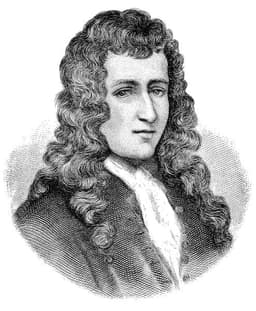
Rene-Robert de La Salle
Explorer · Modern
44.5Total
Basic Information
Born
1757
1643
Died
1798
1687
Era
Modern
Modern
Nationality
Great Britain
France
Occupation
Explorer
Explorer
Civilization
Western
Western
Score Comparison
Military (10%)
25.9
33.2
Political (20%)
35.0
35.0
Influence (20%)
50.2
51.0
Legacy (20%)
42.5
44.2
Leadership (15%)
46.3
46.3
Strategy (15%)
53.5
52.3
TOTAL
43.3
44.5
George Vancouver — Complete Timeline
1790 AD
Negotiated the Nootka Sound ConventionPolitical Action◆ Major
Vancouver participated in negotiations with Spanish officials at Nootka Sound to resolve territorial disputes. The Nootka Sound Convention established British rights to trade and settle in the region.
DiplomacyNootka SoundTerritorial Dispute
Impact: globalconstructive
1792 AD
Explored the Pacific Northwest coastInvention◆ Major
Vancouver led a British naval expedition to chart the Pacific Northwest coast from California to Alaska. He mapped the coastline with unprecedented accuracy, including Puget Sound and the Strait of Georgia.
ExplorationPacific NorthwestMapping
Impact: global
Circumnavigated Vancouver IslandInvention◆ Major
Vancouver proved that Vancouver Island was an island by sailing around it. He named the island after himself, and the surrounding waters were charted for future navigation.
DiscoveryVancouver IslandGeography
Impact: regional
Surveyed the Hawaiian IslandsInvention
Vancouver visited the Hawaiian Islands during his expedition, conducting surveys and establishing friendly relations with King Kamehameha I. He provided the king with European goods and advice.
SurveyHawaiiKamehameha I
Impact: regional
Rene-Robert de La Salle — Complete Timeline
1680 AD
First European to navigate the Illinois RiverInvention
La Salle built Fort Crevecoeur on the Illinois River and explored the region, establishing French claims in the Illinois Country. This expedition laid groundwork for later French control of the interior.
ExplorationIllinois RiverFort Crevecoeur
Impact: regional
1682 AD
Explored the Mississippi River to its mouthInvention◆ Major
La Salle led an expedition from the Great Lakes down the Mississippi River to the Gulf of Mexico. He claimed the entire Mississippi River basin for France, naming it Louisiana in honor of King Louis XIV.
ExplorationMississippi RiverLouisiana Claim
Impact: global
1685 AD
Established Fort Saint Louis in TexasPolitical Action◆ Major
La Salle established a settlement called Fort Saint Louis on the Texas coast after failing to find the Mississippi River mouth from the sea. The colony suffered from disease, starvation, and hostile relations with local Native American tribes.
ColonizationTexasFort Saint Louis
Impact: regionaltragic
1687 AD
Murdered by his own men in TexasOther◆ Major
La Salle was ambushed and killed by mutineers near the Brazos River in Texas. His death ended the French attempt to establish a colony in Texas and marked the collapse of the expedition.
DeathMutinyTexas
Impact: regionaltragic
This comparison has not been analyzed yet.
One-time AI generation (~1 minute). Scores and timeline are already available below.
Rankings
🥇
Rene-Robert de La SalleLeader
Mil: 33.2Pol: 35.0Inf: 51.0
44.5
🥈
George Vancouver
Mil: 25.9Pol: 35.0Inf: 50.2
43.3
+1.2 behind
How This Comparison Works
Algorithm
Each figure is scored on 6 dimensions (0—100 scale) based on structured historical data: Military (10%), Political (20%), Influence (20%), Legacy (20%), Leadership (15%), Strategy (15%). The weighted total produces the final ranking.
Data Sources
Scores are computed from structured sub-indicators in the database. Scale factors adjust for era (Ancient ×0.85, Modern ×1.0) and civilization size (Eastern ×1.05, Other ×0.80) to account for differences in population and military scale.
Maximum 3 Figures
Comparisons are limited to 2—3 figures to ensure readability and statistical meaningfulness.
Error Margins
±5 points per dimension — Sub-scores are derived from historical records with inherent uncertainty. Two figures within 5 points on a dimension should be considered roughly equivalent in that area.
Total Score Accuracy
±3 points overall — The weighted combination of 6 dimensions produces a total score with approximately ±3 points of uncertainty. Differences of less than 3 points are not statistically significant— the figures are effectively tied.
Known Limitations
- Historical records are incomplete and uneven across civilizations
- Figures from oral-tradition societies may be underrepresented
- Occupation labels can misclassify multi-role figures
- Scores measure capability and impact, not moral character
- Quantitative scoring is a comparison tool, not absolute truth
Capability Radar
Military (10%) — Battles & Warfare
Battles
0
15
Win Rate
0
10
Expansion
20
40
Political (20%) — Governance & Reform
Reform
0
10
Diplomacy
25
15
Economy
10
10
Influence (20%) — Cultural & Global Reach
Cultural
30
30
Global
30
35
Legacy (20%) — Historical Impact
Historical
40
45
Longevity
35
40
Leadership (15%) — Power & Stability
Tenure
10
20
Stability
15
5
Strategy (15%) — Tactics & Innovation
Strategy
15
25
Tactics
10
20
Reform
0
5
Similar Comparisons
Comments & Discussion
No comments yet. Be the first to share your thoughts!