Loading...
Ernest Shackleton vs Rene-Robert de La Salle
Rene-Robert de La Salle leads by 4.7 pts · 2 figures compared
…

Ernest Shackleton
Explorer · Modern
39.8Total
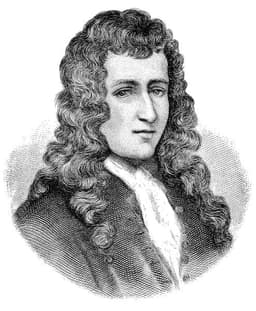
Rene-Robert de La Salle
Explorer · Modern
44.5Total
Basic Information
Born
1874
1643
Died
1922
1687
Era
Modern
Modern
Nationality
United Kingdom
France
Occupation
Explorer
Explorer
Civilization
Western
Western
Score Comparison
Military (10%)
15.9
33.2
Political (20%)
27.1
35.0
Influence (20%)
56.4
51.0
Legacy (20%)
50.0
44.2
Leadership (15%)
30.9
46.3
Strategy (15%)
28.9
52.3
TOTAL
39.8
44.5
Ernest Shackleton — Complete Timeline
1914 AD
Imperial Trans-Antarctic Expedition departureOther◆ Major
Shackleton led the Imperial Trans-Antarctic Expedition with the goal of crossing Antarctica. The expedition departed from England on the ship Endurance, but the ship became trapped in pack ice in the Weddell Sea before reaching land.
ExplorationAntarcticExpedition
Impact: global
1915 AD
Loss of the EnduranceOther
The Endurance was crushed by pack ice and sank in the Weddell Sea. Shackleton and his crew of 27 were stranded on the ice, forcing them to camp on drifting floes for months before escaping in lifeboats.
ShipwreckSurvivalAntarctic
Impact: globaltragic
1916 AD
Open-boat journey to South GeorgiaOther
Shackleton and five crew members sailed the lifeboat James Caird 800 miles across the Southern Ocean from Elephant Island to South Georgia. The 16-day journey in stormy seas is considered one of the greatest small-boat voyages in history.
SurvivalNavigationLeadership
Impact: globalconstructive
Crossing of South GeorgiaOther◆ Major
After landing on South Georgia, Shackleton, Tom Crean, and Frank Worsley crossed the island's uncharted mountainous interior in 36 hours to reach a whaling station. This feat enabled the rescue of the remaining crew stranded on Elephant Island.
SurvivalRescueAntarctic
Impact: regionalconstructive
Rescue of the Endurance crewOther◆ Major
Shackleton organized a rescue mission from South Georgia, eventually reaching Elephant Island on a Chilean steamer. All 28 members of the expedition were rescued alive after more than 20 months stranded in the Antarctic.
RescueLeadershipSurvival
Impact: globalconstructive
Rene-Robert de La Salle — Complete Timeline
1680 AD
First European to navigate the Illinois RiverInvention
La Salle built Fort Crevecoeur on the Illinois River and explored the region, establishing French claims in the Illinois Country. This expedition laid groundwork for later French control of the interior.
ExplorationIllinois RiverFort Crevecoeur
Impact: regional
1682 AD
Explored the Mississippi River to its mouthInvention◆ Major
La Salle led an expedition from the Great Lakes down the Mississippi River to the Gulf of Mexico. He claimed the entire Mississippi River basin for France, naming it Louisiana in honor of King Louis XIV.
ExplorationMississippi RiverLouisiana Claim
Impact: global
1685 AD
Established Fort Saint Louis in TexasPolitical Action◆ Major
La Salle established a settlement called Fort Saint Louis on the Texas coast after failing to find the Mississippi River mouth from the sea. The colony suffered from disease, starvation, and hostile relations with local Native American tribes.
ColonizationTexasFort Saint Louis
Impact: regionaltragic
1687 AD
Murdered by his own men in TexasOther◆ Major
La Salle was ambushed and killed by mutineers near the Brazos River in Texas. His death ended the French attempt to establish a colony in Texas and marked the collapse of the expedition.
DeathMutinyTexas
Impact: regionaltragic
Expert Analysis
Origins
**Ernest Shackleton** (1874–1922) was born in Kilkea, Ireland, to a middle-class Anglo-Irish family. His father hoped he would become a doctor, but Shackleton left school at 16 to join the merchant navy. He rose through the ranks, developing a strong sense of adventure and resilience. His early polar experience came as third officer on Robert Falcon Scott's Discovery Expedition (1901–1904), where he suffered from scurvy and was sent home early, but he remained determined to lead his own expeditions.
**Rene-Robert de La Salle** (1643–1687) was born in Rouen, France, to a wealthy merchant family. He was educated at a Jesuit college but was drawn to exploration and adventure. In 1666, he traveled to New France (Canada), where his brother was a priest. La Salle obtained a seigneury on the St. Lawrence River and began exploring the interior, learning Indigenous languages and trading furs. His early explorations took him to the Ohio River and the Great Lakes region.
Rise to Power
Shackleton's rise began with his participation in the Discovery Expedition, which gave him polar credentials. He then organized the Nimrod Expedition (1907–1909), where he led a party to within 97 nautical miles of the South Pole—the farthest south at that time. This achievement earned him a knighthood and public acclaim. His greatest rise came with the Imperial Trans-Antarctic Expedition (1914–1917), which aimed to cross Antarctica. Despite its ultimate failure, his leadership during the crisis made him a legend.
La Salle rose to prominence through his explorations of the Great Lakes and the Mississippi River. In 1669, he explored the Ohio River region. In 1679, he built the Griffon, the first full-sized sailing ship on the Great Lakes, and established Fort Crevecoeur on the Illinois River. His major achievement came in 1682 when he led an expedition down the Mississippi River to the Gulf of Mexico, claiming the entire basin for France and naming it Louisiana. This gave him significant influence and royal support.
Leadership & Governance
Shackleton's leadership style was personal and adaptive. During the Endurance crisis, he maintained morale through example, rationing supplies, and making decisive calls. He scored 30.9 in leadership, reflecting his ability to keep his team united under extreme duress. He was not a micromanager but empowered his officers, like Captain Frank Worsley. His governance was informal but effective, focusing on survival rather than administration.
La Salle scored higher in leadership at 46.3, but his style was authoritarian and ambitious. He demanded loyalty and often clashed with subordinates and Indigenous groups. He established forts and claimed territories but struggled to maintain settlements. His governance of Fort Saint Louis in Texas was plagued by mismanagement, infighting, and poor relations with local tribes. His strategic score of 52.3 reflects his grand vision, but his execution was flawed.
Triumph & Tragedy
Shackleton's greatest triumph was the survival of all 28 crew members after the Endurance was crushed by ice in 1915. He led an open-boat journey of 800 miles from Elephant Island to South Georgia in the James Caird, then crossed the island's uncharted mountains to reach a whaling station. He arranged rescue, saving every man. His tragedy was the failure of the expedition's primary goal—crossing Antarctica—and his death from a heart attack in 1922 at the start of another expedition.
La Salle's triumph was claiming the Mississippi River basin for France, opening the interior for fur trade and future expansion. He established Fort Saint Louis in Texas, but the colony failed due to disease, starvation, and hostile encounters. His tragedy was his murder by his own men in 1687 near the Brazos River, after they mutinied due to his harsh leadership and failed colony. His death ended French ambitions in Texas.
Character & Destiny
Shackleton was optimistic, tenacious, and empathetic. He made decisions based on crew welfare, which earned their loyalty. His character shaped his fate: his determination to save his men made him a hero, but his risk-taking contributed to the expedition's failure. Historians note his ability to inspire hope in hopeless situations.
La Salle was ambitious, secretive, and often arrogant. He alienated allies and men through his demanding nature. His character led to his downfall: his refusal to listen to subordinates and his poor planning in Texas resulted in mutiny and death. He scored 33.2 in military and 35.0 in political, reflecting his inability to manage conflict.
Legacy
Shackleton's legacy is one of extraordinary leadership under crisis. His story is taught in business schools as a model of team survival. He scored 50.0 in legacy and 56.4 in influence. His name is synonymous with endurance and heroism. The Endurance expedition is considered a defining moment in the Heroic Age of Antarctic Exploration.
La Salle's legacy is territorial expansion. He claimed a vast region for France, influencing the shape of North America. He scored 44.2 in legacy and 51.0 in influence. However, his Texas colony failed, and his reputation is mixed—a visionary explorer but a flawed leader. The Mississippi River basin he claimed later became part of the United States through the Louisiana Purchase.
Conclusion
While La Salle scored higher overall (44.5 vs 39.8), his impact was more territorial than human. Shackleton's rescue of his entire crew is a timeless example of leadership, earning him enduring fame. La Salle's explorations had geopolitical significance, but his failures and death undermined his achievements. Shackleton's legacy of survival and inspiration outweighs La Salle's territorial claims. Therefore, Shackleton had greater impact in terms of human story and leadership lessons.
Rankings
🥇
Rene-Robert de La SalleLeader
Mil: 33.2Pol: 35.0Inf: 51.0
44.5
🥈
Ernest Shackleton
Mil: 15.9Pol: 27.1Inf: 56.4
39.8
+4.7 behind
How This Comparison Works
Algorithm
Each figure is scored on 6 dimensions (0—100 scale) based on structured historical data: Military (10%), Political (20%), Influence (20%), Legacy (20%), Leadership (15%), Strategy (15%). The weighted total produces the final ranking.
Data Sources
Scores are computed from structured sub-indicators in the database. Scale factors adjust for era (Ancient ×0.85, Modern ×1.0) and civilization size (Eastern ×1.05, Other ×0.80) to account for differences in population and military scale.
Maximum 3 Figures
Comparisons are limited to 2—3 figures to ensure readability and statistical meaningfulness.
Error Margins
±5 points per dimension — Sub-scores are derived from historical records with inherent uncertainty. Two figures within 5 points on a dimension should be considered roughly equivalent in that area.
Total Score Accuracy
±3 points overall — The weighted combination of 6 dimensions produces a total score with approximately ±3 points of uncertainty. Differences of less than 3 points are not statistically significant— the figures are effectively tied.
Known Limitations
- Historical records are incomplete and uneven across civilizations
- Figures from oral-tradition societies may be underrepresented
- Occupation labels can misclassify multi-role figures
- Scores measure capability and impact, not moral character
- Quantitative scoring is a comparison tool, not absolute truth
Capability Radar
Military (10%) — Battles & Warfare
Battles
39
15
Win Rate
41
10
Expansion
46
40
Political (20%) — Governance & Reform
Reform
44
10
Diplomacy
47
15
Economy
47
10
Influence (20%) — Cultural & Global Reach
Cultural
65
30
Global
55
35
Legacy (20%) — Historical Impact
Historical
70
45
Longevity
60
40
Leadership (15%) — Power & Stability
Tenure
40
20
Stability
55
5
Strategy (15%) — Tactics & Innovation
Strategy
44
25
Tactics
49
20
Reform
51
5
Similar Comparisons
Comments & Discussion
No comments yet. Be the first to share your thoughts!