Loading...
This comparison has not been analyzed yet.
One-time AI generation (~1 minute). Scores and timeline are already available below.
Gatsi Rusere vs Takht Singh of Jodhpur
Takht Singh of Jodhpur leads by 0.7 pts · 2 figures compared
…

Gatsi Rusere
Emperor · Modern
44.6Total
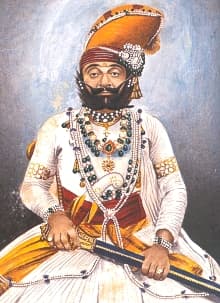
Takht Singh of Jodhpur
Emperor · Modern
45.3Total
Basic Information
Born
1580
1819
Died
1623
1873
Era
Modern
Modern
Nationality
Mutapa Empire
India
Occupation
Emperor
Emperor
Civilization
Other
Indian
Score Comparison
Military (10%)
50.0
21.2
Political (20%)
36.5
45.1
Influence (20%)
47.9
48.6
Legacy (20%)
36.7
40.0
Leadership (15%)
62.2
65.0
Strategy (15%)
36.8
45.0
TOTAL
44.6
45.3
Gatsi Rusere — Complete Timeline
1607 AD
Alliance with PortuguesePolitical Action◆ Major
Gatsi Rusere signed a treaty with Portuguese representatives at the Mutapa court, granting them trading rights and permission to establish settlements in exchange for military support against rival Shona states. This alliance increased Portuguese influence in the region.
Portuguese AllianceTradeMutapa Empire
Impact: regional
1623 AD
Defeat by Portuguese forcesWar◆ Major
Gatsi Rusere's army was defeated by Portuguese-led forces near the Zambezi River after he attempted to reassert Mutapa independence. He was captured and forced to reaffirm vassalage, marking the decline of Mutapa sovereignty.
Portuguese ConquestMilitary DefeatVassalage
Impact: regionaltragic
Takht Singh of Jodhpur — Complete Timeline
1843 AD
Accession to the Throne of JodhpurPolitical Action◆ Major
Takht Singh became Maharaja of Jodhpur after the death of his predecessor, Maharaja Man Singh. His accession was supported by the British, who sought a ruler favorable to their interests in the region.
SuccessionJodhpurBritish Influence
Impact: regional
Alignment with the British East India CompanyPolitical Action◆ Major
Takht Singh signed a treaty with the British East India Company, aligning Jodhpur with British interests. He agreed to provide military support and accept British suzerainty in exchange for protection and recognition of his rule.
TreatyBritish AlliancePrincely State
Impact: regional
1850 AD
Suppression of the Thakur RebellionWar
Takht Singh suppressed a rebellion by Thakurs (nobles) who opposed his rule and British influence. With British military assistance, he defeated the rebels and consolidated his authority, though the rebellion highlighted tensions within the state.
RebellionNobilityBritish Support
Impact: regional
This comparison has not been analyzed yet.
One-time AI generation (~1 minute). Scores and timeline are already available below.
Rankings
🥇
Takht Singh of JodhpurLeader
Mil: 21.2Pol: 45.1Inf: 48.6
45.3
🥈
Gatsi Rusere
Mil: 50.0Pol: 36.5Inf: 47.9
44.6
+0.7 behind
How This Comparison Works
Algorithm
Each figure is scored on 6 dimensions (0—100 scale) based on structured historical data: Military (10%), Political (20%), Influence (20%), Legacy (20%), Leadership (15%), Strategy (15%). The weighted total produces the final ranking.
Data Sources
Scores are computed from structured sub-indicators in the database. Scale factors adjust for era (Ancient ×0.85, Modern ×1.0) and civilization size (Eastern ×1.05, Other ×0.80) to account for differences in population and military scale.
Maximum 3 Figures
Comparisons are limited to 2—3 figures to ensure readability and statistical meaningfulness.
Error Margins
±5 points per dimension — Sub-scores are derived from historical records with inherent uncertainty. Two figures within 5 points on a dimension should be considered roughly equivalent in that area.
Total Score Accuracy
±3 points overall — The weighted combination of 6 dimensions produces a total score with approximately ±3 points of uncertainty. Differences of less than 3 points are not statistically significant— the figures are effectively tied.
Known Limitations
- Historical records are incomplete and uneven across civilizations
- Figures from oral-tradition societies may be underrepresented
- Occupation labels can misclassify multi-role figures
- Scores measure capability and impact, not moral character
- Quantitative scoring is a comparison tool, not absolute truth
Capability Radar
Military (10%) — Battles & Warfare
Battles
20
10
Win Rate
25
10
Expansion
15
10
Political (20%) — Governance & Reform
Reform
20
30
Diplomacy
35
50
Economy
25
30
Influence (20%) — Cultural & Global Reach
Cultural
15
20
Global
10
10
Legacy (20%) — Historical Impact
Historical
20
20
Longevity
10
20
Leadership (15%) — Power & Stability
Tenure
40
40
Stability
20
40
Strategy (15%) — Tactics & Innovation
Strategy
20
10
Tactics
15
10
Reform
10
10
Similar Comparisons
Comments & Discussion
No comments yet. Be the first to share your thoughts!