Loading...
This comparison has not been analyzed yet.
One-time AI generation (~1 minute). Scores and timeline are already available below.
Gao of Mali vs Ordoño I of Asturias
Ordoño I of Asturias leads by 8.2 pts · 2 figures compared
…

Gao of Mali
Emperor · Medieval
39.6Total
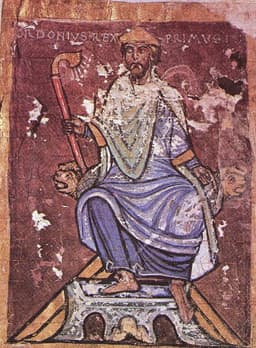
Ordoño I of Asturias
Emperor · Medieval
47.8Total
Basic Information
Born
1280
821
Died
1310
866
Era
Medieval
Medieval
Nationality
Mali Empire
Asturias
Occupation
Emperor
Emperor
Civilization
Other
Western
Score Comparison
Military (10%)
21.2
20.0
Political (20%)
29.3
39.4
Influence (20%)
48.6
51.8
Legacy (20%)
40.0
44.2
Leadership (15%)
48.4
65.7
Strategy (15%)
36.8
60.0
TOTAL
39.6
47.8
Ordoño I of Asturias — Complete Timeline
850 AD
Expansion into the Duero ValleyWar◆ Major
Ordoño I led military campaigns to expand the Kingdom of Asturias southward into the Duero River valley, securing territory that had been depopulated during the early Reconquista. This expansion established a buffer zone against Muslim raids and laid the foundation for future Christian settlement.
ReconquistaTerritorial ExpansionDuero Valley
Impact: regionalconstructive
856 AD
Repopulation of LeonReform◆ Major
Ordoño I initiated the repopulation of the city of Leon, which had been abandoned after the Muslim conquest. He brought settlers from the Asturian mountains and granted them land and privileges, transforming Leon into a key Christian stronghold and future capital of the kingdom.
RepopulationLeonSettlement
Impact: regionalconstructive
859 AD
Battle of AlbeldaWar◆ Major
Ordoño I defeated a combined Muslim force under Musa ibn Musa of the Banu Qasi at Albelda in La Rioja. The victory broke the power of the Banu Qasi dynasty and secured Asturian control over the upper Ebro valley, though the fortress of Albelda was later retaken.
BattleBanu QasiReconquista
Impact: regionalconstructive
This comparison has not been analyzed yet.
One-time AI generation (~1 minute). Scores and timeline are already available below.
Rankings
🥇
Ordoño I of AsturiasLeader
Mil: 20.0Pol: 39.4Inf: 51.8
47.8
🥈
Gao of Mali
Mil: 21.2Pol: 29.3Inf: 48.6
39.6
+8.2 behind
How This Comparison Works
Algorithm
Each figure is scored on 6 dimensions (0—100 scale) based on structured historical data: Military (10%), Political (20%), Influence (20%), Legacy (20%), Leadership (15%), Strategy (15%). The weighted total produces the final ranking.
Data Sources
Scores are computed from structured sub-indicators in the database. Scale factors adjust for era (Ancient ×0.85, Modern ×1.0) and civilization size (Eastern ×1.05, Other ×0.80) to account for differences in population and military scale.
Maximum 3 Figures
Comparisons are limited to 2—3 figures to ensure readability and statistical meaningfulness.
Error Margins
±5 points per dimension — Sub-scores are derived from historical records with inherent uncertainty. Two figures within 5 points on a dimension should be considered roughly equivalent in that area.
Total Score Accuracy
±3 points overall — The weighted combination of 6 dimensions produces a total score with approximately ±3 points of uncertainty. Differences of less than 3 points are not statistically significant— the figures are effectively tied.
Known Limitations
- Historical records are incomplete and uneven across civilizations
- Figures from oral-tradition societies may be underrepresented
- Occupation labels can misclassify multi-role figures
- Scores measure capability and impact, not moral character
- Quantitative scoring is a comparison tool, not absolute truth
Capability Radar
Military (10%) — Battles & Warfare
Battles
10
35
Win Rate
10
40
Expansion
10
50
Political (20%) — Governance & Reform
Reform
20
40
Diplomacy
20
30
Economy
30
35
Influence (20%) — Cultural & Global Reach
Cultural
20
30
Global
10
20
Legacy (20%) — Historical Impact
Historical
20
35
Longevity
20
30
Leadership (15%) — Power & Stability
Tenure
30
45
Stability
30
40
Strategy (15%) — Tactics & Innovation
Strategy
10
45
Tactics
10
30
Reform
10
20
Similar Comparisons
Comments & Discussion
No comments yet. Be the first to share your thoughts!