Loading...
Ganga Zumba vs King Abdullah II of Jordan
King Abdullah II of Jordan leads by 4.6 pts · 2 figures compared
…

Ganga Zumba
Emperor · Modern
49.4Total
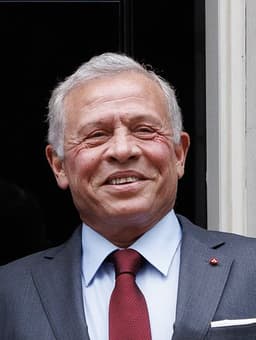
King Abdullah II of Jordan
Emperor · Modern
54.0Total
Basic Information
Born
1630
1962
Died
1678
—
Era
Modern
Modern
Nationality
Brazil
Jordan
Occupation
Emperor
Emperor
Civilization
Other
Middle Eastern
Score Comparison
Military (10%)
10.0
20.0
Political (20%)
43.7
72.0
Influence (20%)
56.4
58.0
Legacy (20%)
46.7
42.5
Leadership (15%)
67.0
80.0
Strategy (15%)
60.0
41.0
TOTAL
49.4
54.0
Ganga Zumba — Complete Timeline
1630 AD
Founded Quilombo dos PalmaresPolitical Action◆ Major
Ganga Zumba became the first leader of the Quilombo dos Palmares, a large settlement of escaped enslaved people in the captaincy of Pernambuco, Brazil. The settlement grew into a self-governing maroon kingdom with a population of thousands, resisting Portuguese and Dutch colonial forces for decades.
MaroonResistanceQuilombo
Impact: regionalconstructive
1678 AD
Signed Peace Treaty with PortuguesePolitical Action◆ Major
Ganga Zumba negotiated and signed a peace treaty with Portuguese colonial authorities, accepting the relocation of Palmares residents to the Cuca
TreatyPeaceDivision
Impact: regional
Assassinated by Rival MaroonsPolitical Action◆ Major
Ganga Zumba was killed, likely poisoned, by rivals within the Palmares community who opposed his peace treaty with the Portuguese. His death paved the way for Zumbi dos Palmares to assume leadership and resume armed resistance against colonial forces.
AssassinationLeadership ChangeResistance
Impact: regionaltragic
King Abdullah II of Jordan — Complete Timeline
1999 AD
Assumed the throne of JordanPolitical Action◆ Major
Abdullah II became King of Jordan on February 7, 1999, upon the death of his father King Hussein. His accession was unexpected as he was not the original heir, but Hussein changed the succession line shortly before his death.
SuccessionMonarchy
Impact: national
2000 AD
Launch of economic reforms and privatizationReform◆ Major
King Abdullah II initiated a series of economic reforms including privatization of state-owned enterprises, trade liberalization, and creation of special economic zones. These policies aimed to attract foreign investment and modernize Jordan's economy.
Economic ReformPrivatizationDevelopment
Impact: nationalconstructive
2011 AD
Jordanian role in the Arab Spring protestsPolitical Action◆ Major
King Abdullah II responded to widespread protests in Jordan during the Arab Spring by dismissing governments, enacting constitutional reforms, and promising political liberalization. He avoided the regime collapse seen in other Arab countries.
Arab SpringReformProtests
Impact: national
Syrian refugee crisis responseOther◆ Major
Under King Abdullah II's leadership, Jordan hosted over 1.3 million Syrian refugees fleeing the Syrian civil war. The influx strained Jordan's resources and infrastructure, leading to international aid agreements and humanitarian challenges.
RefugeesSyrian Civil WarHumanitarian
Impact: regional
2021 AD
Failed coup attempt and Prince Hamzah affairPolitical Action◆ Major
King Abdullah II placed his half-brother Prince Hamzah under house arrest, accusing him of involvement in a foreign-backed plot to destabilize Jordan. The incident exposed internal royal family tensions and was resolved through mediation.
Coup AttemptRoyal FamilySecurity
Impact: nationaldestructive
Expert Analysis
Origins
Ganga Zumba was born in the late 16th century in Africa, likely in the Kongo region, and was captured and enslaved to Brazil. He escaped and became the first leader of the Quilombo dos Palmares, a large settlement of escaped enslaved people in the captaincy of Pernambuco. Palmares grew to become a self-governing kingdom, with Ganga Zumba as its emperor. His early life remains obscure, but his rise reflects the resistance of enslaved Africans against colonial oppression.
King Abdullah II of Jordan was born on January 30, 1962, in Amman, Jordan, as the eldest son of King Hussein and Princess Muna. He was educated in the United States and the United Kingdom, attending Deerfield Academy and later the Royal Military Academy Sandhurst. He served in the Jordanian armed forces, rising to the rank of major general. His upbringing was military-focused, and he was not initially expected to become king, as his uncle Hassan was the crown prince for decades.
Rise to Power
Ganga Zumba's rise came through his role in founding Palmares, which began around 1605 as a refuge for escaped slaves. By the 1640s, Palmares had a population of thousands, with Ganga Zumba as its leader. He consolidated power by organizing the community into a feudal-like structure with a king, nobles, and warriors. His authority was challenged by Dutch and Portuguese military campaigns, but Palmares resisted for decades. In 1678, Ganga Zumba signed a peace treaty with Portuguese governor Pedro de Almeida, accepting relocation to the Cucaú Valley. This decision divided the community and led to his assassination by rivals, including his nephew Zumbi, in 1680.
King Abdullah II's rise was sudden. On February 7, 1999, King Hussein, on his deathbed, changed the line of succession, appointing Abdullah as crown prince. Abdullah became king that same day. His accession was unexpected, as his uncle Hassan had been crown prince for 34 years. Abdullah quickly consolidated power by retaining key advisors and launching economic reforms. He faced early challenges, including a recession and regional instability, but his military background and Western education helped him navigate Jordan's delicate position between Israel, Palestine, and Iraq.
Leadership & Governance
Ganga Zumba's leadership was autocratic and rooted in African traditions. He ruled Palmares as a monarch with absolute authority, organizing the kingdom into villages with appointed chiefs. He maintained a standing army of warriors who defended against Portuguese attacks. His governance included elements of communal land ownership and a mix of African and Catholic religious practices. However, his decision to negotiate with the Portuguese was seen as a betrayal by many maroons, revealing a pragmatic but ultimately fatal approach.
King Abdullah II's leadership is constitutional monarchical, with real political power. He has pursued economic liberalization, privatization, and trade agreements, scoring 72.0 in political acumen. He responded to the Arab Spring protests by dismissing governments and enacting constitutional reforms, but he maintains tight control over security and foreign policy. His governance includes managing a large refugee population (1.3 million Syrians) and balancing relations with the US, Israel, and Gulf states. His leadership score of 80.0 reflects his ability to maintain stability in a volatile region.
Triumph & Tragedy
Ganga Zumba's greatest triumph was founding and sustaining Palmares for over 70 years, creating a free African state in colonial Brazil. His tragedy was the peace treaty that led to his assassination; the treaty failed to secure lasting freedom, and the community split. His death marked the decline of Palmares, which fell to Portuguese forces in 1695.
King Abdullah II's triumphs include economic growth, with Jordan's GDP rising from $8 billion in 1999 to $45 billion in 2023, and his handling of the Syrian refugee crisis, which earned international praise. His tragedies include the failed coup attempt involving his half-brother Prince Hamzah in 2021, which exposed internal divisions, and persistent economic challenges like high unemployment (over 20%) and debt. His influence score of 58.0 reflects his regional role, but his legacy remains incomplete.
Character & Destiny
Ganga Zumba was a pragmatic leader who prioritized peace over continued resistance, but his decision alienated hardliners. His character, shaped by the trauma of enslavement and the need to protect his people, led him to negotiate, but his trust in Portuguese promises proved fatal. Historians view him as a flawed founder whose compromise cost him his life.
King Abdullah II is seen as a cautious reformer, balancing tradition with modernization. He is known for his personal bravery (he once disguised himself to inspect army units) but also for authoritarian tendencies, such as cracking down on dissent. His character has helped Jordan survive regional turmoil, but his destiny remains tied to the success of his reforms and the stability of the monarchy.
Legacy
Ganga Zumba's legacy is as a symbol of resistance for Afro-Brazilians. Palmares is celebrated as a precursor to abolition, and his story is taught in Brazilian schools. His score of 46.7 in legacy reflects his limited global recognition, but his influence on Brazilian culture and the quilombo movement is significant.
King Abdullah II's legacy is still forming. He has modernized Jordan's economy and maintained peace, but his legacy will be judged by the stability of the Hashemite throne. His score of 42.5 in legacy is lower than his political score, as his long-term impact is uncertain. He is likely to be remembered as a stabilizing force in a turbulent region.
Conclusion
King Abdullah II has had a greater impact on global history, scoring 54.0 total compared to Ganga Zumba's 49.4. Abdullah's political score of 72.0 and leadership of 80.0 outweigh Zumba's strengths in influence (56.4) and strategy (60.0). While Zumba's resistance was heroic, his leadership ended in failure, and his kingdom was destroyed. Abdullah has kept Jordan stable for over two decades, navigating wars, refugees, and uprisings. His legacy is ongoing, but his achievements in governance and diplomacy surpass Zumba's localized rebellion. Thus, King Abdullah II is the more impactful figure on the world stage.
Rankings
🥇
King Abdullah II of JordanLeader
Mil: 20.0Pol: 72.0Inf: 58.0
54.0
🥈
Ganga Zumba
Mil: 10.0Pol: 43.7Inf: 56.4
49.4
+4.6 behind
How This Comparison Works
Algorithm
Each figure is scored on 6 dimensions (0—100 scale) based on structured historical data: Military (10%), Political (20%), Influence (20%), Legacy (20%), Leadership (15%), Strategy (15%). The weighted total produces the final ranking.
Data Sources
Scores are computed from structured sub-indicators in the database. Scale factors adjust for era (Ancient ×0.85, Modern ×1.0) and civilization size (Eastern ×1.05, Other ×0.80) to account for differences in population and military scale.
Maximum 3 Figures
Comparisons are limited to 2—3 figures to ensure readability and statistical meaningfulness.
Error Margins
±5 points per dimension — Sub-scores are derived from historical records with inherent uncertainty. Two figures within 5 points on a dimension should be considered roughly equivalent in that area.
Total Score Accuracy
±3 points overall — The weighted combination of 6 dimensions produces a total score with approximately ±3 points of uncertainty. Differences of less than 3 points are not statistically significant— the figures are effectively tied.
Known Limitations
- Historical records are incomplete and uneven across civilizations
- Figures from oral-tradition societies may be underrepresented
- Occupation labels can misclassify multi-role figures
- Scores measure capability and impact, not moral character
- Quantitative scoring is a comparison tool, not absolute truth
Capability Radar
Military (10%) — Battles & Warfare
Battles
45
10
Win Rate
40
10
Expansion
35
5
Political (20%) — Governance & Reform
Reform
35
60
Diplomacy
30
75
Economy
25
55
Influence (20%) — Cultural & Global Reach
Cultural
45
40
Global
35
50
Legacy (20%) — Historical Impact
Historical
50
35
Longevity
40
30
Leadership (15%) — Power & Stability
Tenure
40
70
Stability
30
65
Strategy (15%) — Tactics & Innovation
Strategy
45
20
Tactics
50
15
Reform
30
30
Similar Comparisons
Comments & Discussion
No comments yet. Be the first to share your thoughts!