Loading...
Gang Gam-chan vs Li Wenzhong
Li Wenzhong leads by 0.4 pts · 2 figures compared
…
Gang Gam-chan
General · Medieval
55.4Total
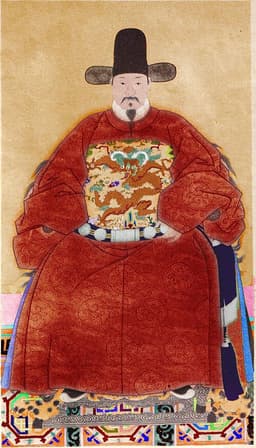
Li Wenzhong
General · Medieval
55.8Total
Basic Information
Born
948
1339
Died
1031
1384
Era
Medieval
Medieval
Nationality
Korea
China
Occupation
General
General
Civilization
Eastern
Eastern
Score Comparison
Military (10%)
82.0
82.0
Political (20%)
36.5
37.9
Influence (20%)
54.1
50.2
Legacy (20%)
47.5
43.3
Leadership (15%)
65.0
80.0
Strategy (15%)
65.9
65.7
TOTAL
55.4
55.8
Gang Gam-chan — Complete Timeline
1010 AD
Siege of HeunghwajinWar◆ Major
Gang Gam-chan defended the fortress of Heunghwajin against Khitan forces during the Second Goryeo-Khitan War. The siege ended with a Goryeo victory, delaying the Khitan advance.
Goryeo-Khitan WarSiegeDefense
Impact: regionalconstructive
1019 AD
Battle of KwijuWar
Gang Gam-chan commanded Goryeo forces at the Battle of Kwiju against the Khitan Liao dynasty. His army decisively defeated the Khitan invaders, ending the Third Goryeo-Khitan War and securing Goryeo's independence.
Goryeo-Khitan WarBattleVictory
Impact: regionalconstructive
Li Wenzhong — Complete Timeline
1355 AD
Capture of Chuzhou and early campaignsWar
Li Wenzhong, as a nephew and general of Zhu Yuanzhang, participated in the capture of Chuzhou and other key cities in the early Red Turban Rebellion. These victories helped establish Zhu's base in the Yangtze River region.
Red Turban RebellionEarly MingMilitary campaign
Impact: regional
1363 AD
Victory at the Battle of Lake PoyangWar
Li Wenzhong commanded a fleet that contributed to the decisive Ming victory over the rival rebel leader Chen Youliang at Lake Poyang. This battle eliminated Zhu Yuanzhang's main rival and paved the way for Ming unification.
BattleNaval warfareMing unification
Impact: national
1368 AD
Capture of Dadu (Beijing)War
Li Wenzhong was a key commander in the Ming army that captured Dadu, the Yuan capital, forcing Emperor Toghon Temur to flee. This event marked the formal establishment of the Ming dynasty over China.
Ming conquestYuan collapseCapital capture
Impact: global
1370 AD
Campaigns against the Northern YuanWar◆ Major
Li Wenzhong led several military expeditions into Mongolia against the retreating Northern Yuan forces. He achieved victories at Yingchang and other locations, but failed to completely destroy the Mongol threat.
Northern YuanMongol campaignsBorder defense
Impact: regional
Expert Analysis
Origins
Gang Gam-chan was born in 948 in Goryeo (modern Korea) into a prominent aristocratic family. He passed the civil service examination in 976 and served in various civil posts before turning to military command. His early career was defined by bureaucratic service, not combat.
Li Wenzhong was born in 1339 in Mingzhou, China, as the nephew of Zhu Yuanzhang, the future Hongwu Emperor. Orphaned young, he joined his uncle's rebel forces in 1354 during the Red Turban Rebellion. He grew up in a military environment, learning warfare from the ground up.
Rise to Power
Gang Gam-chan rose to prominence during the Second Goryeo-Khitan War (1010-1011). After the Khitan invasion forced the Goryeo king to flee, Gang led resistance efforts. His defense of Heunghwajin fortress in 1011 forced the Khitan to withdraw, earning him royal favor. He became a central military figure, culminating in his command at the Battle of Kwiju in 1019.
Li Wenzhong rose through the ranks of the Ming rebellion. He first distinguished himself capturing Chuzhou in 1355. His turning point came at the Battle of Lake Poyang in 1363, where he commanded a fleet that helped destroy the rival rebel Chen Youliang. This victory cemented his status as a top Ming general. In 1368, he led the capture of Dadu (Beijing), ending the Yuan dynasty.
Leadership & Governance
Gang Gam-chan's leadership style was defensive and disciplined. At Kwiju, he deployed a large force of 208,000 men in a prepared position, using archers and terrain to break the Khitan assault. He emphasized morale and logistics, ensuring his army was well-supplied. Politically, he was a moderate, avoiding factional conflicts. His military score of 82.0 reflects his tactical competence, but his political score of 36.5 indicates limited influence beyond the battlefield.
Li Wenzhong was an aggressive, offensive commander. At Lake Poyang, he used fire ships and close-quarters boarding to defeat a larger fleet. He led deep campaigns into Mongolia against the Northern Yuan, capturing Yingchang in 1370. His leadership score of 80.0 is high, but his strategy score of 65.7 is slightly below Gang's 65.9. Li was more entangled in court politics, serving as a loyal nephew to the emperor, which boosted his political score to 37.9.
Triumph & Tragedy
Gang Gam-chan's triumph was the Battle of Kwiju (1019), where he annihilated a Khitan army of 100,000, ending the Third Goryeo-Khitan War. This victory secured Goryeo's independence and is celebrated in Korean history. His tragedy was his later fall from favor—he was exiled in 1020 due to court intrigue, though later rehabilitated. He died in 1031.
Li Wenzhong's triumph was capturing Dadu in 1368, symbolizing the Mongol expulsion from China. He also won major victories against the Northern Yuan. His tragedy was his early death at age 45 in 1384, possibly due to illness or overwork. He died before seeing the full consolidation of Ming rule. Additionally, his later campaigns were less decisive, failing to destroy the Northern Yuan completely.
Character & Destiny
Gang Gam-chan was cautious and methodical. He preferred to fight on his terms, using defensive tactics to maximize casualties. His character led to a stable but limited career—he excelled in one great battle but lacked the ambition for broader conquest. Historical assessments depict him as a competent, loyal servant of the king.
Li Wenzhong was bold and relentless. He took risks, like commanding a fleet at Lake Poyang despite limited naval experience. His close relationship with Zhu Yuanzhang gave him opportunities but also tied his fate to the emperor's whims. He was more ambitious than Gang, but his early death cut his potential short.
Legacy
Gang Gam-chan's legacy endures in Korea as a national hero. The Battle of Kwiju is taught as a classic defensive victory. His name is invoked as a symbol of resistance against foreign invasion. His influence score of 54.1 and legacy score of 47.5 reflect his lasting cultural impact within Korea, but limited global recognition.
Li Wenzhong's legacy is as a founding general of the Ming dynasty. His conquests helped establish one of China's greatest empires. He is remembered in historical records as a loyal and effective commander. His influence score of 50.2 and legacy score of 43.3 are slightly lower than Gang's, perhaps because he was overshadowed by other Ming figures like Xu Da.
Conclusion
While both generals scored similarly overall (Li 55.8, Gang 55.4), Gang Gam-chan had a greater impact on his nation's history. His victory at Kwiju directly prevented a Khitan conquest, preserving Goryeo sovereignty for centuries. Li Wenzhong, though crucial to Ming founding, was one of several capable generals. Gang's singular achievement had more decisive, long-term consequences. Therefore, Gang Gam-chan edges out Li Wenzhong in historical significance.
Rankings
🥇
Li WenzhongLeader
Mil: 82.0Pol: 37.9Inf: 50.2
55.8
🥈
Gang Gam-chan
Mil: 82.0Pol: 36.5Inf: 54.1
55.4
+0.4 behind
How This Comparison Works
Algorithm
Each figure is scored on 6 dimensions (0—100 scale) based on structured historical data: Military (10%), Political (20%), Influence (20%), Legacy (20%), Leadership (15%), Strategy (15%). The weighted total produces the final ranking.
Data Sources
Scores are computed from structured sub-indicators in the database. Scale factors adjust for era (Ancient ×0.85, Modern ×1.0) and civilization size (Eastern ×1.05, Other ×0.80) to account for differences in population and military scale.
Maximum 3 Figures
Comparisons are limited to 2—3 figures to ensure readability and statistical meaningfulness.
Error Margins
±5 points per dimension — Sub-scores are derived from historical records with inherent uncertainty. Two figures within 5 points on a dimension should be considered roughly equivalent in that area.
Total Score Accuracy
±3 points overall — The weighted combination of 6 dimensions produces a total score with approximately ±3 points of uncertainty. Differences of less than 3 points are not statistically significant— the figures are effectively tied.
Known Limitations
- Historical records are incomplete and uneven across civilizations
- Figures from oral-tradition societies may be underrepresented
- Occupation labels can misclassify multi-role figures
- Scores measure capability and impact, not moral character
- Quantitative scoring is a comparison tool, not absolute truth
Capability Radar
Military (10%) — Battles & Warfare
Battles
75
75
Win Rate
80
80
Expansion
40
75
Political (20%) — Governance & Reform
Reform
30
30
Diplomacy
45
50
Economy
35
35
Influence (20%) — Cultural & Global Reach
Cultural
55
40
Global
40
30
Legacy (20%) — Historical Impact
Historical
60
50
Longevity
55
40
Leadership (15%) — Power & Stability
Tenure
50
55
Stability
50
60
Strategy (15%) — Tactics & Innovation
Strategy
75
72
Tactics
78
70
Reform
30
40
Similar Comparisons
Comments & Discussion
No comments yet. Be the first to share your thoughts!