Loading...
Gang Gam-chan vs Qin Shi Huang
Qin Shi Huang leads by 29.8 pts · 2 figures compared
…

Gang Gam-chan
General · Medieval
55.4Total
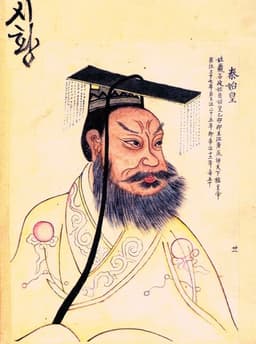
Qin Shi Huang
Emperor · Ancient
85.2Total
Basic Information
Born
948
-259
Died
1031
-210
Era
Medieval
Ancient
Nationality
Korea
China
Occupation
General
Emperor
Civilization
Eastern
Eastern
Score Comparison
Military (10%)
82.0
80.0
Political (20%)
36.5
90.0
Influence (20%)
54.1
85.0
Legacy (20%)
47.5
90.0
Leadership (15%)
65.0
78.0
Strategy (15%)
65.9
82.0
TOTAL
55.4
85.2
Gang Gam-chan — Complete Timeline
1010 AD
Siege of HeunghwajinWar◆ Major
Gang Gam-chan defended the fortress of Heunghwajin against Khitan forces during the Second Goryeo-Khitan War. The siege ended with a Goryeo victory, delaying the Khitan advance.
Goryeo-Khitan WarSiegeDefense
Impact: regionalconstructive
1019 AD
Battle of KwijuWar
Gang Gam-chan commanded Goryeo forces at the Battle of Kwiju against the Khitan Liao dynasty. His army decisively defeated the Khitan invaders, ending the Third Goryeo-Khitan War and securing Goryeo's independence.
Goryeo-Khitan WarBattleVictory
Impact: regionalconstructive
Qin Shi Huang — Complete Timeline
246 BC
Construction of the Mausoleum and Terracotta ArmyOther◆ Major
Qin Shi Huang commissioned a vast mausoleum complex near Xi'an, guarded by thousands of life-sized terracotta soldiers, horses, and chariots. The project employed hundreds of thousands of workers and reflected his obsession with immortality and imperial power.
Impact: global
230 BC
Conquest of the Six Warring StatesWar
From 230 to 221 BCE, Ying Zheng led the Qin state in a series of campaigns that conquered the Han, Zhao, Wei, Chu, Yan, and Qi states. This unified China under a single ruler for the first time, ending the Warring States period.
Impact: global
221 BC
Standardization of Writing, Currency, and MeasurementsReform◆ Major
Qin Shi Huang ordered the standardization of Chinese script, currency, and weights and measures across the unified empire. This facilitated administration, trade, and cultural integration, laying a foundation for future dynasties.
Impact: globalconstructive
Proclamation of the Qin DynastyPolitical Action
After conquering the last independent state, Ying Zheng declared himself Shi Huangdi (First Emperor), founding the Qin Dynasty. He adopted a new title to signify his supreme authority and initiated centralized imperial rule.
Impact: global
214 BC
Initiation of the Great Wall ConstructionOther◆ Major
Qin Shi Huang ordered the connection and extension of existing northern fortifications to create a unified defensive wall against nomadic Xiongnu raids. This project involved massive conscripted labor and became the precursor to the later Great Wall.
Impact: regional
213 BC
Burning of Books and Burying of ScholarsPolitical Action◆ Major
On the advice of Li Si, Qin Shi Huang ordered the burning of historical records and philosophical texts not aligned with Legalist doctrine. He also had 460 Confucian scholars buried alive to suppress dissent and consolidate ideological control.
Impact: nationaldestructive
Expert Analysis
gang-gam-chan-vs-qin-shi-huang
# The Conqueror and the Defender
In the winter of 214 BC, along the windswept northern frontier of China, Qin Shi Huang stood watching as hundreds of thousands of laborers hauled stones and packed earth into a wall that would stretch across mountains and deserts. Nearly twelve centuries later, in the autumn of 1019 AD, a seventy-one-year-old Korean general named Gang Gam-chan peered across the Yalu River at the retreating banners of a Khitan army, his own soldiers too exhausted to pursue. Both men had just secured their nations against existential threats. Yet one would be remembered as a tyrant who built an empire, the other as a savior who preserved one. What separated them was not merely time, but the very nature of power itself.
Origins
Qin Shi Huang entered the world in 259 BC as Ying Zheng, a prince of the western state of Qin, one of seven warring kingdoms locked in a centuries-long struggle for supremacy. His father was a hostage in the rival state of Zhao, and his mother was a former concubine—a childhood of instability that forged in him a cold, calculating ruthlessness. Qin was a state built on the Legalist philosophy of Shang Yang, which valued strict law, harsh punishment, and total obedience to the ruler. The young prince absorbed these teachings like a blade takes its edge.
Gang Gam-chan, born in 948 AD in the kingdom of Goryeo, came from a very different world. His father was a scholar-official, and Gang himself passed the civil service examinations—a path of merit, not blood. Goryeo had unified the Korean peninsula only decades earlier, and its culture was steeped in Buddhism and Confucian ideals. Where Qin Shi Huang learned that power meant crushing opposition, Gang learned that leadership meant serving the state through wisdom and loyalty. The difference in their ages—Gang was already sixty-two when he faced his greatest test—also gave him a patience that the First Emperor, dead at forty-nine, never possessed.
Rise to Power
Ying Zheng ascended the Qin throne at thirteen, but for eight years he was a puppet, dominated by his mother’s lover, the eunuch Lao Ai, and the prime minister Lü Buwei. In 238 BC, at twenty-one, he seized control in a blood-soaked purge: Lao Ai was torn apart by chariots, Lü Buwei was forced to drink poison, and his mother was placed under house arrest. From that moment, the young king trusted no one but himself. Between 230 and 221 BC, he unleashed his armies in a relentless campaign—conquering Han, Zhao, Wei, Chu, Yan, and finally Qi—until all six warring states lay prostrate. In 221 BC, he declared himself Shi Huangdi, the First Emperor, and announced that his dynasty would last ten thousand generations.
Gang Gam-chan’s rise was slower and more conventional. He served as a local magistrate and later as a military commander, but his moment came only when Goryeo faced annihilation. In 1010, the Khitan Liao dynasty invaded with a massive army. The Goryeo king fled, and the capital fell. Gang, then in his sixties, retreated to the fortress of Heunghwajin and held out against siege, refusing to surrender even as the Khitans threatened to burn the countryside. His stubborn defense bought time. When the Khitan emperor died suddenly, the invaders withdrew—but they would return.
Leadership & Governance
Qin Shi Huang governed as he conquered: with absolute, merciless efficiency. He abolished the feudal states and divided China into thirty-six commanderies, each governed by officials appointed by and loyal to the central court. He standardized the written script, so that a man from the far south could read the same edict as a man from the north. He unified currency, weights, and measures, and built a network of roads and canals that bound the empire together. These were achievements of staggering vision—China would never again fragment into truly independent kingdoms. But the cost was terrifying. In 213 BC, on the advice of his chancellor Li Si, he ordered the burning of all historical records and philosophical texts not aligned with Legalism, and the burying alive of 460 scholars who protested. The Great Wall, begun in 214 BC, consumed the lives of hundreds of thousands of conscripted laborers.
Gang Gam-chan’s governance was that of a general who saw war as a last resort. In 1019, when the Khitan invaded for the third time, he was appointed Supreme Commander of the Goryeo forces—at age seventy-one. He did not seek a decisive battle immediately. Instead, he used the terrain, flooded fields to slow the Khitan cavalry, and harassed supply lines. When the Khitan army, exhausted and low on provisions, began to retreat, Gang struck. At the Battle of Kwiju, he trapped the enemy against the river and annihilated them. Only a few thousand of the original Khitan force of over 100,000 escaped. His strategy was not to conquer but to defend, and he did so with minimal loss of Goryeo life.
Triumph & Tragedy
Qin Shi Huang’s greatest triumph was unification itself—an achievement so complete that the name “China” derives from his dynasty. But his tragedy was equally vast. Obsessed with immortality, he sent expeditions to find the elixir of life and consumed mercury pills prescribed by alchemists. He died in 210 BC during an inspection tour, his body hidden in a cart of rotting fish to conceal his death while his sons fought for succession. Within three years, the Qin dynasty collapsed in rebellion, and his mausoleum—guarded by the terracotta army he had built to serve him in the afterlife—became a monument to a dream that lasted only fifteen years.
Gang Gam-chan’s triumph was the Battle of Kwiju, which broke the Khitan threat for a generation. He returned to the capital in triumph, but he did not seek power. He retired to his home, where he lived quietly until his death in 1031 at age eighty-three. His tragedy, if it can be called one, was that his victory was so complete that it ensured peace—and peace made him forgettable to later generations who did not know the terror of invasion.
Character & Destiny
Qin Shi Huang was a man consumed by fear—fear of assassination, fear of rebellion, fear of death itself. He slept in different rooms each night, never announced his routes, and built an underground palace of bronze and mercury. His paranoia drove his cruelty, and his cruelty drove his empire to the brink. He believed that only absolute control could hold chaos at bay, and in the end, chaos won anyway.
Gang Gam-chan was a man who understood limits. He knew that Goryeo could not conquer the Khitan, only repel them. He knew that a general’s duty was not glory but survival. When the king offered him high office after Kwiju, he declined, saying, “Victory belongs to the soldiers, not to me.” His humility was not false modesty; it was the wisdom of a man who had seen enough of war to know what it cost.
Legacy
Qin Shi Huang’s legacy is the most contradictory in Chinese history. He is reviled as a tyrant who burned books and buried scholars, yet revered as the father of a unified China. The Great Wall, the standardized script, the administrative system—all survive. His terracotta army, unearthed in 1974, draws millions of visitors, a silent host that still guards his dream. But his dynasty was the shortest of all major Chinese dynasties, and his name is spoken with a mixture of awe and horror.
Gang Gam-chan’s legacy is quieter but no less profound. In South Korea, his statue stands in Seoul, and the Battle of Kwiju is taught as the greatest victory in Korean military history. Yet he is not a household name outside Korea. His victory did not change the world; it preserved a small kingdom that would eventually be absorbed into larger empires. But to the people of Goryeo, he was the man who saved them from annihilation. Perhaps that is enough.
Conclusion
One built an empire and lost it. One saved a kingdom and let it go. Qin Shi Huang tried to conquer time itself, and time buried him. Gang Gam-chan accepted that even a great victory is only a moment, and the moment passed. The First Emperor’s name echoes across millennia, while the general’s name is known only to his own people. But which of them understood power better? The man who believed he could control everything, or the man who knew that sometimes the greatest strength is knowing when to stop? The answer may depend on whether you value the noise of triumph or the silence of peace.
Rankings
🥇
Qin Shi HuangLeader
Mil: 80.0Pol: 90.0Inf: 85.0
85.2
🥈
Gang Gam-chan
Mil: 82.0Pol: 36.5Inf: 54.1
55.4
+29.8 behind
How This Comparison Works
Algorithm
Each figure is scored on 6 dimensions (0—100 scale) based on structured historical data: Military (10%), Political (20%), Influence (20%), Legacy (20%), Leadership (15%), Strategy (15%). The weighted total produces the final ranking.
Data Sources
Scores are computed from structured sub-indicators in the database. Scale factors adjust for era (Ancient ×0.85, Modern ×1.0) and civilization size (Eastern ×1.05, Other ×0.80) to account for differences in population and military scale.
Maximum 3 Figures
Comparisons are limited to 2—3 figures to ensure readability and statistical meaningfulness.
Error Margins
±5 points per dimension — Sub-scores are derived from historical records with inherent uncertainty. Two figures within 5 points on a dimension should be considered roughly equivalent in that area.
Total Score Accuracy
±3 points overall — The weighted combination of 6 dimensions produces a total score with approximately ±3 points of uncertainty. Differences of less than 3 points are not statistically significant— the figures are effectively tied.
Known Limitations
- Historical records are incomplete and uneven across civilizations
- Figures from oral-tradition societies may be underrepresented
- Occupation labels can misclassify multi-role figures
- Scores measure capability and impact, not moral character
- Quantitative scoring is a comparison tool, not absolute truth
Capability Radar
Military (10%) — Battles & Warfare
Battles
75
85
Win Rate
80
90
Expansion
40
90
Political (20%) — Governance & Reform
Reform
30
95
Diplomacy
45
75
Economy
35
90
Influence (20%) — Cultural & Global Reach
Cultural
55
95
Global
40
85
Legacy (20%) — Historical Impact
Historical
60
95
Longevity
55
95
Leadership (15%) — Power & Stability
Tenure
50
70
Stability
50
65
Strategy (15%) — Tactics & Innovation
Strategy
75
85
Tactics
78
80
Reform
30
95
Similar Comparisons
Comments & Discussion
高丽老炮6/17/2026
说句不好听的,姜邯赞要不是把契丹人揍回去了,高丽早就成辽国的一个省了,哪还有后来的什么韩民族叙事?你们光盯着秦始皇的暴政,可别忘了统一文字和度量衡也是他干的。姜邯赞是保卫了祖宗基业的人,这比空谈“千古一帝”实在多了。
QIN'S GHOST6/17/2026
You revisionists keep trying to moralize history, but Qin Shi Huang didn’t survive the Warring States by being nice—he unified China with iron discipline and standard script, weights, and roads. Gang Gam-chan? Fine general, sure, but he defended a feudal kingdom that collapsed anyway. Qin built something that lasted millennia. Give me the tyrant who actually changed the world over the "savior" of a footnote.
SkepticalScribe6/17/2026
Let's pump the brakes on the "existential threat" hype. The Khitan invasion of Goryeo in 1019 was a serious incursion, but it wasn't Armageddon—the Koryo court had already sued for peace before Gang's victory at Kuju. Meanwhile, Qin's unification wars killed hundreds of thousands. One guy stopped a raid, the other committed genocide. Scale matters, folks.
冷眼旁观6/17/2026
你们这些军事迷就知道比战绩,有没有想过政治逻辑?秦始皇是纯粹的法家赌徒,他必须统一天下才能活下去,不然秦国就是下一个被灭的。姜邯赞呢?他在文官体系里混上去的,打的是防御战,赢了就是民族英雄,输了顶多失地。一个拿命在赌,一个拿官位在赌,能一样吗?