Loading...
Gaius Suetonius Paulinus vs Sima Shi
Sima Shi leads by 9.3 pts · 2 figures compared
…

Gaius Suetonius Paulinus
General · Ancient
51.8Total
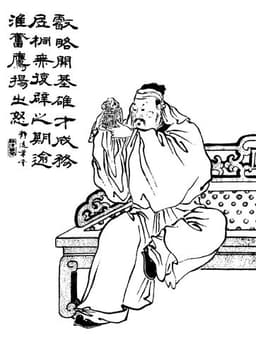
Sima Shi
General · Ancient
61.1Total
Basic Information
Born
10
208
Died
68
255
Era
Ancient
Ancient
Nationality
Roman Empire
China
Occupation
General
General
Civilization
Western
Eastern
Score Comparison
Military (10%)
74.0
72.0
Political (20%)
26.4
68.0
Influence (20%)
55.7
53.3
Legacy (20%)
49.2
48.3
Leadership (15%)
54.2
72.0
Strategy (15%)
61.3
75.0
TOTAL
51.8
61.1
Gaius Suetonius Paulinus — Complete Timeline
60 AD
Sack of Mona (Anglesey)War
Suetonius Paulinus led a campaign against the druid stronghold of Mona (modern Anglesey). Roman forces crossed the Menai Strait, overwhelmed the druids and their supporters, and destroyed the sacred groves, suppressing Celtic religious resistance in Britain.
Roman BritainDruidsCampaign
Impact: regionaldestructive
61 AD
Defeat of Boudica at the Battle of Watling StreetWar◆ Major
Suetonius Paulinus, as governor of Britain, commanded a smaller Roman force against the massive Iceni rebellion led by Boudica. His tactical use of terrain and disciplined legionaries resulted in a decisive Roman victory, ending the revolt and securing Roman control over Britain.
Roman BritainIceni RebellionBattle
Impact: regional
Recall to Rome after Boudica's RevoltPolitical Action
Despite his victory at Watling Street, Suetonius Paulinus was recalled to Rome by Emperor Nero. His harsh punitive measures against the Britons were deemed excessive by the new procurator, leading to his replacement and a more conciliatory policy in the province.
Roman BritainGovernorshipRecall
Impact: regional
66 AD
Consulship under NeroPolitical Action
Suetonius Paulinus served as consul ordinarius for the year 66 AD, a high honor in the Roman state. This appointment recognized his military service and placed him among the senatorial elite during the later years of Nero's reign.
Roman PoliticsConsulshipNero
Impact: national
Sima Shi — Complete Timeline
249 AD
Coup Against Cao ShuangPolitical Action
Sima Shi participated in his father Sima Yi's coup at Gaoping Tombs, which removed the regent Cao Shuang from power. This event marked the beginning of the Sima family's dominance over the Cao Wei state.
Three KingdomsWeiCoupSima Yi
Impact: nationaldestructive
251 AD
Suppression of Wang Ling's RebellionWar◆ Major
Sima Shi led a campaign to suppress the rebellion of Wang Ling, a Wei general who opposed the Sima family's control. Wang Ling was defeated and committed suicide, solidifying Sima Shi's authority in the Wei court.
Three KingdomsWeiRebellionSima Family
Impact: nationaldestructive
255 AD
Death from IllnessOther◆ Major
Sima Shi died from an illness while on campaign against the rebellion of Guanqiu Jian and Wen Qin. His brother Sima Zhao succeeded him as regent of Wei, continuing the Sima family's path to founding the Jin Dynasty.
Three KingdomsWeiSima ZhaoSuccession
Impact: national
Expert Analysis
Origins
Gaius Suetonius Paulinus, born around 10 AD in Rome, came from an equestrian family. His early career included service as a military tribune and later as a praetor. He gained experience in Gaul and Britain, where he served as governor from 58 AD. His formative years were shaped by the Roman military system, emphasizing discipline and tactical flexibility.
Sima Shi (208–255 AD) was born into the powerful Sima clan during the Three Kingdoms period. His father, Sima Yi, was a renowned strategist and regent of Cao Wei. Sima Shi received a Confucian education and military training, preparing him for leadership. His early career involved assisting his father in administrative and military affairs, notably during the coup against Cao Shuang.
Rise to Power
Suetonius Paulinus rose to prominence through military commands. His appointment as governor of Britain in 58 AD followed service in Mauretania and possibly Germany. His decisive campaign against the druids on Mona in 60 AD showcased his tactical skill: Roman forces used pontoon bridges to cross the Menai Strait, overwhelming the defenders. This victory solidified his reputation.
Sima Shi's rise was closely tied to his father. In 249 AD, he participated in the coup at Gaoping Tombs, which eliminated regent Cao Shuang and installed Sima Yi as de facto ruler. After Sima Yi's death in 251 AD, Sima Shi inherited control, suppressing Wang Ling's rebellion that same year. His political acumen secured his position as regent for the young Cao Fang.
Leadership & Governance
Suetonius Paulinus governed Britain with a focus on military consolidation. He maintained Roman authority through fortifications and punitive expeditions. After defeating Boudica, he implemented harsh reprisals, including massacres and enslavement, to deter future revolts. His governance score of 26.4 reflects a heavy-handed approach that alienated local tribes, leading to his recall by Nero in 61 AD.
Sima Shi ruled Wei through a combination of military strength and political manipulation. He controlled the imperial court, appointed loyalists, and purged opponents. His leadership score of 72.0 indicates effective command of armies and administration. He managed state affairs through a network of family members and allies, centralizing power within the Sima clan.
Triumph & Tragedy
Suetonius Paulinus's greatest triumph was the Battle of Watling Street in 61 AD. With about 10,000 legionaries, he defeated a rebel force estimated at 230,000 Britons, killing 80,000 while losing only 400 Romans. His tactical use of terrain—choosing a narrow gorge—neutralized the numerical advantage. However, his tragedy was his recall; his harsh policies provoked Boudica's revolt in the first place, and he was replaced by Petronius Turpilianus, who adopted a conciliatory approach.
Sima Shi's major success was suppressing Wang Ling's rebellion in 251 AD, executing the conspirators and consolidating Sima control. He also launched campaigns against Eastern Wu. His tragedy came in 255 AD: while suppressing the rebellion of Guanqiu Jian and Wen Qin, he died from an illness (possibly a tumor) at age 47. His death left the Sima regime in transition to his brother Sima Zhao.
Character & Destiny
Suetonius Paulinus was a capable but inflexible commander. His military score of 74.0 reflects tactical brilliance, but his political score of 26.4 reveals a lack of diplomatic subtlety. He underestimated the resentment his policies caused, leading to widespread rebellion. His recall shows that even victory could not save him from political fallout. He later became consul in 66 AD, but his later career was unremarkable.
Sima Shi was pragmatic and calculating, with a political score of 68.0. He methodically built power, avoiding open conflict when possible. His death from illness prevented him from completing the transition to full dynastic rule, but his groundwork enabled his brother to depose the Wei emperor and establish the Jin dynasty. His strategy score of 75.0 highlights his ability to plan long-term.
Legacy
Suetonius Paulinus is remembered primarily for defeating Boudica, a defining event in Roman Britain. His tactics are studied in military history, but his legacy is mixed: he suppressed the rebellion but his methods provoked it. His influence score of 55.7 reflects his impact as a symbol of Roman military might, albeit overshadowed by later governors.
Sima Shi's legacy is more substantial. He was a key architect of the Sima clan's rise, paving the way for the Jin dynasty. His political maneuvers and military campaigns (scoring 72.0 military, 68.0 political) established a pattern of regency that led to dynastic change. His influence on Chinese history is significant, though often eclipsed by his father and brother.
Conclusion
While Suetonius Paulinus achieved a greater tactical victory at Watling Street, Sima Shi had a broader and more lasting impact. Paulinus's military score (74.0) slightly exceeds Sima Shi's (72.0), but Sima Shi's political (68.0 vs 26.4) and strategy (75.0 vs 61.3) scores demonstrate superior overall capability. Sima Shi's actions directly led to the Jin dynasty, which unified China, whereas Paulinus's victory was a temporary suppression within a declining Roman empire. Therefore, Sima Shi had greater historical impact, with a total score of 61.1 vs 51.8.
Rankings
🥇
Sima ShiLeader
Mil: 72.0Pol: 68.0Inf: 53.3
61.1
🥈
Gaius Suetonius Paulinus
Mil: 74.0Pol: 26.4Inf: 55.7
51.8
+9.3 behind
How This Comparison Works
Algorithm
Each figure is scored on 6 dimensions (0—100 scale) based on structured historical data: Military (10%), Political (20%), Influence (20%), Legacy (20%), Leadership (15%), Strategy (15%). The weighted total produces the final ranking.
Data Sources
Scores are computed from structured sub-indicators in the database. Scale factors adjust for era (Ancient ×0.85, Modern ×1.0) and civilization size (Eastern ×1.05, Other ×0.80) to account for differences in population and military scale.
Maximum 3 Figures
Comparisons are limited to 2—3 figures to ensure readability and statistical meaningfulness.
Error Margins
±5 points per dimension — Sub-scores are derived from historical records with inherent uncertainty. Two figures within 5 points on a dimension should be considered roughly equivalent in that area.
Total Score Accuracy
±3 points overall — The weighted combination of 6 dimensions produces a total score with approximately ±3 points of uncertainty. Differences of less than 3 points are not statistically significant— the figures are effectively tied.
Known Limitations
- Historical records are incomplete and uneven across civilizations
- Figures from oral-tradition societies may be underrepresented
- Occupation labels can misclassify multi-role figures
- Scores measure capability and impact, not moral character
- Quantitative scoring is a comparison tool, not absolute truth
Capability Radar
Military (10%) — Battles & Warfare
Battles
65
65
Win Rate
70
70
Expansion
60
65
Political (20%) — Governance & Reform
Reform
30
65
Diplomacy
40
75
Economy
35
60
Influence (20%) — Cultural & Global Reach
Cultural
40
40
Global
35
30
Legacy (20%) — Historical Impact
Historical
55
55
Longevity
40
45
Leadership (15%) — Power & Stability
Tenure
50
70
Stability
45
70
Strategy (15%) — Tactics & Innovation
Strategy
70
80
Tactics
75
75
Reform
30
60
Similar Comparisons
Comments & Discussion
No comments yet. Be the first to share your thoughts!