Loading...
Gaiseric vs Qin Shi Huang
Qin Shi Huang leads by 21.3 pts · 2 figures compared
…

Gaiseric
General · Ancient
63.9Total
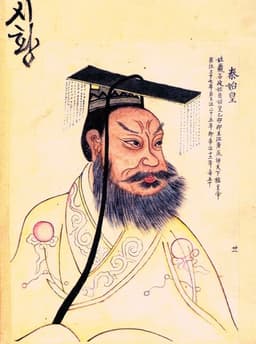
Qin Shi Huang
Emperor · Ancient
85.2Total
Basic Information
Born
389
-259
Died
477
-210
Era
Ancient
Ancient
Nationality
Vandals
China
Occupation
General
Emperor
Civilization
Western
Eastern
Score Comparison
Military (10%)
88.0
80.0
Political (20%)
68.0
90.0
Influence (20%)
55.0
85.0
Legacy (20%)
55.0
90.0
Leadership (15%)
62.0
78.0
Strategy (15%)
80.6
82.0
TOTAL
63.9
85.2
Gaiseric — Complete Timeline
439 AD
Capture of CarthageWar◆ Major
Gaiseric led the Vandals in the capture of Carthage, the most important city in Roman North Africa. He made it the capital of the Vandal Kingdom, establishing a powerful naval base that controlled Mediterranean trade routes.
Vandal ConquestNorth AfricaNaval Power
Impact: regional
455 AD
Sack of RomeWar
Gaiseric led the Vandal fleet to Rome and sacked the city. Unlike Alaric's sack in 410, the Vandals systematically looted treasures, including the spoils from the Temple of Jerusalem. The event gave rise to the term 'vandalism.'
Sack of RomeVandalsLooting
Impact: globaldestructive
468 AD
Battle of Cape BonWar◆ Major
Gaiseric's Vandal fleet defeated a massive combined Roman and Byzantine invasion force at Cape Bon. The victory secured Vandal control over the western Mediterranean and prevented the reconquest of North Africa.
Naval BattleRoman DefeatVandal Kingdom
Impact: regional
476 AD
Treaty with the Byzantine EmpirePolitical Action◆ Major
Gaiseric negotiated a peace treaty with the Byzantine Emperor Zeno, ending decades of conflict. The treaty recognized Vandal control over North Africa, the Balearic Islands, Corsica, Sardinia, and Sicily, solidifying the Vandal Kingdom's borders.
Peace TreatyDiplomacyVandal Kingdom
Impact: regionalconstructive
Qin Shi Huang — Complete Timeline
246 BC
Construction of the Mausoleum and Terracotta ArmyOther◆ Major
Qin Shi Huang commissioned a vast mausoleum complex near Xi'an, guarded by thousands of life-sized terracotta soldiers, horses, and chariots. The project employed hundreds of thousands of workers and reflected his obsession with immortality and imperial power.
Impact: global
230 BC
Conquest of the Six Warring StatesWar
From 230 to 221 BCE, Ying Zheng led the Qin state in a series of campaigns that conquered the Han, Zhao, Wei, Chu, Yan, and Qi states. This unified China under a single ruler for the first time, ending the Warring States period.
Impact: global
221 BC
Standardization of Writing, Currency, and MeasurementsReform◆ Major
Qin Shi Huang ordered the standardization of Chinese script, currency, and weights and measures across the unified empire. This facilitated administration, trade, and cultural integration, laying a foundation for future dynasties.
Impact: globalconstructive
Proclamation of the Qin DynastyPolitical Action
After conquering the last independent state, Ying Zheng declared himself Shi Huangdi (First Emperor), founding the Qin Dynasty. He adopted a new title to signify his supreme authority and initiated centralized imperial rule.
Impact: global
214 BC
Initiation of the Great Wall ConstructionOther◆ Major
Qin Shi Huang ordered the connection and extension of existing northern fortifications to create a unified defensive wall against nomadic Xiongnu raids. This project involved massive conscripted labor and became the precursor to the later Great Wall.
Impact: regional
213 BC
Burning of Books and Burying of ScholarsPolitical Action◆ Major
On the advice of Li Si, Qin Shi Huang ordered the burning of historical records and philosophical texts not aligned with Legalist doctrine. He also had 460 Confucian scholars buried alive to suppress dissent and consolidate ideological control.
Impact: nationaldestructive
Expert Analysis
gaiseric-vs-qin-shi-huang
# The First Emperor and the Pirate King
History seldom offers a more striking contrast than that between Qin Shi Huang, the architect of China’s imperial unity, and Gaiseric, the Vandal king who shattered Rome’s Mediterranean dominance. One built walls that would define a civilization; the other tore down the walls of the Eternal City itself. One standardized script across millions of square miles; the other left not a single lasting inscription in his own language. They never met, never knew of each other’s existence, yet their parallel careers in the fourth and fifth centuries before and after Christ reveal the profound ways in which geography, culture, and personal temperament shape the trajectories of power.
Origins
Ying Zheng was born in 259 BC into the crucible of the Warring States period, a time when seven Chinese kingdoms bled each other dry for supremacy. His father was a prince of Qin, a western state that had already embraced Legalist philosophy—a ruthless doctrine that valued agricultural productivity and military strength above all else. Young Zheng ascended the throne at thirteen, his regency dominated by the eunuch Lao Ai and the chancellor Lü Buwei, both of whom would later be purged. The boy learned early that trust was a luxury he could not afford.
Gaiseric, born in 389 AD, emerged from a very different world. The Vandals were a Germanic tribe that had wandered from the Baltic to the Danube, pushed by Huns and pulled by Roman gold. Gaiseric was the illegitimate son of King Godigisel, a fact that might have relegated him to obscurity in a stable dynasty. But the Vandals were no stable dynasty—they were a people on the move, and Gaiseric’s illegitimacy became his freedom. He grew up amid campfires and war councils, learning that survival depended not on inherited legitimacy but on cunning and speed.
Rise to Power
Qin Shi Huang’s path was one of methodical conquest. From 230 to 221 BC, he unleashed a series of campaigns that devoured the six rival states one by one: Han fell first, then Zhao, Wei, Chu, Yan, and finally Qi. Each conquest was a masterpiece of logistics and psychological warfare. The Qin army used crossbows, iron swords, and a disciplined command structure that gave it an edge over the chariot-dependent aristocracies of the east. When the last king surrendered, Ying Zheng proclaimed himself *Shi Huangdi*—the First Emperor—and declared that his dynasty would last ten thousand generations.
Gaiseric’s rise was more improvisational. In 428 AD, at the age of thirty-nine, he became king of the Vandals just as they crossed from Spain into North Africa. The Roman province of Africa was the empire’s breadbasket, and Gaiseric saw what others did not: that Roman power was hollow, that a determined force could seize what the legions could no longer defend. In 439, he captured Carthage by a stratagem—entering the city under a truce, then seizing the harbor and the walls. He made Carthage his capital, and from that base, he built a fleet that would terrorize the Mediterranean for three decades.
Leadership & Governance
The two rulers governed in opposite keys. Qin Shi Huang ruled through standardization: he imposed a single script, a single currency, a single axle length for carts, and a single legal code across his empire. He built roads and canals, unified the defensive walls into the Great Wall, and created a bureaucracy of appointed officials that replaced the old feudal nobility. His methods were draconian—the burning of books in 213 BC and the burying of scholars alive the following year were acts of intellectual terror designed to erase alternative visions of governance. Yet they worked: the administrative framework he created would outlast his dynasty by two millennia.
Gaiseric ruled through flexibility. The Vandals were Arian Christians in a Catholic Roman world, and Gaiseric used religious difference as a tool of control, persecuting Catholic clergy while allowing the Roman administrative system to function under Vandal oversight. He minted coins in his own name but maintained Roman tax structures. His navy was not a state institution but a personal fleet, crewed by Vandals and Moors and Roman deserters, bound to him by loyalty and loot. Where Qin Shi Huang built for eternity, Gaiseric built for the moment—and the moment was all he needed.
Triumph & Tragedy
The First Emperor’s greatest triumph was also the seed of his tragedy. By 210 BC, he had unified China, built the Great Wall, and constructed a mausoleum guarded by the Terracotta Army—thousands of life-sized soldiers meant to protect him in the afterlife. But his obsession with immortality led him to consume mercury elixirs prescribed by alchemists, which slowly poisoned him. He died at forty-nine, and his empire collapsed within four years of his death. The Qin Dynasty, meant to last ten thousand generations, barely survived a decade after its founder.
Gaiseric’s triumph came in 455 AD, when he sailed to Rome and sacked the city with a brutality that shocked even that hardened age. Unlike Alaric’s sack in 410, which was relatively restrained, Gaiseric’s Vandals systematically stripped Rome of its treasures—including the golden menorah from the Temple of Jerusalem, looted by Titus centuries earlier. Yet his greatest victory was defensive: in 468 AD, at the Battle of Cape Bon, his fleet destroyed a massive Roman-Byzantine armada, securing Vandal dominance for another generation. He died peacefully in 477, still king, still undefeated.
Character & Destiny
Qin Shi Huang was a man possessed by the future. He believed he could control time itself—standardizing the calendar, rewriting history, building an underground army to command in the next world. His paranoia was legendary: he slept in different rooms each night, never revealing his location, and executed those who revealed his whereabouts. This fear of chaos drove him to impose order so rigid that it broke upon his death.
Gaiseric was a man possessed by the present. He understood that the Roman world was dying and that the only question was who would pick the bones. He was patient when patience served—he waited fifteen years between capturing Carthage and sacking Rome—and ruthless when ruthlessness was required. He negotiated treaties he never intended to keep, made alliances he immediately betrayed, and died with his kingdom intact because he never mistook temporary advantage for permanent truth.
Legacy
Qin Shi Huang’s legacy is written in the very shape of China. The script he standardized is still used; the administrative divisions he created still echo in modern provinces; the Great Wall remains a national symbol. His tomb, still unexcavated, promises revelations that could rewrite history. He is remembered as both a unifier and a tyrant, the man who made China possible and the man who burned its books.
Gaiseric left no such legacy. The Vandal kingdom he built collapsed within a generation of his death, destroyed by the Byzantine general Belisarius in 533. His name, however, entered the language: “vandalism” became synonymous with senseless destruction, a linguistic injustice that historians have spent centuries trying to correct. He was not a destroyer for destruction’s sake—he was a king who saw an empire in decay and knew how to take what he wanted.
Conclusion
Standing at the edge of the Terracotta Army, watching the silent ranks of warriors gaze eastward toward an eternity they will never see, one feels the weight of Qin Shi Huang’s ambition. Standing in the ruins of Carthage, where Gaiseric’s fleet once rode at anchor, one feels the salt wind of a world in motion. The First Emperor built for permanence and achieved it, though not as he imagined. The Vandal king built for survival and achieved that, though his kingdom vanished like a footprint in the tide. Together, they remind us that power is not a single thing—it is the shape of the world when a particular will meets a particular moment. And the shape changes, always, with the hand that holds it.
Rankings
🥇
Qin Shi HuangLeader
Mil: 80.0Pol: 90.0Inf: 85.0
85.2
🥈
Gaiseric
Mil: 88.0Pol: 68.0Inf: 55.0
63.9
+21.3 behind
How This Comparison Works
Algorithm
Each figure is scored on 6 dimensions (0—100 scale) based on structured historical data: Military (10%), Political (20%), Influence (20%), Legacy (20%), Leadership (15%), Strategy (15%). The weighted total produces the final ranking.
Data Sources
Scores are computed from structured sub-indicators in the database. Scale factors adjust for era (Ancient ×0.85, Modern ×1.0) and civilization size (Eastern ×1.05, Other ×0.80) to account for differences in population and military scale.
Maximum 3 Figures
Comparisons are limited to 2—3 figures to ensure readability and statistical meaningfulness.
Error Margins
±5 points per dimension — Sub-scores are derived from historical records with inherent uncertainty. Two figures within 5 points on a dimension should be considered roughly equivalent in that area.
Total Score Accuracy
±3 points overall — The weighted combination of 6 dimensions produces a total score with approximately ±3 points of uncertainty. Differences of less than 3 points are not statistically significant— the figures are effectively tied.
Known Limitations
- Historical records are incomplete and uneven across civilizations
- Figures from oral-tradition societies may be underrepresented
- Occupation labels can misclassify multi-role figures
- Scores measure capability and impact, not moral character
- Quantitative scoring is a comparison tool, not absolute truth
Capability Radar
Military (10%) — Battles & Warfare
Battles
85
85
Win Rate
90
90
Expansion
88
90
Political (20%) — Governance & Reform
Reform
65
95
Diplomacy
85
75
Economy
75
90
Influence (20%) — Cultural & Global Reach
Cultural
60
95
Global
70
85
Legacy (20%) — Historical Impact
Historical
75
95
Longevity
65
95
Leadership (15%) — Power & Stability
Tenure
80
70
Stability
70
65
Strategy (15%) — Tactics & Innovation
Strategy
92
85
Tactics
88
80
Reform
70
95
Similar Comparisons
Comments & Discussion
TRENCH-COAT FRANK6/17/2026
Qin Shi Huang is the father of China while Gaiseric is a glorified pirate lord. One unified a civilization through standardized script and roads—things that lasted over two millennia. The Vandal king? He sacked Rome for three days and vanished into the sands of North Africa. Qin built the Great Wall and the Terracotta Army, monuments that still evoke awe. Gaiseric couldn't even preserve his own realm from Byzantine reconquest. History remembers builders, not vandals.
黑瞳疑兵6/17/2026
Gaiseric的罗马洗劫被吹成传奇,但那不过是趁罗马虚弱时的野蛮一枪。真正持久的成就是法律、货币和度量衡的统一,这正是秦始皇做到的。Gaiseric的汪达尔王国连一代人的寿命都没活过,而秦帝制度却延续了两千年。比较这两人就像拿陨石坑和长城比——一个只是破坏的痕迹,另一个是人类的蓝图。
ENCYCLOPEDIA BRUTUS6/17/2026
Let's talk about literacy versus legacy. Qin Shi Huang unified the written script across a vast territory, ensuring that scholars from modern Beijing to Canton could communicate. Gaiseric, for all his naval prowess, left behind exactly zero inscriptions in the Vandal language. His people assimilated into Latin and Punic cultures within a century. The First Emperor's ghost still dictates how Chinese characters are written today. That's the difference between a civilization builder and a footnote.
千里独行侠6/17/2026
军事上两人都是天才,但方向截然不同。秦始皇是通过围困和外交瓦解了六国,他鲜有大规模野战却赢到最后。Gaiseric则是海战奇才,用海盗战术打垮了两支罗马舰队。可问题在于:Gaiseric的王国在他死后三十年就崩溃了,而秦制却经汉唐继承。战术天才常有,能创造生存数千年的制度的王者,千年才出一位。
WEIGH-THE-EVIDENCE SKEPSIS6/17/2026
The comparison lacks nuance. Yes, Qin unified China but at what cost? His burning of books and burying of scholars was cultural genocide. The terracotta army is impressive, but it was built by forced labor. Gaiseric's Vandal Kingdom actually tolerated religious diversity and preserved Roman administrative structures. His "piracy" was naval warfare that Rome itself couldn't match. Both were ruthless, but Gaiseric didn't destroy an entire philosophical tradition. Let's not confuse scale with moral