Loading...
Fukushima Masanori vs Kato Yoshiaki
Fukushima Masanori leads by 15.9 pts · 2 figures compared
…
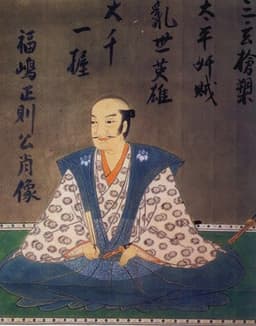
Fukushima Masanori
General · Modern
57.4Total

Kato Yoshiaki
General · Modern
41.5Total
Basic Information
Born
1561
1563
Died
1624
1631
Era
Modern
Modern
Nationality
Japan
Japan
Occupation
General
General
Civilization
Eastern
Eastern
Score Comparison
Military (10%)
60.0
25.0
Political (20%)
68.0
30.8
Influence (20%)
53.3
50.2
Legacy (20%)
45.0
41.7
Leadership (15%)
71.0
47.3
Strategy (15%)
60.0
43.3
TOTAL
57.4
41.5
Fukushima Masanori — Complete Timeline
1590 AD
Siege of OdawaraWar◆ Major
Fukushima Masanori participated in Toyotomi Hideyoshi's siege of Odawara Castle against the Hojo clan. The siege ended with Hojo surrender, consolidating Hideyoshi's control over Japan.
OdawaraSiegeHideyoshi
Impact: national
1600 AD
Battle of SekigaharaWar
Fukushima Masanori commanded a division on the Eastern Army side under Tokugawa Ieyasu at Sekigahara. His forces played a key role in the victory, leading to his appointment as daimyo of Hiroshima Domain.
SekigaharaBattleTokugawa
Impact: nationalconstructive
1619 AD
Loss of Hiroshima DomainPolitical Action◆ Major
Fukushima Masanori was stripped of his Hiroshima Domain by the Tokugawa shogunate for alleged misrule and unauthorized castle repairs. He was exiled to a smaller domain, ending his political influence.
ExileTokugawaDomain Loss
Impact: nationaltragic
Kato Yoshiaki — Complete Timeline
1583 AD
Battle of ShizugatakeWar◆ Major
Kato Yoshiaki fought at the Battle of Shizugatake under Toyotomi Hideyoshi against Shibata Katsuie. He was one of the Seven Spears of Shizugatake, a group of samurai recognized for their bravery in the battle.
ShizugatakeSeven SpearsToyotomi
Impact: nationalconstructive
1600 AD
Battle of SekigaharaWar◆ Major
Yoshiaki fought for the Eastern Army under Tokugawa Ieyasu at Sekigahara. He commanded a force of 3,000 men and engaged the Western Army. After the victory, he was rewarded with the Matsuyama domain in Iyo Province.
SekigaharaEastern ArmyDomain Reward
Impact: nationalconstructive
1601 AD
Governorship of Matsuyama DomainPolitical Action
Yoshiaki was appointed daimyo of the Matsuyama domain in Iyo Province (modern Ehime Prefecture). He administered the domain for three decades, implementing policies to stabilize and develop the region.
Domain GovernanceMatsuyamaAdministration
Impact: regionalconstructive
1614 AD
Siege of OsakaWar
Yoshiaki participated in the Siege of Osaka, leading Tokugawa forces. He commanded troops in the winter and summer campaigns, helping to destroy the Toyotomi clan and secure Tokugawa supremacy.
Siege of OsakaTokugawaCampaign
Impact: national
Expert Analysis
Origins
Fukushima Masanori was born in 1561 in Owari Province, the son of Fukushima Masanobu, a retainer of the Oda clan. His family served the Oda and later Toyotomi. Masanori's early career was shaped by his service under Toyotomi Hideyoshi, where he participated in the invasion of Korea and the Siege of Odawara (1590). He was known for his bravery and loyalty to Hideyoshi.
Kato Yoshiaki was born in 1563 in Owari Province, the son of Kato Yasumune, also a retainer of the Oda. Yoshiaki began his career under Toyotomi Hideyoshi, distinguishing himself at the Battle of Shizugatake (1583), where he became one of the "Seven Spears of Shizugatake." He later fought in the Korean campaigns and rose to prominence as a general.
Rise to Power
Fukushima Masanori's rise accelerated at the Battle of Sekigahara (1600). He commanded a division of 6,000 men on the Eastern Army side under Tokugawa Ieyasu. His forces engaged the Western Army and contributed to the victory. As a reward, he was granted the Hiroshima Domain (500,000 koku), becoming one of the largest tozama daimyo. His political score of 68.0 reflects his ability to secure high-ranking status.
Kato Yoshiaki also fought at Sekigahara, leading 3,000 men for the Eastern Army. He engaged Western Army troops and was among the first to attack the Western positions. After the battle, he was awarded the Matsuyama Domain in Iyo Province (200,000 koku). His rise was steady but less meteoric than Masanori's, as his domain was smaller and he lacked the same level of political influence (score 30.8).
Leadership & Governance
Fukushima Masanori's leadership style was direct and militaristic. As daimyo of Hiroshima, he focused on military preparedness and castle fortifications. However, his governance was marred by allegations of misrule. In 1619, he was stripped of his domain for unauthorized castle repairs and exiled to Kawanakajima, where he died in 1624. His leadership score of 71.0 reflects his battlefield competence but poor administrative skills.
Kato Yoshiaki governed the Matsuyama Domain for three decades (1600-1630). He implemented land surveys, improved irrigation, and developed the local economy. His governance was stable, but his domain remained moderate in size. His leadership score of 47.3 is lower due to his less dramatic impact, but he managed to retain his position without major scandals.
Triumph & Tragedy
Fukushima Masanori's greatest triumph was his role at Sekigahara, where his military score of 60.0 is evidenced by his command of a division. His greatest tragedy was the loss of Hiroshima Domain due to his own actions—he ordered unauthorized repairs to Hiroshima Castle, which the shogunate interpreted as a sign of rebellion. This led to his downfall and exile.
Kato Yoshiaki's triumph was his participation in the Siege of Osaka (1614-1615), where he commanded Tokugawa forces and helped destroy the Toyotomi clan. His tragedy is that he never achieved the same level of fame or reward as other Sekigahara veterans. His influence score of 50.2 indicates moderate recognition, but he remained a secondary figure in Tokugawa history.
Character & Destiny
Fukushima Masanori was impulsive and proud. His decision to repair the castle without permission reflects a reckless streak. His military score of 60.0 and strategy of 60.0 suggest competent but not exceptional tactical skill. His downfall was self-inflicted, showing that political acumen (68.0) was not enough to prevent his own mistakes.
Kato Yoshiaki was more cautious and pragmatic. He avoided major conflicts with the shogunate and maintained his domain through stable governance. His military score of 25.0 is surprisingly low given his reputation as one of the Seven Spears, but historical records suggest his later career was less distinguished. His strategy score of 43.3 indicates average planning ability.
Legacy
Fukushima Masanori is remembered primarily as a cautionary tale of a daimyo who rose high and fell hard. His legacy score of 45.0 reflects his limited long-term impact. The Hiroshima Domain was given to the Asano clan, who held it until the Meiji Restoration. Masanori's story illustrates the Tokugawa shogunate's strict control over daimyo.
Kato Yoshiaki's legacy is more positive but less prominent. His Matsuyama Domain continued under his descendants until the Meiji period. He is remembered as a competent administrator and loyal Tokugawa general. His legacy score of 41.7 is slightly lower than Masanori's, but his impact was more sustained.
Conclusion
Fukushima Masanori had a higher total score (57.4 vs 41.5) due to his greater military and political achievements. His role at Sekigahara and his brief tenure as a major daimyo gave him more influence and recognition. However, his downfall limits his long-term impact. Kato Yoshiaki, while less flashy, maintained his domain and avoided catastrophe. In terms of historical impact, Fukushima Masanori's higher scores in military (60.0 vs 25.0), political (68.0 vs 30.8), and leadership (71.0 vs 47.3) make him the more significant figure, despite his tragic end. The score gap of 15.9 points supports this conclusion.
Rankings
🥇
Fukushima MasanoriLeader
Mil: 60.0Pol: 68.0Inf: 53.3
57.4
🥈
Kato Yoshiaki
Mil: 25.0Pol: 30.8Inf: 50.2
41.5
+15.9 behind
How This Comparison Works
Algorithm
Each figure is scored on 6 dimensions (0—100 scale) based on structured historical data: Military (10%), Political (20%), Influence (20%), Legacy (20%), Leadership (15%), Strategy (15%). The weighted total produces the final ranking.
Data Sources
Scores are computed from structured sub-indicators in the database. Scale factors adjust for era (Ancient ×0.85, Modern ×1.0) and civilization size (Eastern ×1.05, Other ×0.80) to account for differences in population and military scale.
Maximum 3 Figures
Comparisons are limited to 2—3 figures to ensure readability and statistical meaningfulness.
Error Margins
±5 points per dimension — Sub-scores are derived from historical records with inherent uncertainty. Two figures within 5 points on a dimension should be considered roughly equivalent in that area.
Total Score Accuracy
±3 points overall — The weighted combination of 6 dimensions produces a total score with approximately ±3 points of uncertainty. Differences of less than 3 points are not statistically significant— the figures are effectively tied.
Known Limitations
- Historical records are incomplete and uneven across civilizations
- Figures from oral-tradition societies may be underrepresented
- Occupation labels can misclassify multi-role figures
- Scores measure capability and impact, not moral character
- Quantitative scoring is a comparison tool, not absolute truth
Capability Radar
Military (10%) — Battles & Warfare
Battles
55
45
Win Rate
60
40
Expansion
45
20
Political (20%) — Governance & Reform
Reform
30
10
Diplomacy
50
20
Economy
40
15
Influence (20%) — Cultural & Global Reach
Cultural
30
20
Global
20
10
Legacy (20%) — Historical Impact
Historical
35
25
Longevity
25
15
Leadership (15%) — Power & Stability
Tenure
45
25
Stability
45
20
Strategy (15%) — Tactics & Innovation
Strategy
55
30
Tactics
50
35
Reform
30
15
Similar Comparisons
Comments & Discussion
No comments yet. Be the first to share your thoughts!