Loading...
Frederik Willem de Klerk vs Qin Shi Huang
Qin Shi Huang leads by 23.3 pts · 2 figures compared
…

Frederik Willem de Klerk
Politician · Modern
61.9Total
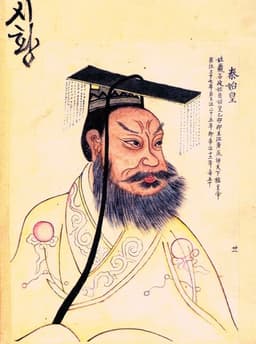
Qin Shi Huang
Emperor · Ancient
85.2Total
Basic Information
Born
1936
-259
Died
—
-210
Era
Modern
Ancient
Nationality
South Africa
China
Occupation
Politician
Emperor
Civilization
Other
Eastern
Score Comparison
Military (10%)
30.2
80.0
Political (20%)
62.7
90.0
Influence (20%)
82.0
85.0
Legacy (20%)
55.0
90.0
Leadership (15%)
72.0
78.0
Strategy (15%)
44.0
82.0
TOTAL
61.9
85.2
Frederik Willem de Klerk — Complete Timeline
1989 AD
Election as State PresidentPolitical Action
F.W. de Klerk was elected State President of South Africa, succeeding P.W. Botha. He represented the National Party and was initially seen as a conservative, but soon surprised observers by initiating reforms that would dismantle apartheid.
PresidencyNational PartyReform
Impact: national
1990 AD
Unbanning of ANC and Release of MandelaPolitical Action
De Klerk announced the unbanning of the African National Congress (ANC), the Pan Africanist Congress (PAC), and the South African Communist Party. He also ordered the release of Nelson Mandela from prison on February 11, 1990, signaling the end of apartheid.
ApartheidMandelaPolitical Reform
Impact: globalprogressive
1993 AD
Negotiation of the Interim ConstitutionPolitical Action◆ Major
De Klerk led the National Party in the CODESA negotiations, resulting in an interim constitution that provided for a multiracial democracy. He and Mandela were jointly awarded the Nobel Peace Prize in 1993 for their efforts to end apartheid peacefully.
CODESAInterim ConstitutionNobel Peace Prize
Impact: nationalprogressive
1994 AD
1994 Elections and Transition to DemocracyPolitical Action
De Klerk oversaw South Africa's first fully democratic elections in April 1994, in which the ANC won overwhelmingly. He served as Deputy President under Nelson Mandela in the Government of National Unity, marking the formal end of apartheid.
1994 ElectionsGovernment of National UnityDemocracy
Impact: globalprogressive
Qin Shi Huang — Complete Timeline
246 BC
Construction of the Mausoleum and Terracotta ArmyOther◆ Major
Qin Shi Huang commissioned a vast mausoleum complex near Xi'an, guarded by thousands of life-sized terracotta soldiers, horses, and chariots. The project employed hundreds of thousands of workers and reflected his obsession with immortality and imperial power.
Impact: global
230 BC
Conquest of the Six Warring StatesWar
From 230 to 221 BCE, Ying Zheng led the Qin state in a series of campaigns that conquered the Han, Zhao, Wei, Chu, Yan, and Qi states. This unified China under a single ruler for the first time, ending the Warring States period.
Impact: global
221 BC
Standardization of Writing, Currency, and MeasurementsReform◆ Major
Qin Shi Huang ordered the standardization of Chinese script, currency, and weights and measures across the unified empire. This facilitated administration, trade, and cultural integration, laying a foundation for future dynasties.
Impact: globalconstructive
Proclamation of the Qin DynastyPolitical Action
After conquering the last independent state, Ying Zheng declared himself Shi Huangdi (First Emperor), founding the Qin Dynasty. He adopted a new title to signify his supreme authority and initiated centralized imperial rule.
Impact: global
214 BC
Initiation of the Great Wall ConstructionOther◆ Major
Qin Shi Huang ordered the connection and extension of existing northern fortifications to create a unified defensive wall against nomadic Xiongnu raids. This project involved massive conscripted labor and became the precursor to the later Great Wall.
Impact: regional
213 BC
Burning of Books and Burying of ScholarsPolitical Action◆ Major
On the advice of Li Si, Qin Shi Huang ordered the burning of historical records and philosophical texts not aligned with Legalist doctrine. He also had 460 Confucian scholars buried alive to suppress dissent and consolidate ideological control.
Impact: nationaldestructive
Expert Analysis
frederik-willem-de-klerk-vs-qin-shi-huang
# The Unifier and the Liberator: Two Paths to Transformation
In the winter of 221 BCE, a young king in northern China stood before his assembled generals and declared himself *Shi Huangdi*—the First Emperor—after a decade of relentless conquest that had crushed six rival kingdoms. Two thousand years later, in February 1990, a white-haired Afrikaner politician stood before a stunned South African parliament and announced the unbanning of the African National Congress, setting in motion the dismantling of apartheid. Qin Shi Huang and Frederik Willem de Klerk could not have inhabited more different worlds, yet both faced the same fundamental question: how does a leader transform a fractured, violent society into something new? Their answers—and their legacies—could not have been more starkly different.
Origins
Qin Shi Huang was born into war. The year was 259 BCE, and China was splintered into the Warring States, a brutal era where seven kingdoms fought ceaselessly for supremacy. His father, King Zhuangxiang of Qin, ruled a western state that had long been viewed as semi-barbarian by the more cultured central kingdoms. Young Ying Zheng ascended the throne at thirteen, surrounded by court intrigue and the ever-present threat of assassination. The Qin state was already the most militarily efficient of the seven, its Legalist philosophy emphasizing strict laws, harsh punishments, and total obedience to the ruler. This was the crucible that forged the First Emperor: a world where mercy was weakness, where unity could only be achieved through absolute force.
F.W. de Klerk, born in 1936 in Johannesburg, came from a very different tradition of power. His family was deeply embedded in Afrikaner nationalism—his father served as a cabinet minister under apartheid, and his uncle was a prime minister. Young Frederik grew up in a society that had constructed an elaborate legal system to maintain white supremacy, but one that was increasingly isolated and economically unsustainable. By the time he entered politics in the 1970s, South Africa faced mounting international sanctions, internal unrest, and the growing realization that apartheid could not survive forever. De Klerk was a product of the system, not its critic—a cautious lawyer-politician who rose through the ranks of the National Party by being competent, conservative, and reliable.
Rise to Power
The First Emperor's path was forged in blood. From 230 to 221 BCE, Ying Zheng personally directed a series of military campaigns that systematically annihilated the six rival states. Each conquest was a masterpiece of strategy: the Qin armies used advanced iron weapons, disciplined infantry formations, and a ruthless policy of slaughtering defeated soldiers to prevent future rebellions. When the last king of Qi surrendered in 221 BCE, Ying Zheng had accomplished what no Chinese ruler had done before—he had unified the entire civilized world under a single throne. At thirty-eight years old, he stood without rival, his legitimacy resting entirely on the sword.
De Klerk's rise was quieter but no less calculated. Elected State President in September 1989, he inherited a country in crisis. P.W. Botha, his predecessor, had tried to reform apartheid while keeping its essential structures intact—a policy that satisfied no one. De Klerk understood that the old game was finished. In a series of secret meetings with the imprisoned Nelson Mandela, he began laying the groundwork for what would become the most dramatic political transformation of the late twentieth century. Where Qin Shi Huang conquered with armies, de Klerk negotiated with enemies.
Leadership & Governance
Qin Shi Huang’s rule was a whirlwind of standardization. In the eleven years of his reign, he imposed a single written script across China, standardized currency and weights and measures, built a network of roads and canals, and began linking the northern defensive walls into what would become the Great Wall. His administrative system divided the empire into commanderies and counties governed by appointed officials, breaking the power of the old feudal nobility. This was governance by decree—efficient, uniform, and utterly ruthless. When scholars criticized his policies, he ordered the Burning of Books and Burying of Scholars in 213 BCE, destroying philosophical texts and executing those who questioned Legalist orthodoxy.
De Klerk governed through consensus, however fragile. The CODESA negotiations of 1991-1993 were a chaotic, multi-party process that nearly collapsed several times. His political genius lay not in imposing his will but in managing his own constituency—convincing white South Africans to accept majority rule through a whites-only referendum in 1992, and persuading the National Party to accept an interim constitution that guaranteed civil rights for all. Where Qin Shi Huang forced unity through terror, de Klerk coaxed it through compromise. His military score of 30.2 reflects his complete lack of martial ambition; his leadership score of 74.3 reflects a different kind of courage—the courage to surrender power.
Triumph & Tragedy
Qin Shi Huang’s greatest achievement was also his greatest tragedy. The unified empire he created would survive dynastic changes for over two thousand years, but the methods he used—mass conscription, crushing taxation, brutal suppression of dissent—created a society of exhausted subjects. When he died in 210 BCE, possibly from mercury poisoning during his quest for immortality, rebellions erupted within months. The Qin Dynasty collapsed just three years later, destroyed by the very forces of oppression that had built it. His magnificent mausoleum, guarded by the Terracotta Army of thousands of life-sized soldiers, remains a monument to both his vision and his isolation.
De Klerk’s triumph came in April 1994, when South Africa held its first fully democratic elections. He served as one of two deputy presidents under Nelson Mandela, a symbol of racial reconciliation. Yet his tragedy was personal: many white South Africans viewed him as a traitor who had sold out their future, while many black South Africans saw him as a reluctant reformer who had only acted when forced. He shared the Nobel Peace Prize with Mandela in 1993, but his legacy remained contested. Unlike Qin Shi Huang, who died in absolute power, de Klerk lived long enough to see his compromises questioned and his motives doubted.
Character & Destiny
Qin Shi Huang was driven by an obsession with control—over his empire, over history, and even over death itself. He believed that unity could only be maintained through absolute uniformity of thought and action. His paranoia led him to hide his palaces and build secret passageways, fearing assassination. His quest for immortality consumed his final years, and his death was kept secret for weeks while his advisors staged a cover-up. He was a man who could not imagine a world without him at its center.
De Klerk was driven by pragmatism, not ideology. He was not a visionary like Mandela, nor a zealot like Botha. He was a fixer who saw that the apartheid machine was broken and decided to dismantle it before it exploded. His political score of 67.7 reflects this cautious, transactional approach. He did not seek to be loved or remembered—he sought to manage a transition that would avoid civil war. In this, he succeeded, but at the cost of being seen as a figure of transition rather than transformation.
Legacy
Qin Shi Huang left a blueprint for imperial rule that would shape China for two millennia. The standardized script he imposed is still used today. The Great Wall he initiated became a national symbol. The administrative system he created—centralized bureaucracy, appointed officials, uniform laws—became the model for every subsequent Chinese dynasty. His legacy score of 85.0 reflects this enduring influence, even as his reputation has been contested between those who see him as a unifier and those who see him as a tyrant.
De Klerk’s legacy is more ambiguous. He helped end apartheid without a bloodbath, a remarkable achievement in a world where racial conflicts often led to decades of violence. Yet the post-apartheid South Africa he helped create has struggled with corruption, inequality, and persistent racial tensions. His influence score of 70.1 and legacy score of 65.3 suggest a leader who was essential but not transformative—the man who opened the door, not the one who walked through it.
Conclusion
Standing at the extremes of history, Qin Shi Huang and F.W. de Klerk illuminate the two faces of political transformation. The First Emperor believed that unity must be imposed from above, through force and fear. De Klerk believed that change must be negotiated, through compromise and reconciliation. One created a system that lasted for centuries but collapsed as soon as he died. The other dismantled a system that had lasted for decades, and lived to see his work survive. In the end, the question each leader answered was the same: how much blood is necessary to build a new world? Qin Shi Huang answered, “As much as it takes.” De Klerk answered, “As little as possible.” History has not yet finished judging which answer was wiser.
Rankings
🥇
Qin Shi HuangLeader
Mil: 80.0Pol: 90.0Inf: 85.0
85.2
🥈
Frederik Willem de Klerk
Mil: 30.2Pol: 62.7Inf: 82.0
61.9
+23.3 behind
How This Comparison Works
Algorithm
Each figure is scored on 6 dimensions (0—100 scale) based on structured historical data: Military (10%), Political (20%), Influence (20%), Legacy (20%), Leadership (15%), Strategy (15%). The weighted total produces the final ranking.
Data Sources
Scores are computed from structured sub-indicators in the database. Scale factors adjust for era (Ancient ×0.85, Modern ×1.0) and civilization size (Eastern ×1.05, Other ×0.80) to account for differences in population and military scale.
Maximum 3 Figures
Comparisons are limited to 2—3 figures to ensure readability and statistical meaningfulness.
Error Margins
±5 points per dimension — Sub-scores are derived from historical records with inherent uncertainty. Two figures within 5 points on a dimension should be considered roughly equivalent in that area.
Total Score Accuracy
±3 points overall — The weighted combination of 6 dimensions produces a total score with approximately ±3 points of uncertainty. Differences of less than 3 points are not statistically significant— the figures are effectively tied.
Known Limitations
- Historical records are incomplete and uneven across civilizations
- Figures from oral-tradition societies may be underrepresented
- Occupation labels can misclassify multi-role figures
- Scores measure capability and impact, not moral character
- Quantitative scoring is a comparison tool, not absolute truth
Capability Radar
Military (10%) — Battles & Warfare
Battles
20
85
Win Rate
24
90
Expansion
27
90
Political (20%) — Governance & Reform
Reform
85
95
Diplomacy
80
75
Economy
55
90
Influence (20%) — Cultural & Global Reach
Cultural
60
95
Global
70
85
Legacy (20%) — Historical Impact
Historical
75
95
Longevity
65
95
Leadership (15%) — Power & Stability
Tenure
60
70
Stability
50
65
Strategy (15%) — Tactics & Innovation
Strategy
29
85
Tactics
34
80
Reform
37
95
Similar Comparisons
Comments & Discussion
数典忘祖6/17/2026
拿秦始皇跟德克勒克比,简直侮辱中国历史。秦始皇统一度量衡、文字、修长城,奠定中国两千年基业;德克勒克只是被迫让步,南非现在犯罪率全球前三。你们西方中心论者就爱拿道德标签套古代帝王,忘了没有秦始皇就没有今天中国。建议去读读《史记》再说话。
DataSkepticDan6/17/2026
The stats kill the comparison. Qin's unification killed 400k+ troops in ten years, plus unknown civilian deaths. Under De Klerk, South Africa's murder rate actually fell 30% from 1990-94 as apartheid ended. You can't weigh 'national unity' against 500,000+ lives. Qin's body count alone makes this a no-brainer—De Klerk saved lives, period.
IronFistHistorian6/17/2026
De Klerk's a decent man who freed millions; Qin turned China into a brutal police state. De Klerk ended apartheid peacefully, dismantling a regime that killed and segregated for decades. Qin's unification? Mass graves, book burnings, legal terror. I'd take a clumsy democrat over a genocidal tyrant any day. History's not neutral on this.
秦颂墨客6/17/2026
统一六国岂有不流血之理?秦始皇焚书坑儒、严刑峻法,但换来了书同文、车同轨的制度革命。德克勒克不过是个改良派政客,南非至今种族矛盾丛生、经济凋敝。真正的历史转折都需要铁血手段,伪善的和平妥协只会留下烂摊子。你们读书人就是不懂现实政治的残酷。
RevisionistRebel6/17/2026
Everyone praises De Klerk as a saint, but he was a shrewd politician who saw the writing on the wall. South Africa's economy was collapsing under sanctions; he cut a deal to save white minority wealth, not out of moral awakening. Qin at least had the guts to transform China completely. De Klerk's legacy is managed decline, not liberation.