Loading...
Frederick William III of Prussia vs Leopold I
Leopold I leads by 17.6 pts · 2 figures compared
…
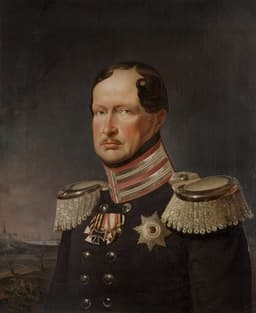
Frederick William III of Prussia
Emperor · Modern
50.4Total
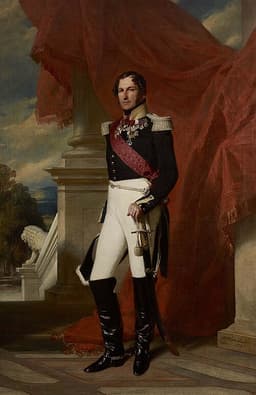
Leopold I
Emperor · Modern
68.0Total
Basic Information
Born
1770
1640
Died
1840
1705
Era
Modern
Modern
Nationality
Prussia
Holy Roman Empire
Occupation
Emperor
Emperor
Civilization
Western
Western
Score Comparison
Military (10%)
50.0
74.0
Political (20%)
43.7
78.0
Influence (20%)
50.2
72.0
Legacy (20%)
43.3
52.0
Leadership (15%)
74.0
75.0
Strategy (15%)
43.7
66.3
TOTAL
50.4
68.0
Frederick William III of Prussia — Complete Timeline
1806 AD
Defeat at the Battle of Jena-AuerstedtWar
Frederick William III led Prussia into war against Napoleon. The Prussian army was decisively defeated at the twin battles of Jena and Auerstedt. The defeat was catastrophic, leading to the collapse of the Prussian state, the occupation of Berlin, and the flight of the royal family to East Prussia.
PrussiaNapoleonWarJena-Auerstedt
Impact: globaltragic
1807 AD
Prussian Reform MovementReform◆ Major
In response to the defeat, Frederick William III supported a series of reforms led by Stein, Hardenberg, Scharnhorst, and Gneisenau. These included the abolition of serfdom, municipal self-government, military reorganization, and educational reform. The reforms modernized Prussia and laid the foundation for its recovery.
PrussiaReformSteinHardenbergModernization
Impact: nationalprogressive
Treaty of TilsitPolitical Action
After the defeat at Jena, Frederick William III was forced to sign the Treaty of Tilsit with Napoleon. Prussia lost half of its territory, including all lands west of the Elbe, and was forced to pay huge indemnities and reduce its army to 42,000 men. Prussia became a French satellite state.
PrussiaNapoleonTreatyTerritory
Impact: regionaltragic
1813 AD
Entry into the Sixth CoalitionWar◆ Major
After Napoleon's disastrous Russian campaign, Frederick William III joined the Sixth Coalition against France. The Prussian army played a key role in the War of Liberation, culminating in the Battle of Leipzig. This restored Prussia's status as a major European power and led to territorial gains at the Congress of Vienna.
PrussiaNapoleonic WarsCoalitionLiberation
Impact: globalconstructive
1815 AD
Congress of ViennaPolitical Action◆ Major
Frederick William III was represented at the Congress of Vienna, which redrew the map of Europe after Napoleon's defeat. Prussia gained significant territories, including the Rhineland, Westphalia, and parts of Saxony, becoming a major German power. The Congress also confirmed the Prussian-led German Confederation.
PrussiaCongress of ViennaTerritoryDiplomacy
Impact: globalconstructive
Leopold I — Complete Timeline
1683 AD
Battle of ViennaWar
Leopold I, as Holy Roman Emperor, organized the relief of Vienna from the Ottoman siege. A combined imperial, Polish, and German army under John III Sobieski defeated the Ottoman forces, halting Ottoman expansion into Central Europe and marking the beginning of the Great Turkish War.
Great Turkish WarOttoman EmpireSiege
Impact: global
1688 AD
War of the Grand AllianceWar◆ Major
Leopold I led the Holy Roman Empire in the War of the Grand Alliance against Louis XIV of France. The conflict, fought across Europe and the colonies, ended with the Treaty of Ryswick in 1697, which confirmed French gains but checked French expansion.
War of the Grand AllianceLouis XIVTreaty of Ryswick
Impact: global
1699 AD
Treaty of KarlowitzPolitical Action
Leopold I's forces, under Prince Eugene of Savoy, defeated the Ottomans, leading to the Treaty of Karlowitz. The treaty ceded Hungary, Transylvania, and Slavonia to the Habsburgs, establishing Austria as a major European power and ending Ottoman dominance in the region.
Great Turkish WarTreatyHabsburg Expansion
Impact: regional
Expert Analysis
Origins
Frederick William III of Prussia was born on August 3, 1770, in Potsdam, the son of King Frederick William II and Frederica Louisa of Hesse-Darmstadt. His upbringing was marked by the rigid Prussian military tradition, but he was also influenced by the Enlightenment ideals of his tutor, Count von Hertzberg. He ascended the throne in 1797 at the age of 27, inheriting a state that had been weakened by the costly policies of his predecessors.
Leopold I, born on June 9, 1640, in Vienna, was the son of Emperor Ferdinand III and Maria Anna of Spain. As a younger son, he was initially destined for the church, receiving a Jesuit education that emphasized piety and discipline. However, after the deaths of his elder brothers, he became heir and eventually Holy Roman Emperor in 1658, at age 18. His reign was shaped by the ongoing conflicts with the Ottoman Empire and France.
Rise to Power
Frederick William III's early reign was cautious, seeking to maintain neutrality in the escalating conflicts of the Napoleonic Wars. His decision to declare war on France in 1806, however, led to the catastrophic defeat at the Battle of Jena-Auerstedt on October 14, 1806. The Prussian army, still relying on outdated tactics, was crushed by Napoleon's forces. The subsequent Treaty of Tilsit (July 9, 1807) stripped Prussia of half its territory and reduced it to a minor power. This humiliation forced Frederick William to embrace reforms.
Leopold I's rise was marked by his role as a defender of Christendom. His greatest turning point came in 1683 when the Ottoman Empire laid siege to Vienna. Leopold fled the city, but he organized a relief army under John III Sobieski of Poland, which decisively defeated the Ottomans on September 12, 1683. This victory not only saved Vienna but also marked the beginning of the Habsburg reconquest of Hungary. The subsequent Treaty of Karlowitz in 1699 secured vast territories for Austria, including Hungary and Transylvania.
Leadership & Governance
Frederick William III's leadership was reactive and often indecisive. After the defeat at Jena, he reluctantly supported the Prussian Reform Movement led by ministers like Baron vom Stein and Karl August von Hardenberg, and military reformers Scharnhorst and Gneisenau. These reforms modernized the army, abolished serfdom, and introduced municipal self-government. However, Frederick William often resisted change; his score of 74.0 in Leadership reflects his ability to eventually guide the reforms, but his Political score of 43.7 indicates his lack of initiative. He was a cautious ruler who preferred stability over bold action.
Leopold I, by contrast, was a more assertive leader. His Political score of 78.0 and Military score of 74.0 reflect his successful management of the Holy Roman Empire during wars with France and the Ottomans. He centralized authority and relied on capable generals like Prince Eugene of Savoy. However, his governance was also marked by religious intolerance, including the expulsion of Jews from Vienna in 1670. Despite his piety, he was a pragmatic ruler who used diplomacy and war to expand Habsburg influence.
Triumph & Tragedy
Frederick William III's greatest triumph was his role in the final defeat of Napoleon. After Napoleon's disastrous Russian campaign in 1812, Frederick William joined the Sixth Coalition in 1813. The Prussian army, now reformed, fought effectively at the Battle of Leipzig (October 16-19, 1813) and later entered Paris in 1814. At the Congress of Vienna (1814-1815), Prussia regained its lost territories and gained new ones in the Rhineland and Saxony, becoming a major European power again. His greatest tragedy was the humiliation of Jena-Auerstedt, which exposed the weaknesses of the Prussian state and cost him half his kingdom. He also failed to secure a unified Germany, as the Congress of Vienna preserved the German Confederation under Austrian leadership.
Leopold I's triumph was the liberation of Vienna and the subsequent conquest of Hungary. The Battle of Vienna in 1683 was a turning point in European history, halting Ottoman expansion. The Treaty of Karlowitz in 1699 gave Austria control over Hungary, which would remain a core part of the Habsburg Empire. His tragedy was the War of the Grand Alliance (1688-1697) against Louis XIV, which, despite some successes, ended with the Treaty of Ryswick that failed to curb French power. Leopold also faced internal challenges, including the Rakoczi Rebellion in Hungary (1703-1711), which was suppressed by Prince Eugene.
Character & Destiny
Frederick William III was known for his personal integrity, frugality, and devotion to his family, but he was also indecisive and lacked strategic vision. His character was shaped by the trauma of the Napoleonic Wars; he often deferred to his ministers and generals. His score of 43.7 in Strategy reflects his inability to anticipate Napoleon's moves. His cautious nature led Prussia to a path of reform, but only after catastrophe forced his hand.
Leopold I was a devout Catholic and a patron of the arts, but also a calculating politician. He was known for his patience and methodical approach, often waiting for opportunities to strike. His Strategy score of 66.3 indicates a more deliberate planner than Frederick William. However, his reliance on strong subordinates like Prince Eugene meant that his personal military acumen was sometimes overshadowed. His destiny was to preside over the rise of Habsburg power in Central Europe.
Legacy
Frederick William III's legacy is mixed. He is remembered as the king who lost Prussia's independence and then helped restore it. The reforms he sponsored laid the groundwork for Prussia's later unification of Germany under his son, Frederick William IV, and ultimately Otto von Bismarck. However, his reactionary policies after 1815, including the Carlsbad Decrees, suppressed liberal movements. His total score of 50.4 reflects his limited impact compared to other rulers.
Leopold I's legacy is more substantial. He is celebrated as the savior of Vienna and the conqueror of Hungary. His reign saw the Habsburg Monarchy emerge as a great power, and his policies set the stage for the Austro-Hungarian Empire. However, his religious intolerance and centralization also sowed seeds of future ethnic tensions. His total score of 68.0 places him significantly above Frederick William.
Conclusion
Leopold I had a greater impact on European history than Frederick William III. His victory at Vienna in 1683 permanently ended the Ottoman threat to Central Europe, and his acquisitions at Karlowitz reshaped the map of the continent. Frederick William, while crucial to Prussia's recovery, was largely a passive figure who was carried by events and the efforts of his ministers. The score gap of 17.6 points underscores Leopold's superior military, political, and strategic achievements. While both ruled during transformative periods, Leopold actively shaped his era, whereas Frederick William was shaped by it.
Rankings
🥇
Leopold ILeader
Mil: 74.0Pol: 78.0Inf: 72.0
68.0
🥈
Frederick William III of Prussia
Mil: 50.0Pol: 43.7Inf: 50.2
50.4
+17.6 behind
How This Comparison Works
Algorithm
Each figure is scored on 6 dimensions (0—100 scale) based on structured historical data: Military (10%), Political (20%), Influence (20%), Legacy (20%), Leadership (15%), Strategy (15%). The weighted total produces the final ranking.
Data Sources
Scores are computed from structured sub-indicators in the database. Scale factors adjust for era (Ancient ×0.85, Modern ×1.0) and civilization size (Eastern ×1.05, Other ×0.80) to account for differences in population and military scale.
Maximum 3 Figures
Comparisons are limited to 2—3 figures to ensure readability and statistical meaningfulness.
Error Margins
±5 points per dimension — Sub-scores are derived from historical records with inherent uncertainty. Two figures within 5 points on a dimension should be considered roughly equivalent in that area.
Total Score Accuracy
±3 points overall — The weighted combination of 6 dimensions produces a total score with approximately ±3 points of uncertainty. Differences of less than 3 points are not statistically significant— the figures are effectively tied.
Known Limitations
- Historical records are incomplete and uneven across civilizations
- Figures from oral-tradition societies may be underrepresented
- Occupation labels can misclassify multi-role figures
- Scores measure capability and impact, not moral character
- Quantitative scoring is a comparison tool, not absolute truth
Capability Radar
Military (10%) — Battles & Warfare
Battles
20
85
Win Rate
15
80
Expansion
10
80
Political (20%) — Governance & Reform
Reform
40
75
Diplomacy
30
85
Economy
35
70
Influence (20%) — Cultural & Global Reach
Cultural
20
65
Global
20
70
Legacy (20%) — Historical Impact
Historical
40
75
Longevity
30
70
Leadership (15%) — Power & Stability
Tenure
60
90
Stability
25
75
Strategy (15%) — Tactics & Innovation
Strategy
15
85
Tactics
10
70
Reform
30
75
Similar Comparisons
Comments & Discussion
No comments yet. Be the first to share your thoughts!