Loading...
This comparison has not been analyzed yet.
One-time AI generation (~1 minute). Scores and timeline are already available below.
Franz Halder vs Merzifonlu Kara Mustafa
Franz Halder leads by 2.0 pts · 2 figures compared
…
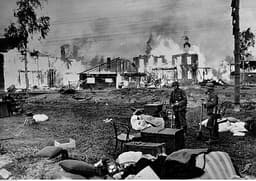
Franz Halder
General · Modern
57.3Total
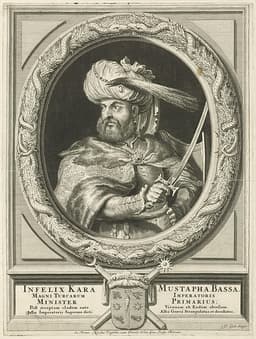
Merzifonlu Kara Mustafa
General · Modern
55.3Total
Basic Information
Born
1884
1634
Died
1972
1683
Era
Modern
Modern
Nationality
Germany
Ottoman Empire
Occupation
General
General
Civilization
Western
Middle Eastern
Score Comparison
Military (10%)
65.0
82.0
Political (20%)
43.7
45.0
Influence (20%)
61.0
55.0
Legacy (20%)
50.0
55.0
Leadership (15%)
64.5
48.8
Strategy (15%)
68.1
55.0
TOTAL
57.3
55.3
Franz Halder — Complete Timeline
1938 AD
Appointed Chief of the Army General StaffPolitical Action◆ Major
Halder succeeded Ludwig Beck as Chief of the Army General Staff on August 27, 1938. He oversaw the planning of German military operations during the early years of World War II, including the invasions of Poland, France, and the Soviet Union.
World War IIGerman ArmyMilitary Command
Impact: global
Involvement in the September 1938 ConspiracyPolitical Action◆ Major
Halder participated in a planned coup against Hitler during the Sudeten crisis. The plot aimed to arrest Hitler if he ordered an invasion of Czechoslovakia. The plan was abandoned after the Munich Agreement averted war.
German ResistanceCoup AttemptMunich Agreement
Impact: national
1942 AD
Dismissed as Chief of StaffPolitical Action◆ Major
Hitler dismissed Halder as Chief of the Army General Staff on September 24, 1942, following disagreements over the conduct of the war on the Eastern Front. Halder was replaced by Kurt Zeitzler and placed in the F
World War IIGerman CommandDismissal
Impact: national
1944 AD
Arrested after the July 20 PlotPolitical Action◆ Major
Halder was arrested by the Gestapo on July 23, 1944, three days after the failed assassination attempt on Hitler. He was implicated due to his earlier involvement in resistance circles. He was imprisoned in concentration camps until the end of the war.
July 20 PlotArrestConcentration Camp
Impact: nationaltragic
Merzifonlu Kara Mustafa — Complete Timeline
1678 AD
Campaign against Russia (1678)War
As grand vizier, Kara Mustafa led a campaign against Russia, capturing the fortress of Chyhyryn in Ukraine. This was part of the Russo-Turkish War (1676
Russo-Turkish WarCampaignUkraine
Impact: regional
1683 AD
Siege of Vienna (1683)War
Merzifonlu Kara Mustafa led the Ottoman army in the siege of Vienna. The siege failed after a relief force led by John III Sobieski of Poland defeated the Ottomans at the Battle of Kahlenberg, ending the Ottoman threat to Central Europe.
SiegeOttoman-Habsburg WarsDefeat
Impact: globaldestructive
Execution by Silk CordOther◆ Major
After the failure at Vienna, Merzifonlu Kara Mustafa was executed in Belgrade on the orders of Sultan Mehmed IV. He was strangled with a silk cord, a traditional method for high-ranking officials, as punishment for the military disaster.
ExecutionOttoman PoliticsFailure
Impact: nationaltragic
This comparison has not been analyzed yet.
One-time AI generation (~1 minute). Scores and timeline are already available below.
Rankings
🥇
Franz HalderLeader
Mil: 65.0Pol: 43.7Inf: 61.0
57.3
🥈
Merzifonlu Kara Mustafa
Mil: 82.0Pol: 45.0Inf: 55.0
55.3
+2.0 behind
How This Comparison Works
Algorithm
Each figure is scored on 6 dimensions (0—100 scale) based on structured historical data: Military (10%), Political (20%), Influence (20%), Legacy (20%), Leadership (15%), Strategy (15%). The weighted total produces the final ranking.
Data Sources
Scores are computed from structured sub-indicators in the database. Scale factors adjust for era (Ancient ×0.85, Modern ×1.0) and civilization size (Eastern ×1.05, Other ×0.80) to account for differences in population and military scale.
Maximum 3 Figures
Comparisons are limited to 2—3 figures to ensure readability and statistical meaningfulness.
Error Margins
±5 points per dimension — Sub-scores are derived from historical records with inherent uncertainty. Two figures within 5 points on a dimension should be considered roughly equivalent in that area.
Total Score Accuracy
±3 points overall — The weighted combination of 6 dimensions produces a total score with approximately ±3 points of uncertainty. Differences of less than 3 points are not statistically significant— the figures are effectively tied.
Known Limitations
- Historical records are incomplete and uneven across civilizations
- Figures from oral-tradition societies may be underrepresented
- Occupation labels can misclassify multi-role figures
- Scores measure capability and impact, not moral character
- Quantitative scoring is a comparison tool, not absolute truth
Capability Radar
Military (10%) — Battles & Warfare
Battles
65
75
Win Rate
60
60
Expansion
60
80
Political (20%) — Governance & Reform
Reform
30
55
Diplomacy
40
50
Economy
20
60
Influence (20%) — Cultural & Global Reach
Cultural
30
55
Global
45
65
Legacy (20%) — Historical Impact
Historical
55
70
Longevity
40
60
Leadership (15%) — Power & Stability
Tenure
50
65
Stability
20
40
Strategy (15%) — Tactics & Innovation
Strategy
80
65
Tactics
75
70
Reform
70
50
Similar Comparisons
Comments & Discussion
No comments yet. Be the first to share your thoughts!