Loading...
Franklin Pierce vs Vincent Auriol
Vincent Auriol leads by 9.6 pts · 2 figures compared
…

Franklin Pierce
Politician · Modern
46.2Total
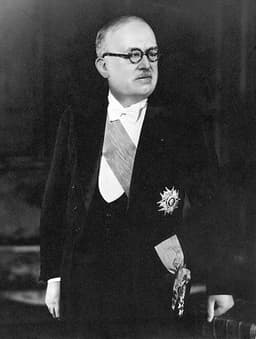
Vincent Auriol
Politician · Modern
55.8Total
Basic Information
Born
1804
1884
Died
1869
1966
Era
Modern
Modern
Nationality
United States
France
Occupation
Politician
Politician
Civilization
Western
Western
Score Comparison
Military (10%)
50.0
49.6
Political (20%)
30.8
60.0
Influence (20%)
48.6
55.7
Legacy (20%)
41.7
46.7
Leadership (15%)
65.7
79.8
Strategy (15%)
41.6
43.0
TOTAL
46.2
55.8
Franklin Pierce — Complete Timeline
1852 AD
Elected President of the United StatesPolitical Action◆ Major
Pierce won the 1852 presidential election as a dark horse Democratic candidate, defeating Whig Winfield Scott. He carried all but four states, benefiting from the Whig Party's collapse.
PresidencyElectionDemocratic Party
Impact: national
1853 AD
Gadsden PurchasePolitical Action
Pierce authorized the Gadsden Purchase, acquiring 29,670 square miles from Mexico for $10 million. The land in present-day Arizona and New Mexico was intended for a southern transcontinental railroad route.
Territorial ExpansionGadsden PurchaseRailroad
Impact: regional
1854 AD
Signed the Kansas-Nebraska ActPolitical Action◆ Major
Pierce signed the Kansas-Nebraska Act, which repealed the Missouri Compromise and allowed popular sovereignty on slavery in Kansas and Nebraska. This led to violent conflict in 'Bleeding Kansas'.
Kansas-Nebraska ActSlaveryBleeding Kansas
Impact: nationaldestructive
Ostend ManifestoPolitical Action
Pierce's administration supported the Ostend Manifesto, a secret document advocating U.S. acquisition of Cuba by force if Spain refused to sell. The leak caused a diplomatic scandal and damaged Pierce's reputation.
CubaImperialismScandal
Impact: nationaldestructive
1856 AD
Lost 1856 Democratic NominationPolitical Action◆ Major
Pierce sought the Democratic nomination for a second term but was defeated by James Buchanan. His support for the Kansas-Nebraska Act and the resulting violence made him unelectable.
ElectionDemocratic PartyKansas-Nebraska Act
Impact: nationaltragic
Vincent Auriol — Complete Timeline
1936 AD
Served as Minister of FinancePolitical Action
Auriol served as Minister of Finance in the Popular Front government of L
Popular FrontLabor Reforms
Impact: nationalprogressive
1947 AD
Elected President of FrancePolitical Action◆ Major
Vincent Auriol was elected the first President of the Fourth French Republic, serving from 1947 to 1954. His presidency oversaw post-war reconstruction, the beginning of the Cold War, and the early stages of decolonization.
PresidencyFourth Republic
Impact: nationalconstructive
1951 AD
Presided over the Creation of the European Coal and Steel CommunityPolitical Action◆ Major
As president, Auriol supported the Schuman Plan and the Treaty of Paris (1951), which established the European Coal and Steel Community, a key step toward European integration.
European Integration
Impact: regionalconstructive
Expert Analysis
Origins
Franklin Pierce was born on November 23, 1804, in Hillsborough, New Hampshire, into a politically active family. His father, Benjamin Pierce, served as governor of New Hampshire. Pierce graduated from Bowdoin College in 1824, studied law, and was admitted to the bar in 1827. He entered politics early, serving in the New Hampshire legislature and later the U.S. House and Senate.
Vincent Auriol was born on August 27, 1884, in Revel, Haute-Garonne, France, to a modest family. His father was a baker. Auriol studied law at the University of Toulouse and became a lawyer. He joined the French Socialist Party (SFIO) and was elected to the Chamber of Deputies in 1914. His early career focused on labor rights and social justice.
Rise to Power
Pierce rose to national prominence as a Democrat. He served in the Mexican-American War as a brigadier general, though without significant combat experience. In 1852, he was a dark horse candidate for president, winning the Democratic nomination on the 49th ballot. He defeated Whig Winfield Scott in the general election, carrying all but four states. His victory was partly due to his perceived moderation on slavery.
Auriol rose through the French Socialist Party. He served as Minister of Finance in Léon Blum's Popular Front government in 1936, implementing the Matignon Agreements that established labor reforms. During World War II, he was arrested by the Vichy regime but later escaped to London, where he joined the Free French forces. After the war, he was elected president of the Constituent Assembly and then, in 1947, became the first president of the Fourth Republic, winning 361 votes out of 899 in the National Assembly.
Leadership & Governance
Pierce's presidency (1853-1857) was marked by a focus on territorial expansion and appeasement of Southern interests. He signed the Gadsden Purchase (1853), acquiring land for a southern transcontinental railroad. He also supported the Ostend Manifesto (1854), which advocated seizing Cuba. His most consequential act was signing the Kansas-Nebraska Act (1854), which repealed the Missouri Compromise and allowed popular sovereignty on slavery, leading to violent conflict in Kansas. Pierce scored 65.7 in leadership but only 30.8 in political effectiveness, reflecting his inability to manage the sectional crisis.
Auriol's presidency (1947-1954) focused on post-war reconstruction and European integration. He supported the Schuman Plan, leading to the Treaty of Paris (1951) that created the European Coal and Steel Community (ECSC). He oversaw the early stages of the Marshall Plan in France and worked to stabilize the French economy. His leadership score of 79.8 reflects his role in building consensus, but his political score of 60.0 indicates the constraints of the Fourth Republic's weak executive.
Triumph & Tragedy
Pierce's greatest success was the Gadsden Purchase, which secured land for a southern railroad route. His greatest failure was the Kansas-Nebraska Act, which inflamed sectional tensions and led to the formation of the Republican Party. The resulting violence in Kansas, known as "Bleeding Kansas," foreshadowed the Civil War. Pierce also lost the 1856 Democratic nomination due to his unpopularity.
Auriol's greatest success was his role in founding the ECSC, a key step toward European unity. He also oversaw the initial years of the Fourth Republic, which saw economic recovery. His greatest failure was his inability to resolve the First Indochina War (1946-1954), which ended with the French defeat at Dien Bien Phu in 1954, just after his term ended. The Fourth Republic's instability also persisted, leading to its collapse in 1958.
Character & Destiny
Pierce was known as a charming and affable man, but his indecisiveness and sympathy for Southern positions led him to make disastrous policy choices. His personal life was marked by tragedy: his son died in a train accident just before his inauguration, and his wife suffered from depression. Historians often rank Pierce among the worst U.S. presidents, citing his failure to prevent the Civil War.
Auriol was a pragmatic socialist who prioritized stability and reconciliation. He worked well with coalition governments and was respected for his integrity. However, his presidency was constrained by the Fourth Republic's parliamentary system, which limited his ability to act decisively. He retired from politics after his term, dying in 1966.
Legacy
Pierce's legacy is overwhelmingly negative. The Kansas-Nebraska Act is seen as a catalyst for the Civil War. His overall legacy score is 41.7, reflecting his destructive impact. He is remembered as a president who failed to navigate the nation's deepest crisis.
Auriol's legacy is more positive but modest. He is remembered as a founding figure of European integration and a steady hand during post-war reconstruction. His legacy score of 46.7 reflects his contributions to the ECSC. However, the Fourth Republic's instability and the Indochina War mar his record.
Conclusion
Vincent Auriol had a greater impact than Franklin Pierce. While Pierce's actions led directly to the Civil War, that outcome was likely inevitable given the deep divisions over slavery. Auriol, by contrast, helped create a framework for European cooperation that led to the modern European Union. Auriol's total score of 55.8 versus Pierce's 46.2 underscores this. Despite the Fourth Republic's flaws, Auriol's contribution to lasting peace in Europe outweighs Pierce's negative legacy.
Rankings
🥇
Vincent AuriolLeader
Mil: 49.6Pol: 60.0Inf: 55.7
55.8
🥈
Franklin Pierce
Mil: 50.0Pol: 30.8Inf: 48.6
46.2
+9.6 behind
How This Comparison Works
Algorithm
Each figure is scored on 6 dimensions (0—100 scale) based on structured historical data: Military (10%), Political (20%), Influence (20%), Legacy (20%), Leadership (15%), Strategy (15%). The weighted total produces the final ranking.
Data Sources
Scores are computed from structured sub-indicators in the database. Scale factors adjust for era (Ancient ×0.85, Modern ×1.0) and civilization size (Eastern ×1.05, Other ×0.80) to account for differences in population and military scale.
Maximum 3 Figures
Comparisons are limited to 2—3 figures to ensure readability and statistical meaningfulness.
Error Margins
±5 points per dimension — Sub-scores are derived from historical records with inherent uncertainty. Two figures within 5 points on a dimension should be considered roughly equivalent in that area.
Total Score Accuracy
±3 points overall — The weighted combination of 6 dimensions produces a total score with approximately ±3 points of uncertainty. Differences of less than 3 points are not statistically significant— the figures are effectively tied.
Known Limitations
- Historical records are incomplete and uneven across civilizations
- Figures from oral-tradition societies may be underrepresented
- Occupation labels can misclassify multi-role figures
- Scores measure capability and impact, not moral character
- Quantitative scoring is a comparison tool, not absolute truth
Capability Radar
Military (10%) — Battles & Warfare
Battles
28
29
Win Rate
32
31
Expansion
33
36
Political (20%) — Governance & Reform
Reform
10
55
Diplomacy
20
60
Economy
15
50
Influence (20%) — Cultural & Global Reach
Cultural
10
30
Global
10
35
Legacy (20%) — Historical Impact
Historical
30
40
Longevity
20
30
Leadership (15%) — Power & Stability
Tenure
60
65
Stability
5
45
Strategy (15%) — Tactics & Innovation
Strategy
39
36
Tactics
40
41
Reform
41
47
Similar Comparisons
Comments & Discussion
No comments yet. Be the first to share your thoughts!