Loading...
This comparison has not been analyzed yet.
One-time AI generation (~1 minute). Scores and timeline are already available below.
Frank Merrill vs Ii Naomasa
Ii Naomasa leads by 14.0 pts · 2 figures compared
…

Frank Merrill
General · Modern
39.9Total
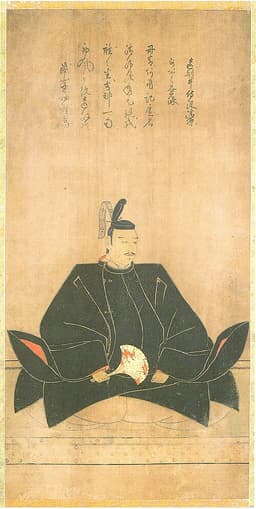
Ii Naomasa
General · Modern
53.9Total
Basic Information
Born
1903
1561
Died
1955
1602
Era
Modern
Modern
Nationality
United States
Japan
Occupation
General
General
Civilization
Western
Eastern
Score Comparison
Military (10%)
25.0
70.0
Political (20%)
25.0
39.4
Influence (20%)
50.2
57.2
Legacy (20%)
42.5
50.0
Leadership (15%)
30.0
61.1
Strategy (15%)
60.0
50.0
TOTAL
39.9
53.9
Frank Merrill — Complete Timeline
1943 AD
Formation of Merrill's MaraudersWar◆ Major
Merrill was appointed commander of the 5307th Composite Unit, known as Merrill's Marauders. The unit was a long-range penetration force trained for jungle warfare in Burma, operating behind Japanese lines.
World War IIBurmaMerrill's Marauders
Impact: regional
1944 AD
Myitkyina CampaignWar◆ Major
Merrill led the Marauders in a 100-mile march through jungle to capture the Myitkyina airfield. The operation succeeded in securing the airfield, but the subsequent siege of Myitkyina lasted 78 days and resulted in heavy casualties.
World War IIBurmaMyitkyina
Impact: regional
Walawbum BattleWar
Merrill's Marauders fought the Battle of Walawbum, a successful engagement against Japanese forces in northern Burma. The battle demonstrated the effectiveness of long-range penetration tactics in jungle warfare.
World War IIBurmaBattle
Evacuation due to IllnessOther
Merrill was evacuated from Burma due to a heart attack and malaria during the Myitkyina campaign. His health deteriorated from the harsh jungle conditions, and he was replaced as commander of the Marauders.
World War IIBurmaHealth
tragic
Ii Naomasa — Complete Timeline
1570 AD
Battle of AnegawaWar
Ii Naomasa fought under Tokugawa Ieyasu at the Battle of Anegawa. He led a unit of red-armored troops, earning the nickname 'Red Devil' for his fierce fighting against the Azai and Asakura forces.
Sengoku PeriodBattleTokugawa
Impact: regionalconstructive
1584 AD
Battle of Komaki and NagakuteWar◆ Major
Ii Naomasa fought at the Battle of Komaki and Nagakute against Toyotomi Hideyoshi's forces. He commanded a unit of red-armored troops and engaged in skirmishes, further building his reputation.
Sengoku PeriodBattleKomaki
Impact: regional
1590 AD
Siege of OdawaraWar
Ii Naomasa participated in the Siege of Odawara under Toyotomi Hideyoshi. He commanded a contingent of Tokugawa forces during the siege, which ended with the surrender of the Hojo clan.
Sengoku PeriodSiegeOdawara
Impact: regional
1600 AD
Battle of SekigaharaWar
Ii Naomasa led the vanguard of Tokugawa Ieyasu's forces at Sekigahara. His red-armored troops charged the Western Army, and he was wounded in the battle but survived, contributing to the victory.
Sengoku PeriodBattleSekigahara
Impact: nationalconstructive
This comparison has not been analyzed yet.
One-time AI generation (~1 minute). Scores and timeline are already available below.
Rankings
🥇
Ii NaomasaLeader
Mil: 70.0Pol: 39.4Inf: 57.2
53.9
🥈
Frank Merrill
Mil: 25.0Pol: 25.0Inf: 50.2
39.9
+14.0 behind
How This Comparison Works
Algorithm
Each figure is scored on 6 dimensions (0—100 scale) based on structured historical data: Military (10%), Political (20%), Influence (20%), Legacy (20%), Leadership (15%), Strategy (15%). The weighted total produces the final ranking.
Data Sources
Scores are computed from structured sub-indicators in the database. Scale factors adjust for era (Ancient ×0.85, Modern ×1.0) and civilization size (Eastern ×1.05, Other ×0.80) to account for differences in population and military scale.
Maximum 3 Figures
Comparisons are limited to 2—3 figures to ensure readability and statistical meaningfulness.
Error Margins
±5 points per dimension — Sub-scores are derived from historical records with inherent uncertainty. Two figures within 5 points on a dimension should be considered roughly equivalent in that area.
Total Score Accuracy
±3 points overall — The weighted combination of 6 dimensions produces a total score with approximately ±3 points of uncertainty. Differences of less than 3 points are not statistically significant— the figures are effectively tied.
Known Limitations
- Historical records are incomplete and uneven across civilizations
- Figures from oral-tradition societies may be underrepresented
- Occupation labels can misclassify multi-role figures
- Scores measure capability and impact, not moral character
- Quantitative scoring is a comparison tool, not absolute truth
Capability Radar
Military (10%) — Battles & Warfare
Battles
45
65
Win Rate
50
70
Expansion
10
40
Political (20%) — Governance & Reform
Reform
5
20
Diplomacy
15
30
Economy
5
25
Influence (20%) — Cultural & Global Reach
Cultural
15
45
Global
15
30
Legacy (20%) — Historical Impact
Historical
25
50
Longevity
20
40
Leadership (15%) — Power & Stability
Tenure
10
35
Stability
10
30
Strategy (15%) — Tactics & Innovation
Strategy
55
60
Tactics
60
75
Reform
10
30
Similar Comparisons
Comments & Discussion
No comments yet. Be the first to share your thoughts!