Loading...
This comparison has not been analyzed yet.
One-time AI generation (~1 minute). Scores and timeline are already available below.
Franjo Tudjman vs V. K. Krishna Menon
Franjo Tudjman leads by 1.2 pts · 2 figures compared
…
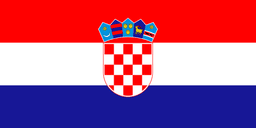
Franjo Tudjman
Politician · Modern
51.7Total

V. K. Krishna Menon
Politician · Modern
50.5Total
Basic Information
Born
1922
1896
Died
—
1974
Era
Modern
Modern
Nationality
Croatia
India
Occupation
Politician
Politician
Civilization
Western
Indian
Score Comparison
Military (10%)
20.0
51.7
Political (20%)
68.0
42.3
Influence (20%)
59.0
58.0
Legacy (20%)
49.2
45.0
Leadership (15%)
53.2
48.4
Strategy (15%)
45.0
60.0
TOTAL
51.7
50.5
Franjo Tudjman — Complete Timeline
1990 AD
Election as First President of CroatiaPolitical Action
Franjo Tuđman was elected as the first president of the Republic of Croatia in the first multi-party elections, leading the Croatian Democratic Union (HDZ) to victory. This marked the end of communist rule in Croatia and set the stage for independence from Yugoslavia.
ElectionIndependenceHDZ
Impact: regionalconstructive
1991 AD
Declaration of Croatian IndependencePolitical Action
Tuđman led Croatia in declaring independence from Yugoslavia on June 25, 1991, following a referendum. This triggered the Croatian War of Independence, as the Yugoslav People's Army and Serb rebels opposed secession, leading to a four-year conflict.
IndependenceYugoslav WarsReferendum
Impact: regionalconstructive
1995 AD
Operation StormWar
Tuđman authorized Operation Storm, a large-scale military offensive that recaptured the Serb-held Krajina region in Croatia. The operation ended the Croatian War of Independence but resulted in the exodus of approximately 200,000 Serb civilians, leading to accusations of ethnic cleansing.
Military OffensiveKrajinaWar Crimes
Impact: regionaldestructive
Signing of the Dayton AgreementPolitical Action◆ Major
Tuđman signed the Dayton Agreement on behalf of Croatia, ending the Bosnian War. The agreement established the political structure of Bosnia and Herzegovina, with Croatia playing a key role in supporting the Bosnian Croats and the Federation entity.
Peace TreatyBosnian WarDayton
Impact: regionalconstructive
1999 AD
Death in OfficeOther◆ Major
Tuđman died in office on December 10, 1999, after a battle with cancer. His death marked the end of an era in Croatian politics, as he had been the dominant figure since independence. His legacy remains deeply divisive, with praise for achieving independence and criticism for authoritarian tendencies.
DeathEnd of EraLegacy
Impact: national
V. K. Krishna Menon — Complete Timeline
1953 AD
Led India's Delegation to the United NationsPolitical Action◆ Major
Krishna Menon led the Indian delegation to the UN, where he became a prominent voice for decolonization and non-alignment. He played a key role in the Korean War armistice negotiations and advocated for the admission of China to the UN.
United NationsDiplomacyNon-Alignment
Impact: globalconstructive
1954 AD
Instrumental in the Panchsheel AgreementPolitical Action◆ Major
Krishna Menon helped draft the Panchsheel, or Five Principles of Peaceful Coexistence, which were incorporated into the Sino-Indian Agreement on Tibet. The principles became a cornerstone of India's foreign policy and influenced the Non-Aligned Movement.
PanchsheelForeign PolicyChina
Impact: globalconstructive
1962 AD
Served as India's Defense Minister during the 1962 Sino-Indian WarWar◆ Major
As Defense Minister, Krishna Menon oversaw India's military response to the Chinese invasion. India suffered a decisive defeat, leading to widespread criticism of Menon's leadership and his eventual resignation from the post.
Sino-Indian WarDefense MinisterDefeat
Impact: nationaltragic
Resigned as Defense MinisterPolitical Action◆ Major
Following India's defeat in the Sino-Indian War, Krishna Menon resigned as Defense Minister under pressure from the Congress party and public opinion. His resignation marked the end of his tenure in high office.
ResignationSino-Indian WarAccountability
Impact: nationaltragic
This comparison has not been analyzed yet.
One-time AI generation (~1 minute). Scores and timeline are already available below.
Rankings
🥇
Franjo TudjmanLeader
Mil: 20.0Pol: 68.0Inf: 59.0
51.7
🥈
V. K. Krishna Menon
Mil: 51.7Pol: 42.3Inf: 58.0
50.5
+1.2 behind
How This Comparison Works
Algorithm
Each figure is scored on 6 dimensions (0—100 scale) based on structured historical data: Military (10%), Political (20%), Influence (20%), Legacy (20%), Leadership (15%), Strategy (15%). The weighted total produces the final ranking.
Data Sources
Scores are computed from structured sub-indicators in the database. Scale factors adjust for era (Ancient ×0.85, Modern ×1.0) and civilization size (Eastern ×1.05, Other ×0.80) to account for differences in population and military scale.
Maximum 3 Figures
Comparisons are limited to 2—3 figures to ensure readability and statistical meaningfulness.
Error Margins
±5 points per dimension — Sub-scores are derived from historical records with inherent uncertainty. Two figures within 5 points on a dimension should be considered roughly equivalent in that area.
Total Score Accuracy
±3 points overall — The weighted combination of 6 dimensions produces a total score with approximately ±3 points of uncertainty. Differences of less than 3 points are not statistically significant— the figures are effectively tied.
Known Limitations
- Historical records are incomplete and uneven across civilizations
- Figures from oral-tradition societies may be underrepresented
- Occupation labels can misclassify multi-role figures
- Scores measure capability and impact, not moral character
- Quantitative scoring is a comparison tool, not absolute truth
Capability Radar
Military (10%) — Battles & Warfare
Battles
15
43
Win Rate
20
45
Expansion
10
47
Political (20%) — Governance & Reform
Reform
55
20
Diplomacy
50
70
Economy
45
10
Influence (20%) — Cultural & Global Reach
Cultural
50
30
Global
45
50
Legacy (20%) — Historical Impact
Historical
55
40
Longevity
40
20
Leadership (15%) — Power & Stability
Tenure
60
30
Stability
40
10
Strategy (15%) — Tactics & Innovation
Strategy
20
54
Tactics
15
54
Reform
25
57
Similar Comparisons
Comments & Discussion
No comments yet. Be the first to share your thoughts!