Loading...
Francis I of France vs Qaitbay
Francis I of France leads by 4.3 pts · 2 figures compared
…
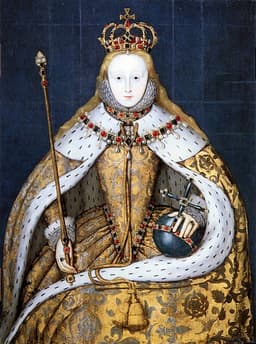
Francis I of France
Emperor · Medieval
63.0Total
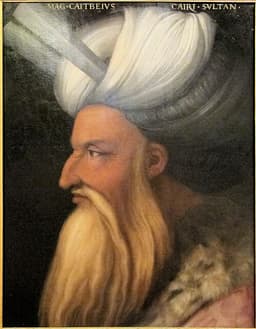
Qaitbay
Emperor · Medieval
58.7Total
Basic Information
Born
1494
1416
Died
1547
1496
Era
Medieval
Medieval
Nationality
France
Egypt
Occupation
Emperor
Emperor
Civilization
Western
Middle Eastern
Score Comparison
Military (10%)
52.5
50.0
Political (20%)
60.0
68.0
Influence (20%)
72.0
58.0
Legacy (20%)
58.0
50.0
Leadership (15%)
72.0
66.0
Strategy (15%)
55.0
66.3
TOTAL
63.0
58.7
Francis I of France — Complete Timeline
1515 AD
Battle of MarignanoWar◆ Major
Francis I led a French army to victory against the Swiss at Marignano, securing control of the Duchy of Milan. This battle established Francis I as a major military leader and marked the beginning of his Italian campaigns.
Italian WarsBattleCapetian
Impact: regional
1516 AD
Patronage of Leonardo da VinciCultural◆ Major
Francis I invited Leonardo da Vinci to France, providing him with the Ch
RenaissancePatronageCapetian
Impact: globalconstructive
Concordat of BolognaPolitical Action◆ Major
Francis I signed the Concordat of Bologna with Pope Leo X, which gave the French king the right to appoint bishops and abbots. This agreement strengthened royal control over the French Church and reduced papal influence in France.
Church-State RelationsTreatyCapetian
Impact: nationalconstructive
1525 AD
Capture at the Battle of PaviaWar
Francis I was defeated and captured by Imperial forces at the Battle of Pavia. He was imprisoned in Spain and forced to sign the Treaty of Madrid, renouncing French claims in Italy. This was a major setback for French ambitions.
Italian WarsDefeatCapetian
Impact: globaltragic
Qaitbay — Complete Timeline
1468 AD
Suppression of the Revolt of the Emir of AleppoWar
Early in his reign, Qaitbay suppressed a revolt by the Emir of Aleppo, who had refused to recognize his authority. The sultan's forces marched to Aleppo, defeated the rebels, and executed the emir, securing his position as sultan.
Mamluk SultanateRevoltAleppo
Impact: regional
1477 AD
Construction of the Qaitbay Citadel in AlexandriaCultural◆ Major
Qaitbay ordered the construction of a fortress on the site of the ancient Lighthouse of Alexandria, one of the Seven Wonders of the Ancient World. The citadel was built using stones from the ruined lighthouse and served as a key defensive fortification for the city.
Mamluk SultanateArchitectureFortificationAlexandria
Impact: regionalconstructive
1482 AD
Restoration of the Dome of the RockCultural◆ Major
Qaitbay funded a major restoration of the Dome of the Rock in Jerusalem, including repairs to the dome's mosaics and the addition of a marble facing. This project demonstrated Mamluk patronage of Islamic architecture and religious sites.
Mamluk SultanateArchitectureJerusalemRestoration
Impact: regionalconstructive
1485 AD
War with the Ottoman Empire (1485-1491)War◆ Major
Qaitbay fought a protracted war against the Ottoman Empire over control of Cilicia and the buffer state of Dulkadir. The conflict ended with a peace treaty that maintained the status quo, with the Mamluks retaining their northern borders.
Mamluk SultanateOttoman EmpireWarCilicia
Impact: regional
Expert Analysis
Origins
Francis I of France (1494–1547) was born into the House of Valois-Angoulême in Cognac. His father, Charles of Angoulême, died when Francis was two, leaving him to be raised by his mother, Louise of Savoy, who ensured a humanist education. He became heir presumptive in 1498 when Louis XII succeeded to the throne, and married Louis's daughter Claude in 1514. His upbringing in the French court exposed him to Renaissance ideas, which shaped his later patronage of the arts.
Qaitbay (c. 1416–1496) was born in Circassia and purchased as a slave soldier (mamluk) in Egypt. He rose through the ranks of the Mamluk Sultanate under Sultan Jaqmaq, eventually becoming a prominent emir. His military training and administrative experience prepared him for the sultanate, which he assumed in 1468 after a period of instability. His origins as a Circassian slave were typical for Mamluk rulers, who relied on a system of military slavery to maintain power.
Rise to Power
Francis I became king in 1515 at age 20 upon the death of his cousin Louis XII. He immediately launched a campaign into Italy, culminating in the Battle of Marignano (13–14 September 1515) where he decisively defeated the Swiss mercenaries. This victory secured the Duchy of Milan for France and earned him a reputation as a chivalric warrior-king. He later forged alliances with the Ottoman Empire and English King Henry VIII to counter Habsburg power, but his rivalry with Emperor Charles V defined his reign.
Qaitbay became sultan in 1468 after the death of Sultan Khushqadam, who had designated him as successor. His accession was contested by other emirs, but he quickly consolidated power by suppressing a revolt from the Emir of Aleppo in 1469. He then faced challenges from the Ottoman Empire, which sought to expand into Mamluk territory. The war with the Ottomans (1485–1491) over Cilicia and the buffer state of Dulkadir ended inconclusively, with both sides agreeing to a peace treaty that maintained the status quo.
Leadership & Governance
Francis I centralized royal authority through the Concordat of Bologna (1516), which gave the French crown the right to appoint bishops and abbots, effectively controlling the Gallican Church. He also expanded the administrative apparatus, relying on the Parlement and royal officials. However, his foreign policy was often erratic, leading to costly wars. He scored 72.0 in Leadership and 60.0 in Political, reflecting his ability to inspire loyalty but also his strategic missteps.
Qaitbay ruled for 28 years, a long tenure for a Mamluk sultan. He maintained stability through patronage of military elites and careful management of the Mamluk hierarchy. He invested in infrastructure, including the Qaitbay Citadel in Alexandria (1477) and the restoration of the Dome of the Rock in Jerusalem (1482). His Political score of 68.0 indicates his skill in navigating internal politics, but his Military score of 50.0 shows his limited success in external conflicts.
Triumph & Tragedy
Francis I's greatest triumph was the victory at Marignano, which established his reputation and secured Milan. His patronage of Leonardo da Vinci, who brought the Mona Lisa to France, enriched French culture. However, his capture at the Battle of Pavia (24 February 1525) was a disaster: he was imprisoned in Spain and forced to sign the Treaty of Madrid, renouncing claims to Italy. He repudiated the treaty upon release, but his Italian ambitions were permanently damaged.
Qaitbay's construction of the Qaitbay Citadel on the site of the Lighthouse of Alexandria preserved a strategic fortress. The restoration of the Dome of the Rock enhanced his religious legacy. Yet his war with the Ottomans drained resources and ended without clear gains. He also faced internal revolts, such as the rebellion of the Emir of Aleppo, which he suppressed, but the Mamluk state remained fragile. His Legacy score of 50.0 reflects limited long-term impact.
Character & Destiny
Francis I was a charismatic and cultured monarch, embodying the Renaissance ideal of the 'warrior-king.' His patronage of arts and letters earned him the title 'Father of Letters,' but his impulsiveness and overconfidence led to defeats. He scored 72.0 in Leadership due to his ability to rally support, but his Strategy score of 55.0 indicates flawed military planning.
Qaitbay was a cautious and pragmatic ruler, focused on stability rather than expansion. His long reign suggests effective management of the Mamluk system, but his lack of aggressive ambition meant he did not significantly alter the balance of power. His Strategy score of 66.3 is higher than Francis I's, reflecting careful decision-making, but his Influence score of 58.0 is lower.
Legacy
Francis I is remembered as the king who brought the Renaissance to France. He invited artists like Leonardo da Vinci and built the Château de Chambord. His centralization of the monarchy laid groundwork for absolutism. However, his military failures and heavy taxation diminished his legacy. He scored 72.0 in Influence and 58.0 in Legacy.
Qaitbay's legacy is tied to his architectural projects, particularly the Qaitbay Citadel and the Dome of the Rock restoration. He is seen as a capable administrator who maintained Mamluk power during a period of Ottoman expansion. Yet his reign did not produce lasting political changes, and the Mamluk Sultanate fell to the Ottomans in 1517, just two decades after his death. His Legacy score of 50.0 reflects this limited impact.
Conclusion
Francis I of France holds a higher overall score (63.0 vs 58.7) and greater historical significance. His patronage of Leonardo da Vinci and the Concordat of Bologna had enduring cultural and political effects. Qaitbay's achievements were largely architectural and administrative, but his influence was confined to a declining empire. While both were competent leaders, Francis I's impact on the European Renaissance and French monarchy outweighs Qaitbay's contributions. Francis I is the more influential figure.
Rankings
🥇
Francis I of FranceLeader
Mil: 52.5Pol: 60.0Inf: 72.0
63.0
🥈
Qaitbay
Mil: 50.0Pol: 68.0Inf: 58.0
58.7
+4.3 behind
How This Comparison Works
Algorithm
Each figure is scored on 6 dimensions (0—100 scale) based on structured historical data: Military (10%), Political (20%), Influence (20%), Legacy (20%), Leadership (15%), Strategy (15%). The weighted total produces the final ranking.
Data Sources
Scores are computed from structured sub-indicators in the database. Scale factors adjust for era (Ancient ×0.85, Modern ×1.0) and civilization size (Eastern ×1.05, Other ×0.80) to account for differences in population and military scale.
Maximum 3 Figures
Comparisons are limited to 2—3 figures to ensure readability and statistical meaningfulness.
Error Margins
±5 points per dimension — Sub-scores are derived from historical records with inherent uncertainty. Two figures within 5 points on a dimension should be considered roughly equivalent in that area.
Total Score Accuracy
±3 points overall — The weighted combination of 6 dimensions produces a total score with approximately ±3 points of uncertainty. Differences of less than 3 points are not statistically significant— the figures are effectively tied.
Known Limitations
- Historical records are incomplete and uneven across civilizations
- Figures from oral-tradition societies may be underrepresented
- Occupation labels can misclassify multi-role figures
- Scores measure capability and impact, not moral character
- Quantitative scoring is a comparison tool, not absolute truth
Capability Radar
Military (10%) — Battles & Warfare
Battles
65
55
Win Rate
45
60
Expansion
55
45
Political (20%) — Governance & Reform
Reform
65
55
Diplomacy
60
60
Economy
55
55
Influence (20%) — Cultural & Global Reach
Cultural
75
50
Global
60
40
Legacy (20%) — Historical Impact
Historical
70
55
Longevity
65
50
Leadership (15%) — Power & Stability
Tenure
70
70
Stability
40
65
Strategy (15%) — Tactics & Innovation
Strategy
55
60
Tactics
60
65
Reform
50
50
Similar Comparisons
Comments & Discussion
No comments yet. Be the first to share your thoughts!