Loading...
This comparison has not been analyzed yet.
One-time AI generation (~1 minute). Scores and timeline are already available below.
Fidel V. Ramos vs William Slim
William Slim leads by 9.0 pts · 2 figures compared
…
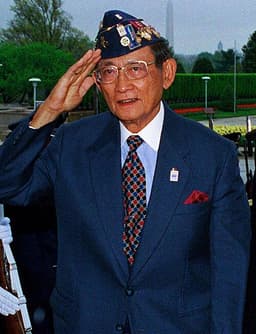
Fidel V. Ramos
General · Modern
58.0Total

William Slim
General · Modern
67.0Total
Basic Information
Born
1928
1891
Died
—
1970
Era
Modern
Modern
Nationality
Philippines
United Kingdom
Occupation
General
General
Civilization
Eastern
Western
Score Comparison
Military (10%)
45.0
78.0
Political (20%)
70.3
72.0
Influence (20%)
57.2
65.0
Legacy (20%)
47.5
55.0
Leadership (15%)
72.0
68.0
Strategy (15%)
60.0
82.0
TOTAL
58.0
67.0
Fidel V. Ramos — Complete Timeline
1992 AD
Elected President of the PhilippinesPolitical Action◆ Major
Fidel V. Ramos won the Philippine presidential election, succeeding Corazon Aquino. His victory marked the first peaceful transfer of power after the EDSA Revolution, and he focused on economic reforms and national reconciliation.
PresidencyPeaceful TransitionEconomic Reform
Impact: nationalconstructive
1993 AD
Implemented the Philippines 2000 economic programReform◆ Major
Ramos launched the Philippines 2000 program, a comprehensive economic liberalization plan that included deregulation, privatization, and trade liberalization. The program led to sustained GDP growth of over 5% annually.
Economic ReformLiberalizationGrowth
Impact: nationalconstructive
1996 AD
Signed the Final Peace Agreement with the Moro National Liberation FrontPolitical Action◆ Major
Ramos signed a peace agreement with the Moro National Liberation Front, ending decades of armed conflict in Mindanao. The agreement established the Autonomous Region in Muslim Mindanao and granted amnesty to MNLF fighters.
Peace AgreementMindanaoMNLF
Impact: regionalconstructive
Hosted the Asia-Pacific Economic Cooperation summitPolitical Action◆ Major
Ramos hosted the APEC summit in Subic Bay, Philippines, showcasing the country's economic recovery. The summit focused on trade liberalization and economic cooperation among Pacific Rim economies.
APECTradeEconomic Diplomacy
Impact: regionalconstructive
1998 AD
Established the National Anti-Poverty CommissionReform
Ramos created the National Anti-Poverty Commission to coordinate poverty reduction programs across government agencies. The commission aimed to improve social services and livelihood opportunities for the poor.
Poverty ReductionSocial PolicyGovernment Reform
Impact: nationalconstructive
William Slim — Complete Timeline
1943 AD
Commanded 14th Army in BurmaWar◆ Major
Slim was appointed commander of the British 14th Army in Burma. He rebuilt the army's morale and logistics after the retreat from Burma, transforming it into a effective fighting force.
World War IIBurma CampaignCommand
Impact: regionalconstructive
1944 AD
Battle of Imphal and KohimaWar
Slim's 14th Army defeated the Japanese offensive at Imphal and Kohima, ending Japanese attempts to invade India. The battle was a turning point in the Burma campaign, with heavy Japanese losses.
World War IIBurma CampaignBattle
Impact: regional
1945 AD
Battle of Meiktila and MandalayWar◆ Major
Slim led the 14th Army in a decisive offensive that captured Meiktila and Mandalay, destroying the Japanese Burma Area Army. This victory opened the way to Rangoon and effectively ended organized Japanese resistance in Burma.
World War IIBurma CampaignVictory
Impact: regional
1948 AD
Appointed Chief of the Imperial General StaffPolitical Action◆ Major
Slim was appointed Chief of the Imperial General Staff, the professional head of the British Army. He served until 1952, overseeing the army's post-war reorganization and the Korean War.
Post-WarBritish ArmyCommand
Impact: global
This comparison has not been analyzed yet.
One-time AI generation (~1 minute). Scores and timeline are already available below.
Rankings
🥇
William SlimLeader
Mil: 78.0Pol: 72.0Inf: 65.0
67.0
🥈
Fidel V. Ramos
Mil: 45.0Pol: 70.3Inf: 57.2
58.0
+9.0 behind
How This Comparison Works
Algorithm
Each figure is scored on 6 dimensions (0—100 scale) based on structured historical data: Military (10%), Political (20%), Influence (20%), Legacy (20%), Leadership (15%), Strategy (15%). The weighted total produces the final ranking.
Data Sources
Scores are computed from structured sub-indicators in the database. Scale factors adjust for era (Ancient ×0.85, Modern ×1.0) and civilization size (Eastern ×1.05, Other ×0.80) to account for differences in population and military scale.
Maximum 3 Figures
Comparisons are limited to 2—3 figures to ensure readability and statistical meaningfulness.
Error Margins
±5 points per dimension — Sub-scores are derived from historical records with inherent uncertainty. Two figures within 5 points on a dimension should be considered roughly equivalent in that area.
Total Score Accuracy
±3 points overall — The weighted combination of 6 dimensions produces a total score with approximately ±3 points of uncertainty. Differences of less than 3 points are not statistically significant— the figures are effectively tied.
Known Limitations
- Historical records are incomplete and uneven across civilizations
- Figures from oral-tradition societies may be underrepresented
- Occupation labels can misclassify multi-role figures
- Scores measure capability and impact, not moral character
- Quantitative scoring is a comparison tool, not absolute truth
Capability Radar
Military (10%) — Battles & Warfare
Battles
25
85
Win Rate
30
90
Expansion
20
75
Political (20%) — Governance & Reform
Reform
75
55
Diplomacy
70
65
Economy
80
50
Influence (20%) — Cultural & Global Reach
Cultural
30
55
Global
45
65
Legacy (20%) — Historical Impact
Historical
40
70
Longevity
35
60
Leadership (15%) — Power & Stability
Tenure
60
60
Stability
65
60
Strategy (15%) — Tactics & Innovation
Strategy
40
92
Tactics
35
88
Reform
45
80
Similar Comparisons
Comments & Discussion
No comments yet. Be the first to share your thoughts!