Loading...
Fidel V. Ramos vs O Jin-u
Fidel V. Ramos leads by 16.1 pts · 2 figures compared
…
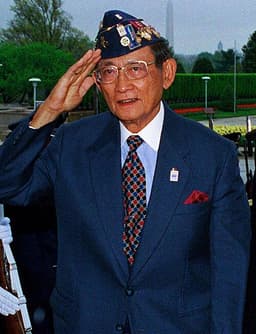
Fidel V. Ramos
General · Modern
58.0Total

O Jin-u
General · Modern
41.9Total
Basic Information
Born
1928
1917
Died
—
1995
Era
Modern
Modern
Nationality
Philippines
North Korea
Occupation
General
General
Civilization
Eastern
Eastern
Score Comparison
Military (10%)
45.0
22.6
Political (20%)
70.3
30.8
Influence (20%)
57.2
51.8
Legacy (20%)
47.5
40.8
Leadership (15%)
72.0
53.2
Strategy (15%)
60.0
38.6
TOTAL
58.0
41.9
Fidel V. Ramos — Complete Timeline
1992 AD
Elected President of the PhilippinesPolitical Action◆ Major
Fidel V. Ramos won the Philippine presidential election, succeeding Corazon Aquino. His victory marked the first peaceful transfer of power after the EDSA Revolution, and he focused on economic reforms and national reconciliation.
PresidencyPeaceful TransitionEconomic Reform
Impact: nationalconstructive
1993 AD
Implemented the Philippines 2000 economic programReform◆ Major
Ramos launched the Philippines 2000 program, a comprehensive economic liberalization plan that included deregulation, privatization, and trade liberalization. The program led to sustained GDP growth of over 5% annually.
Economic ReformLiberalizationGrowth
Impact: nationalconstructive
1996 AD
Signed the Final Peace Agreement with the Moro National Liberation FrontPolitical Action◆ Major
Ramos signed a peace agreement with the Moro National Liberation Front, ending decades of armed conflict in Mindanao. The agreement established the Autonomous Region in Muslim Mindanao and granted amnesty to MNLF fighters.
Peace AgreementMindanaoMNLF
Impact: regionalconstructive
Hosted the Asia-Pacific Economic Cooperation summitPolitical Action◆ Major
Ramos hosted the APEC summit in Subic Bay, Philippines, showcasing the country's economic recovery. The summit focused on trade liberalization and economic cooperation among Pacific Rim economies.
APECTradeEconomic Diplomacy
Impact: regionalconstructive
1998 AD
Established the National Anti-Poverty CommissionReform
Ramos created the National Anti-Poverty Commission to coordinate poverty reduction programs across government agencies. The commission aimed to improve social services and livelihood opportunities for the poor.
Poverty ReductionSocial PolicyGovernment Reform
Impact: nationalconstructive
O Jin-u — Complete Timeline
1976 AD
Appointed Minister of the People's Armed ForcesPolitical Action◆ Major
O Jin-u was appointed as North Korea's Minister of the People's Armed Forces, a position he held for nearly two decades. This made him the top military official under Kim Il-sung, overseeing the Korean People's Army during a period of intense militarization and economic hardship.
Military AppointmentNorth KoreaKim Il-sung
Impact: national
1992 AD
Promoted to Vice MarshalPolitical Action◆ Major
O Jin-u was promoted to the rank of Vice Marshal (Chasu) in the Korean People's Army, one of the highest military ranks in North Korea. This promotion solidified his status as a key military figure loyal to the Kim dynasty.
Military RankNorth KoreaPromotion
Impact: national
1995 AD
Died in OfficeOther◆ Major
O Jin-u died while still serving as Minister of the People's Armed Forces. His death marked the end of an era of long-serving military leadership under Kim Il-sung, and he was given a state funeral with high honors.
DeathNorth KoreaMilitary
Impact: national
Expert Analysis
Origins
Fidel V. Ramos was born on March 18, 1928, in Lingayen, Pangasinan, Philippines. He came from a political family; his father was a legislator and his cousin was President Ferdinand Marcos. Ramos studied at the University of the Philippines and then the United States Military Academy at West Point, graduating in 1950. He also earned a civil engineering degree from the University of Illinois and a master's in national security from the National Defense College of the Philippines.
O Jin-u was born on March 8, 1917, in North Hamgyong Province, Korea (then under Japanese rule). Little is known about his early life, but he joined the Korean People's Army (KPA) during the Korean War. He attended the Mangyongdae Revolutionary School and later the Kim Il-sung Military University. His background was purely military, with no significant political family ties.
Rise to Power
Ramos rose through the ranks of the Philippine Constabulary, becoming its chief in 1972. He played a key role in the 1986 People Power Revolution by defecting from Marcos and supporting Corazon Aquino. As military chief under Aquino, he suppressed seven coup attempts. In 1992, he won the presidency with 23.6% of the vote, succeeding Aquino. His rise was marked by institutional loyalty and a reformist image.
O Jin-u rose within the KPA during the Korean War, commanding units in battle. He became a member of the Central Committee of the Workers' Party of Korea in 1961. In 1976, he was appointed Minister of the People's Armed Forces, a position he held until his death in 1997. He was promoted to Vice Marshal in 1992. His rise was entirely within the Kim Il-sung regime, dependent on the leader's favor.
Leadership & Governance
Ramos led the Philippines with a focus on economic liberalization and peace. He implemented the Philippines 2000 program, which included deregulation, privatization, and trade liberalization. He signed the Final Peace Agreement with the Moro National Liberation Front in 1996, ending decades of conflict in Mindanao. He also hosted the 1996 APEC summit in Subic Bay. His leadership style was technocratic and inclusive, scoring 72.0 in leadership metrics.
O Jin-u served as North Korea's defense minister for 21 years, overseeing the military under Kim Il-sung and Kim Jong-il. His governance focused on maintaining loyalty and the military-first policy. He enforced the Juche ideology and supported the development of nuclear weapons. His leadership score of 53.2 reflects a more authoritarian and repressive approach.
Triumph & Tragedy
Ramos's greatest triumph was economic reform: GDP growth averaged 5.3% during his term, and poverty fell from 40% to 31%. The peace agreement with the MNLF was a major achievement. His tragedy was the Asian financial crisis of 1997, which hit the Philippines hard, and his inability to fully address corruption and inequality. He also faced criticism for human rights abuses during his military career.
O Jin-u's triumph was maintaining military stability and loyalty during a period of economic hardship and famine. He oversaw the KPA's expansion. His tragedy was his complicity in the regime's human rights abuses and the famine that killed hundreds of thousands. He died in office, leaving no lasting reforms.
Character & Destiny
Ramos was known as a disciplined, pragmatic leader. He was nicknamed "Steady Eddie" for his calm demeanor. His character allowed him to navigate political crises and build consensus. His destiny was to lead a democratic transition and economic opening.
O Jin-u was a loyalist to the Kim dynasty. He was reportedly ruthless and uncompromising. His character made him a reliable enforcer, but limited his influence beyond the military. His destiny was to serve until death, leaving no independent legacy.
Legacy
Ramos's legacy is as the reformer who modernized the Philippine economy and promoted peace. The Philippines 2000 program set the stage for future growth. The peace agreement with the MNLF remains a framework for autonomy in Mindanao. His legacy score is 47.5.
O Jin-u's legacy is as a long-serving military leader in a totalitarian state. He is remembered for his loyalty but not for any independent achievements. His legacy score is 40.8.
Conclusion
Fidel V. Ramos had a greater impact. His political score of 70.3 and leadership score of 72.0 far exceed O Jin-u's 30.8 and 53.2. Ramos reformed a nation and advanced democracy; O Jin-u perpetuated a dictatorship. The 16.1-point total score gap reflects this. Ramos's contributions to peace and economic growth are enduring, while O Jin-u's role is tied to a regime that continues to struggle.
Rankings
🥇
Fidel V. RamosLeader
Mil: 45.0Pol: 70.3Inf: 57.2
58.0
🥈
O Jin-u
Mil: 22.6Pol: 30.8Inf: 51.8
41.9
+16.1 behind
How This Comparison Works
Algorithm
Each figure is scored on 6 dimensions (0—100 scale) based on structured historical data: Military (10%), Political (20%), Influence (20%), Legacy (20%), Leadership (15%), Strategy (15%). The weighted total produces the final ranking.
Data Sources
Scores are computed from structured sub-indicators in the database. Scale factors adjust for era (Ancient ×0.85, Modern ×1.0) and civilization size (Eastern ×1.05, Other ×0.80) to account for differences in population and military scale.
Maximum 3 Figures
Comparisons are limited to 2—3 figures to ensure readability and statistical meaningfulness.
Error Margins
±5 points per dimension — Sub-scores are derived from historical records with inherent uncertainty. Two figures within 5 points on a dimension should be considered roughly equivalent in that area.
Total Score Accuracy
±3 points overall — The weighted combination of 6 dimensions produces a total score with approximately ±3 points of uncertainty. Differences of less than 3 points are not statistically significant— the figures are effectively tied.
Known Limitations
- Historical records are incomplete and uneven across civilizations
- Figures from oral-tradition societies may be underrepresented
- Occupation labels can misclassify multi-role figures
- Scores measure capability and impact, not moral character
- Quantitative scoring is a comparison tool, not absolute truth
Capability Radar
Military (10%) — Battles & Warfare
Battles
25
10
Win Rate
30
10
Expansion
20
5
Political (20%) — Governance & Reform
Reform
75
20
Diplomacy
70
15
Economy
80
10
Influence (20%) — Cultural & Global Reach
Cultural
30
10
Global
45
10
Legacy (20%) — Historical Impact
Historical
40
15
Longevity
35
20
Leadership (15%) — Power & Stability
Tenure
60
60
Stability
65
40
Strategy (15%) — Tactics & Innovation
Strategy
40
15
Tactics
35
15
Reform
45
30
Similar Comparisons
Comments & Discussion
No comments yet. Be the first to share your thoughts!