Loading...
This comparison has not been analyzed yet.
One-time AI generation (~1 minute). Scores and timeline are already available below.
Fidel Ramos vs Max Hoffmann
Max Hoffmann leads by 2.5 pts · 2 figures compared
…
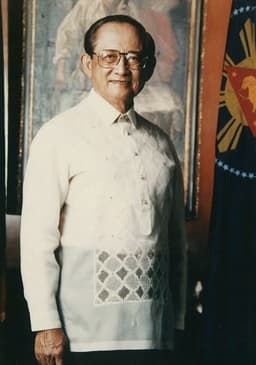
Fidel Ramos
General · Modern
53.2Total
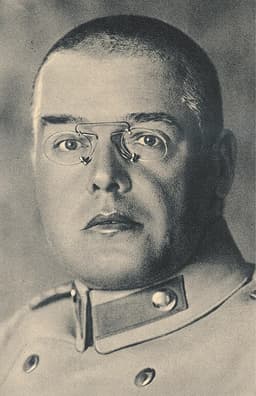
Max Hoffmann
General · Modern
55.7Total
Basic Information
Born
1928
1869
Died
—
1927
Era
Modern
Modern
Nationality
Philippines
Germany
Occupation
General
General
Civilization
Eastern
Western
Score Comparison
Military (10%)
55.0
82.0
Political (20%)
60.0
42.2
Influence (20%)
56.4
58.0
Legacy (20%)
48.3
54.0
Leadership (15%)
48.8
43.8
Strategy (15%)
52.5
66.3
TOTAL
53.2
55.7
Fidel Ramos — Complete Timeline
1989 AD
Suppressed the 1989 Coup AttemptPolitical Action◆ Major
As Chief of the Philippine Constabulary, Ramos played a key role in suppressing the 1989 coup attempt against President Corazon Aquino. He remained loyal to the government and helped stabilize the country.
Coup AttemptLoyaltyStability
Impact: nationalconstructive
1992 AD
Initiated Economic Liberalization ReformsReform◆ Major
Ramos implemented a series of economic liberalization policies, including deregulation, privatization of state-owned enterprises, and opening the economy to foreign investment. These reforms led to sustained economic growth.
Economic ReformLiberalizationGrowth
Impact: nationalconstructive
Elected President of the PhilippinesPolitical Action◆ Major
Ramos was elected as the 12th President of the Philippines, succeeding Corazon Aquino. He was the first Protestant president in a predominantly Catholic country and focused on economic reforms and peace negotiations.
ElectionPresidencyProtestant
Impact: nationalconstructive
1996 AD
Signed the Final Peace Agreement with the MNLFPolitical Action◆ Major
Ramos signed a final peace agreement with the Moro National Liberation Front (MNLF), ending decades of insurgency in Mindanao. The agreement established the Autonomous Region in Muslim Mindanao (ARMM).
Peace AgreementMNLFMindanao
Impact: regionalconstructive
Max Hoffmann — Complete Timeline
1914 AD
Battle of TannenbergWar
As Chief of Operations for the German Eighth Army, Hoffmann played a key role in planning the encirclement of the Russian Second Army at Tannenberg. The battle resulted in the destruction of the Russian army and the capture of its commander, Samsonov. This victory established Hindenburg and Ludendorff's reputations.
World War IEastern FrontBattle
Impact: regional
Battle of the Masurian LakesWar◆ Major
Hoffmann helped plan the follow-up battle to Tannenberg, the First Battle of the Masurian Lakes. German forces drove the Russian First Army out of East Prussia, inflicting heavy casualties. This cleared German territory of Russian troops and secured the eastern border for the remainder of 1914.
World War IEastern FrontBattle
Impact: regional
1918 AD
Treaty of Brest-LitovskPolitical Action
Hoffmann was the chief German military negotiator at Brest-Litovsk. He dictated harsh terms to Soviet Russia, forcing the cession of vast territories including Poland, the Baltic states, and Ukraine. The treaty ended the war on the Eastern Front but was later annulled by the Armistice.
World War IPeace TreatyEastern Europe
Impact: globaldestructive
This comparison has not been analyzed yet.
One-time AI generation (~1 minute). Scores and timeline are already available below.
Rankings
🥇
Max HoffmannLeader
Mil: 82.0Pol: 42.2Inf: 58.0
55.7
🥈
Fidel Ramos
Mil: 55.0Pol: 60.0Inf: 56.4
53.2
+2.5 behind
How This Comparison Works
Algorithm
Each figure is scored on 6 dimensions (0—100 scale) based on structured historical data: Military (10%), Political (20%), Influence (20%), Legacy (20%), Leadership (15%), Strategy (15%). The weighted total produces the final ranking.
Data Sources
Scores are computed from structured sub-indicators in the database. Scale factors adjust for era (Ancient ×0.85, Modern ×1.0) and civilization size (Eastern ×1.05, Other ×0.80) to account for differences in population and military scale.
Maximum 3 Figures
Comparisons are limited to 2—3 figures to ensure readability and statistical meaningfulness.
Error Margins
±5 points per dimension — Sub-scores are derived from historical records with inherent uncertainty. Two figures within 5 points on a dimension should be considered roughly equivalent in that area.
Total Score Accuracy
±3 points overall — The weighted combination of 6 dimensions produces a total score with approximately ±3 points of uncertainty. Differences of less than 3 points are not statistically significant— the figures are effectively tied.
Known Limitations
- Historical records are incomplete and uneven across civilizations
- Figures from oral-tradition societies may be underrepresented
- Occupation labels can misclassify multi-role figures
- Scores measure capability and impact, not moral character
- Quantitative scoring is a comparison tool, not absolute truth
Capability Radar
Military (10%) — Battles & Warfare
Battles
35
75
Win Rate
40
80
Expansion
20
60
Political (20%) — Governance & Reform
Reform
65
20
Diplomacy
60
50
Economy
55
15
Influence (20%) — Cultural & Global Reach
Cultural
30
30
Global
40
50
Legacy (20%) — Historical Impact
Historical
45
65
Longevity
35
40
Leadership (15%) — Power & Stability
Tenure
55
30
Stability
50
10
Strategy (15%) — Tactics & Innovation
Strategy
50
90
Tactics
45
85
Reform
60
40
Similar Comparisons
Comments & Discussion
No comments yet. Be the first to share your thoughts!