Loading...
Ferdinand I of Austria vs Vyner Brooke
Vyner Brooke leads by 3.7 pts · 2 figures compared
…

Ferdinand I of Austria
Emperor · Modern
40.0Total
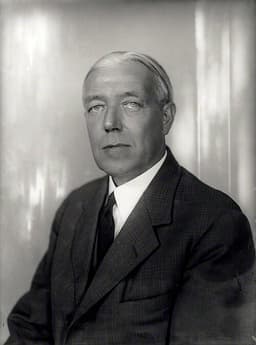
Vyner Brooke
Emperor · Modern
43.7Total
Basic Information
Born
1793
1874
Died
1875
1963
Era
Modern
Modern
Nationality
Austria
Great Britain
Occupation
Emperor
Emperor
Civilization
Western
Western
Score Comparison
Military (10%)
27.1
49.8
Political (20%)
29.3
35.1
Influence (20%)
45.5
47.1
Legacy (20%)
35.0
35.8
Leadership (15%)
45.0
58.8
Strategy (15%)
60.0
39.5
TOTAL
40.0
43.7
Ferdinand I of Austria — Complete Timeline
1835 AD
Accession to the Austrian ThronePolitical Action◆ Major
Ferdinand I became Emperor of Austria upon the death of his father Francis II. His reign was marked by his epilepsy and mental incapacity, leading to governance by a regency council dominated by Metternich.
SuccessionRegencyAustrian Empire
Impact: national
1848 AD
Revolutions of 1848 in the Austrian EmpirePolitical Action
A series of uprisings across the Austrian Empire demanded liberal reforms and national autonomy. Ferdinand I was forced to dismiss Metternich and promise a constitution, but the revolts were eventually suppressed.
RevolutionLiberal ReformsMetternich
Impact: regionaldestructive
Abdication in Favor of Franz JosephPolitical Action◆ Major
Under pressure from the court and military, Ferdinand I abdicated the throne in favor of his nephew Franz Joseph. This ended his ineffective reign and allowed a new, more capable ruler to take control.
AbdicationSuccessionFranz Joseph
Impact: national
Vyner Brooke — Complete Timeline
1917 AD
Succeeded as Rajah of SarawakPolitical Action◆ Major
Vyner Brooke succeeded his father Charles Brooke as the third White Rajah of Sarawak on May 24, 1917. He inherited a stable kingdom but faced challenges from modernization and growing nationalist movements in Southeast Asia.
SuccessionBorneoDynasty
Impact: regional
1941 AD
Japanese Occupation of SarawakWar◆ Major
Vyner Brooke evacuated Sarawak in December 1941 as Japanese forces invaded. The Japanese occupied Sarawak from 1941 to 1945, ending Brooke rule temporarily. Vyner Brooke administered the colony from Australia during the war.
World War IIJapanese OccupationBorneo
Impact: regionaltragic
Promulgation of the 1941 ConstitutionReform◆ Major
Vyner Brooke promulgated a constitution for Sarawak on September 24, 1941, which limited his absolute powers and established a Supreme Council and State Council. The constitution was suspended during the Japanese occupation but influenced post-war governance.
ConstitutionReformBorneo
Impact: regionalprogressive
1946 AD
Cession of Sarawak to the British CrownPolitical Action◆ Major
Vyner Brooke ceded Sarawak to the British Crown on July 1, 1946, ending the White Rajah dynasty. The cession followed World War II and was opposed by many Sarawakians, leading to political unrest and the assassination of the British governor in 1949.
CessionColonialismBorneo
Impact: regionaltragic
Expert Analysis
Origins
Ferdinand I of Austria was born on April 19, 1793, in Vienna, the eldest son of Emperor Francis II and Maria Theresa of Naples. He suffered from epilepsy and hydrocephalus, which caused severe cognitive impairments. His education was limited, and he was never expected to rule effectively. In contrast, Vyner Brooke was born on September 26, 1874, in England, the son of Charles Brooke, the second White Rajah of Sarawak. He was educated at Winchester College and in Switzerland, preparing for his future role in the remote Bornean kingdom. While Ferdinand inherited a vast European empire, Vyner grew up in the unique environment of a personal dynasty ruling over indigenous peoples.
Rise to Power
Ferdinand became Emperor of Austria on March 2, 1835, upon the death of his father. His incapacity was well-known, leading to a regency council dominated by Prince Metternich and Archduke Louis. Ferdinand's reign was marked by his inability to govern, with state affairs managed by advisors. Vyner Brooke succeeded his father on May 24, 1917, inheriting a stable but autocratic state. He had been involved in administration since 1907 and introduced reforms gradually. Unlike Ferdinand, Vyner actively participated in governance, though his leadership was often criticized as lax.
Leadership & Governance
Ferdinand's leadership was nominal; his score of 45.0 in Leadership reflects his figurehead status. He was unable to make decisions, and during the 1848 revolutions, he was forced to dismiss Metternich and promise reforms, but his abdication followed. Vyner Brooke scored higher at 58.8 in Leadership. He promulgated a constitution in 1941 that limited his absolute powers, establishing a Supreme Council and State Council. However, his governance was marked by indecisiveness during the Japanese occupation, and he eventually ceded Sarawak to Britain in 1946, ending the dynasty.
Triumph & Tragedy
Ferdinand's greatest success was surviving the 1848 revolutions without bloodshed on his part, but his tragedy was his incapacity and abdication on December 2, 1848, in favor of Franz Joseph. His reign saw the loss of Lombardy and Venetian territories. Vyner's triumph was the 1941 constitution, which introduced democratic elements. His tragedy was the Japanese occupation (1941-1945) and the controversial cession of Sarawak, which led to opposition and assassination attempts. Vyner's Political score of 35.1 is slightly higher than Ferdinand's 29.3, but both were ineffective in crisis.
Character & Destiny
Ferdinand was known for his simple-mindedness and reliance on others. His epilepsy limited his capacity, and he reportedly had only one coherent phrase: 'I am the Emperor and I want dumplings.' His destiny was to be a placeholder. Vyner was more capable but lazy and pleasure-seeking, preferring life in England. His character led to the end of the Brooke dynasty. Both lacked the drive to maintain power.
Legacy
Ferdinand's legacy is minimal; he is remembered as the last Habsburg to abdicate, paving the way for Franz Joseph's long reign. His scores: Legacy 35.0. Vyner's legacy is more complex: he ended the White Rajahs and integrated Sarawak into the British Empire, which later influenced Malaysian history. His scores: Legacy 35.8. The constitution he granted is a landmark.
Conclusion
Vyner Brooke had a greater impact, scoring 43.7 total vs Ferdinand's 40.0. While Ferdinand was a passive victim of events, Vyner actively shaped Sarawak's transition to colonial rule. His decisions ended a unique dynasty but laid foundations for modern governance. Ferdinand's reign was a failure of leadership, while Vyner's was a deliberate, if controversial, end of an era.
Rankings
🥇
Vyner BrookeLeader
Mil: 49.8Pol: 35.1Inf: 47.1
43.7
🥈
Ferdinand I of Austria
Mil: 27.1Pol: 29.3Inf: 45.5
40.0
+3.7 behind
How This Comparison Works
Algorithm
Each figure is scored on 6 dimensions (0—100 scale) based on structured historical data: Military (10%), Political (20%), Influence (20%), Legacy (20%), Leadership (15%), Strategy (15%). The weighted total produces the final ranking.
Data Sources
Scores are computed from structured sub-indicators in the database. Scale factors adjust for era (Ancient ×0.85, Modern ×1.0) and civilization size (Eastern ×1.05, Other ×0.80) to account for differences in population and military scale.
Maximum 3 Figures
Comparisons are limited to 2—3 figures to ensure readability and statistical meaningfulness.
Error Margins
±5 points per dimension — Sub-scores are derived from historical records with inherent uncertainty. Two figures within 5 points on a dimension should be considered roughly equivalent in that area.
Total Score Accuracy
±3 points overall — The weighted combination of 6 dimensions produces a total score with approximately ±3 points of uncertainty. Differences of less than 3 points are not statistically significant— the figures are effectively tied.
Known Limitations
- Historical records are incomplete and uneven across civilizations
- Figures from oral-tradition societies may be underrepresented
- Occupation labels can misclassify multi-role figures
- Scores measure capability and impact, not moral character
- Quantitative scoring is a comparison tool, not absolute truth
Capability Radar
Military (10%) — Battles & Warfare
Battles
36
23
Win Rate
38
25
Expansion
41
28
Political (20%) — Governance & Reform
Reform
10
20
Diplomacy
20
30
Economy
10
25
Influence (20%) — Cultural & Global Reach
Cultural
5
10
Global
5
10
Legacy (20%) — Historical Impact
Historical
15
15
Longevity
5
10
Leadership (15%) — Power & Stability
Tenure
30
40
Stability
5
15
Strategy (15%) — Tactics & Innovation
Strategy
48
35
Tactics
46
38
Reform
51
42
Similar Comparisons
Comments & Discussion
No comments yet. Be the first to share your thoughts!