Loading...
Feng Yuxiang vs Fu Zuoyi
Feng Yuxiang leads by 3.3 pts · 2 figures compared
…
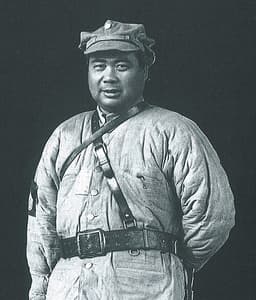
Feng Yuxiang
General · Modern
56.8Total

Fu Zuoyi
General · Modern
53.5Total
Basic Information
Born
1882
1895
Died
1948
1974
Era
Modern
Modern
Nationality
China
China
Occupation
General
General
Civilization
Eastern
Eastern
Score Comparison
Military (10%)
50.0
47.5
Political (20%)
62.7
68.0
Influence (20%)
58.0
55.7
Legacy (20%)
50.0
48.3
Leadership (15%)
62.0
48.8
Strategy (15%)
60.7
52.5
TOTAL
56.8
53.5
Feng Yuxiang — Complete Timeline
1914 AD
Conversion to ChristianityCultural
Feng Yuxiang converted to Christianity, earning him the nickname 'The Christian General'. He required his soldiers to attend Christian services and promoted Christian ethics within his army. This conversion was unusual among Chinese warlords and influenced his governance style.
ReligionChristianityWarlord
Impact: regionalconstructive
1924 AD
Beijing Coup of 1924Political Action◆ Major
Feng Yuxiang staged the Beijing Coup, overthrowing the Zhili clique government and capturing Beijing. He invited Sun Yat-sen to discuss national unification. The coup led to the establishment of a provisional government under Duan Qirui and temporarily shifted the balance of power among warlords.
CoupWarlord EraBeijing
Impact: national
1927 AD
Defection to the Nationalist GovernmentPolitical Action◆ Major
Feng Yuxiang defected from the Fengtian clique and allied with the Nationalist government under Chiang Kai-shek. He participated in the Northern Expedition, helping to defeat other warlords. This alliance strengthened the Nationalist cause but also led to conflicts with other warlords.
AllianceNationalistNorthern Expedition
Impact: nationalconstructive
1930 AD
Defeat in the Central Plains WarWar◆ Major
Feng Yuxiang joined the anti-Chiang Kai-shek coalition in the Central Plains War. His forces were defeated by Chiang's National Revolutionary Army. The defeat ended Feng's military power and forced him into retirement. He later fled to the Soviet Union.
WarDefeatWarlord
Impact: nationaldestructive
Fu Zuoyi — Complete Timeline
1937 AD
Commander of the Nationalist Forces in SuiyuanPolitical Action◆ Major
Fu Zuoyi was appointed commander of Nationalist forces in Suiyuan Province. He successfully defended the province against Japanese attacks and became a prominent regional warlord loyal to Chiang Kai-shek.
Military CommandSecond Sino-Japanese War
Impact: regional
1949 AD
Peaceful Surrender of BeijingPolitical Action
Fu Zuoyi, as the Nationalist commander of Beijing, negotiated a peaceful surrender of the city to the Chinese Communist Party. This avoided urban destruction and set a precedent for other Nationalist commanders to defect.
Chinese Civil WarSurrenderDefection
Impact: nationalconstructive
Minister of Water Resources of the People's Republic of ChinaPolitical Action◆ Major
After his surrender, Fu Zuoyi was appointed Minister of Water Resources in the new Communist government. He served in this role until 1972, overseeing major water conservancy projects.
GovernmentInfrastructureCommunist China
Impact: nationalconstructive
Expert Analysis
Origins
Feng Yuxiang was born in 1882 in Anhui Province into a poor military family. He joined the Qing army as a teenager and later served in the Beiyang Army under Yuan Shikai. With limited formal education, Feng rose through the ranks by cultivating loyalty among his troops. In 1914, he converted to Christianity, adopting strict moral codes and earning the nickname 'Christian General.'
Fu Zuoyi was born in 1895 in Shanxi Province to a modest farming family. He graduated from the Baoding Military Academy in 1918, a prestigious institution that produced many Nationalist commanders. Fu initially served under the warlord Yan Xishan, honing his skills in provincial administration and military strategy.
Rise to Power
Feng Yuxiang's rise accelerated during the early Republic period. In 1924, he executed the Beijing Coup, overthrowing the Zhili clique government and capturing Beijing. This audacious move made him a key player in national politics. He invited Sun Yat-sen to discuss unification, but the alliance collapsed after Sun's death. By 1926, Feng defected to the Nationalist government under Chiang Kai-shek, participating in the Northern Expedition against the Beiyang warlords.
Fu Zuoyi rose through the ranks under Yan Xishan. In 1931, he was appointed commander of Nationalist forces in Suiyuan Province. He successfully defended Suiyuan against Japanese attacks in 1933 and 1936, earning national recognition for his military competence. By the late 1930s, Fu controlled Suiyuan and parts of Chahar, establishing himself as a regional power broker.
Leadership & Governance
Feng Yuxiang led with a blend of Christian piety and authoritarian discipline. He required his soldiers to attend Christian services, banned opium and gambling, and promoted literacy. However, his governance was inconsistent: he allied with communists, then with nationalists, then rebelled against Chiang. His military score of 50.0 reflects mixed battlefield performance, while his political score of 62.7 indicates some skill in maneuvering.
Fu Zuoyi governed with pragmatism and administrative efficiency. In Suiyuan, he implemented land reforms, built infrastructure, and maintained order. He prioritized stability over ideology, which later enabled his peaceful surrender. Fu's political score of 68.0 is higher than Feng's, but his military score of 47.5 is lower.
Triumph & Tragedy
Feng's greatest triumph was the Beijing Coup of 1924, which reshaped the political landscape and briefly made him the arbiter of Chinese unification. His greatest tragedy was the Central Plains War (1930), where he allied with Yan Xishan and others against Chiang Kai-shek. Feng's forces were decisively defeated, ending his independent power. He spent his final years under virtual house arrest in Chongqing, dying in 1948.
Fu's triumph was the peaceful surrender of Beijing in 1949. By negotiating with the Communists, he avoided urban destruction and saved lives. He was rewarded with the position of Minister of Water Resources, serving until 1972. His tragedy was the loss of political autonomy: after surrender, he became a figurehead in the Communist government, with no independent base.
Character & Destiny
Feng Yuxiang was charismatic but impulsive. His conversion to Christianity was genuine but also a political tool to distinguish himself. He frequently changed allegiances, earning a reputation for unreliability. This pattern led to his isolation and defeat. Historians note that Feng scored 62.0 in leadership but lacked strategic consistency.
Fu Zuoyi was cautious and calculating. He prioritized the welfare of his people over political loyalty. His decision to surrender Beijing was pragmatic, recognizing the inevitable Communist victory. His 52.5 strategy score reflects careful risk assessment.
Legacy
Feng Yuxiang is remembered as a colorful warlord who briefly influenced national politics. His Beijing Coup demonstrated the power of military action in the chaotic Republican era. However, his legacy is overshadowed by his failures. He scored 50.0 in legacy, indicating limited long-term impact.
Fu Zuoyi's legacy is more enduring. His peaceful surrender model influenced other Nationalist commanders to follow suit, accelerating Communist victory. As Water Resources Minister, he contributed to flood control and irrigation projects. His legacy score of 48.3 is slightly lower than Feng's, but his impact on China's transition was more constructive.
Conclusion
While Feng Yuxiang had a higher overall score (56.8 vs 53.5), Fu Zuoyi's impact on China's history was more significant. Feng's military adventures and political maneuvering ultimately failed, while Fu's pragmatic surrender helped end the civil war with less destruction. In the long term, Fu's governance in Suiyuan and his role in water management had concrete benefits. Therefore, Fu Zuoyi had greater positive impact on China's development.
Rankings
🥇
Feng YuxiangLeader
Mil: 50.0Pol: 62.7Inf: 58.0
56.8
🥈
Fu Zuoyi
Mil: 47.5Pol: 68.0Inf: 55.7
53.5
+3.3 behind
How This Comparison Works
Algorithm
Each figure is scored on 6 dimensions (0—100 scale) based on structured historical data: Military (10%), Political (20%), Influence (20%), Legacy (20%), Leadership (15%), Strategy (15%). The weighted total produces the final ranking.
Data Sources
Scores are computed from structured sub-indicators in the database. Scale factors adjust for era (Ancient ×0.85, Modern ×1.0) and civilization size (Eastern ×1.05, Other ×0.80) to account for differences in population and military scale.
Maximum 3 Figures
Comparisons are limited to 2—3 figures to ensure readability and statistical meaningfulness.
Error Margins
±5 points per dimension — Sub-scores are derived from historical records with inherent uncertainty. Two figures within 5 points on a dimension should be considered roughly equivalent in that area.
Total Score Accuracy
±3 points overall — The weighted combination of 6 dimensions produces a total score with approximately ±3 points of uncertainty. Differences of less than 3 points are not statistically significant— the figures are effectively tied.
Known Limitations
- Historical records are incomplete and uneven across civilizations
- Figures from oral-tradition societies may be underrepresented
- Occupation labels can misclassify multi-role figures
- Scores measure capability and impact, not moral character
- Quantitative scoring is a comparison tool, not absolute truth
Capability Radar
Military (10%) — Battles & Warfare
Battles
55
55
Win Rate
50
50
Expansion
45
40
Political (20%) — Governance & Reform
Reform
60
30
Diplomacy
55
70
Economy
40
35
Influence (20%) — Cultural & Global Reach
Cultural
45
30
Global
35
25
Legacy (20%) — Historical Impact
Historical
50
50
Longevity
40
30
Leadership (15%) — Power & Stability
Tenure
50
55
Stability
35
50
Strategy (15%) — Tactics & Innovation
Strategy
55
65
Tactics
60
60
Reform
65
30
Similar Comparisons
Comments & Discussion
No comments yet. Be the first to share your thoughts!