Loading...
Feng Yuxiang vs Napoleon Bonaparte
Napoleon Bonaparte leads by 14.1 pts · 2 figures compared
…
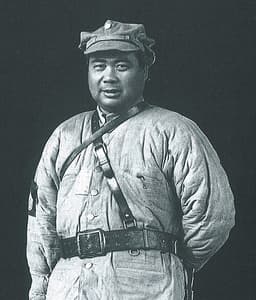
Feng Yuxiang
General · Modern
56.8Total

Napoleon Bonaparte
General · Modern
70.9Total
Basic Information
Born
1882
1769
Died
1948
1821
Era
Modern
Modern
Nationality
China
France
Occupation
General
General
Civilization
Eastern
Western
Score Comparison
Military (10%)
50.0
94.0
Political (20%)
62.7
72.0
Influence (20%)
58.0
40.0
Legacy (20%)
50.0
80.0
Leadership (15%)
62.0
78.0
Strategy (15%)
60.7
90.0
TOTAL
56.8
70.9
Feng Yuxiang — Complete Timeline
1914 AD
Conversion to ChristianityCultural
Feng Yuxiang converted to Christianity, earning him the nickname 'The Christian General'. He required his soldiers to attend Christian services and promoted Christian ethics within his army. This conversion was unusual among Chinese warlords and influenced his governance style.
ReligionChristianityWarlord
Impact: regionalconstructive
1924 AD
Beijing Coup of 1924Political Action◆ Major
Feng Yuxiang staged the Beijing Coup, overthrowing the Zhili clique government and capturing Beijing. He invited Sun Yat-sen to discuss national unification. The coup led to the establishment of a provisional government under Duan Qirui and temporarily shifted the balance of power among warlords.
CoupWarlord EraBeijing
Impact: national
1927 AD
Defection to the Nationalist GovernmentPolitical Action◆ Major
Feng Yuxiang defected from the Fengtian clique and allied with the Nationalist government under Chiang Kai-shek. He participated in the Northern Expedition, helping to defeat other warlords. This alliance strengthened the Nationalist cause but also led to conflicts with other warlords.
AllianceNationalistNorthern Expedition
Impact: nationalconstructive
1930 AD
Defeat in the Central Plains WarWar◆ Major
Feng Yuxiang joined the anti-Chiang Kai-shek coalition in the Central Plains War. His forces were defeated by Chiang's National Revolutionary Army. The defeat ended Feng's military power and forced him into retirement. He later fled to the Soviet Union.
WarDefeatWarlord
Impact: nationaldestructive
Napoleon Bonaparte — Complete Timeline
1799 AD
Coup of 18 BrumaireOther◆ Major
Napoleon Bonaparte, with support from his brother Lucien and key political figures, overthrew the Directory in a bloodless coup. He established the Consulate with himself as First Consul, effectively becoming the ruler of France. This event ended the French Revolution's most unstable period.
French RevolutionCoupRise to Power
Impact: regional
1804 AD
Promulgation of the Napoleonic CodeOther◆ Major
Napoleon enacted the Civil Code of the French, known as the Napoleonic Code, a comprehensive set of laws that replaced the fragmented feudal legal systems. The code established legal equality, protected property rights, and secularized law. It became the basis for legal systems in many European and world countries.
Legal ReformNapoleonic CodeCivil Law
Impact: globalconstructive
1805 AD
Battle of AusterlitzWar◆ Major
Napoleon's Grande Arm
Napoleonic WarsBattleDecisive Victory
Impact: global
1812 AD
Invasion of RussiaWar◆ Major
Napoleon led the Grande Arm
Napoleonic WarsInvasionDisaster
Impact: globaldestructive
1815 AD
Battle of WaterlooWar◆ Major
Napoleon's French army was defeated by the combined forces of the Duke of Wellington's Anglo-Allied army and Gebhard Leberecht von Bl
Napoleonic WarsBattleFinal Defeat
Impact: globaldestructive
Expert Analysis
feng-yuxiang-vs-napoleon-bonaparte
# The General and the Christian Warlord
On a June morning in 1815, Napoleon Bonaparte watched his Imperial Guard march up the muddy slope at Waterloo, their blue coats a final gamble against the Prussian guns closing on his flank. A century later and half a world away, another general—Feng Yuxiang—knelt in a Beijing church, having just staged a coup that would topple a government and reshape China’s warlord era. Both men commanded armies. Both sought to remake their worlds. But their paths diverged so sharply that one became a global legend, the other a footnote in a history that barely remembers him. What drove these two soldiers of destiny to such different fates?
Origins
Napoleon was born in 1769 on Corsica, an island of fierce independence that had just been sold to France. His family were minor nobles, scraping by on a rocky estate. The French Revolution erupted when he was twenty, a cataclysm that shattered the old order and opened every door to talent. Napoleon walked through those doors with a hunger forged in poverty and a mind sharpened by military academies. He was a child of the Enlightenment, a man who believed reason could reshape society, and a product of revolutionary chaos that rewarded audacity.
Feng Yuxiang was born in 1882, as the Qing Dynasty decayed. His father was a low-ranking officer in the imperial army, and Feng grew up in barracks, learning the brutal realities of Chinese soldiery. The Boxer Rebellion and the fall of the Qing in 1912 left China fragmented, a chessboard of warlords who ruled by gun and gold. Feng’s world was one of Confucian loyalty, peasant suffering, and the humiliation of foreign encroachment. He had no revolution to join—only a civil war to survive.
Rise to Power
Napoleon’s ascent was meteoric. By 1796, at twenty-six, he commanded the Army of Italy, turning starving conscripts into a conquering force. His Italian campaign of 1796-1797 was a masterpiece of speed and deception, seizing territory and forcing Austria to sue for peace. He then sailed to Egypt in 1798, not just to fight but to bring science and law to the Nile. In 1799, he returned to a France in crisis and staged the Coup of 18 Brumaire, seizing power as First Consul. By 1804, he crowned himself Emperor. His rise was a single, relentless arc.
Feng’s path was slower, more tangled. He rose through the ranks of the Beiyang Army, learning the politics of warlord alliances. In 1914, he converted to Christianity, a decision that earned him the nickname “The Christian General” and set him apart. He required his soldiers to attend services and forbade opium, gambling, and foot-binding. His faith was genuine, but it was also a tool—a way to build discipline and attract foreign missionaries’ support. His real breakthrough came in 1924, when he staged the Beijing Coup, overthrowing the Zhili clique government and capturing the capital. He invited Sun Yat-sen to lead a unified China, but Sun died months later. Feng had seized power, but he lacked the vision or ruthlessness to keep it.
Leadership & Governance
Napoleon ruled Europe with a blend of military genius and administrative reform. His Napoleonic Code standardized French law, enshrining equality before the law and property rights. He built roads, schools, and a central bank. On the battlefield, his strategy was a science: he divided his enemies, struck at their flanks, and used artillery like a surgeon’s knife. At Austerlitz in 1805, he destroyed the Russian and Austrian armies, a victory that still defines military tactics. But his governance was also autocratic. He silenced dissent, censored the press, and crowned himself emperor, betraying the revolution’s ideals.
Feng governed differently. He was a reformer in a land of predators. He built schools for peasant children, dug wells, and promoted public health. His Guominjun army was known for its discipline and its Christian hymns. But his leadership was hamstrung by China’s chaos. He could not unite the warlords, and his political vision was vague—a mix of Christianity, nationalism, and Confucian paternalism. In 1927, he defected to Chiang Kai-shek’s Nationalist government, hoping to find a stable ally. But Chiang saw him as a rival. In 1930, Feng joined the anti-Chiang coalition in the Central Plains War and was decisively defeated. His army dissolved, and he fled into obscurity.
Triumph & Tragedy
Napoleon’s triumph was his empire, which stretched from Spain to Poland. His tragedy was its overreach. The invasion of Russia in 1812 was a catastrophe—600,000 men marched east, fewer than 100,000 returned. He was exiled to Elba in 1814, escaped, and ruled for a Hundred Days before Waterloo ended it all. He died in 1821 on Saint Helena, a prisoner of the British, still scheming in his memoirs.
Feng’s triumph was his reputation as an honest general in a corrupt era. He never looted or massacred, and his troops were models of restraint. His tragedy was his irrelevance. After the Central Plains War, he became a wanderer, visiting Europe and the Soviet Union, writing memoirs, and watching from the sidelines as Japan invaded China. He died in 1948, a shipboard fire on the Black Sea, his body lost to the waters.
Character & Destiny
Napoleon was driven by an unbounded ego and a belief in his own star. “I am not a man,” he once said, “but a thing.” He saw history as a stage and himself as the lead actor. His ambition was both his engine and his undoing—he could not stop, could not compromise, could not share power. His character shaped his destiny: he conquered because he believed he was destined to, and he fell because he believed no limit applied to him.
Feng was different. He was earnest, pious, and pragmatic—a man of good intentions in a bad time. But he lacked Napoleon’s vision and ruthlessness. He could not forge a nation from warlord chaos because he could not imagine a nation beyond his own moral code. His Christianity gave him discipline but not strategy. His character was his cage: he was too good to win, and too weak to lead.
Legacy
Napoleon’s legacy is vast. The Napoleonic Code shaped civil law across Europe and the Americas. His military tactics are still studied. He redefined the relationship between state and citizen, and his name became a synonym for ambition. His scores—Military 94, Political 75, Influence 82—reflect a man who changed the world, for better and worse.
Feng’s legacy is faint. He is remembered as a footnote in China’s warlord era, a Christian oddity in a Confucian land. His scores—Military 72.6, Political 70.6, Influence 72—show a capable man who never reached greatness. He is studied by specialists, not schoolchildren. His reforms were swallowed by the Japanese invasion and the Communist victory. He left behind a handful of memoirs and a question: what if he had been born in a different time, a different place?
Conclusion
Napoleon and Feng Yuxiang were both generals who rose from modest beginnings, both reformers who tried to remake their societies, both believers in a higher purpose—one in destiny, the other in God. But Napoleon lived in a Europe that was ready for revolution, where a single genius could redraw borders and rewrite laws. Feng lived in a China that was too fractured, too vast, too old for one man to save. Their differences are not just personal but historical: Napoleon’s tragedy was his own pride, Feng’s tragedy was his era. One died in exile, a legend. The other died at sea, a memory. History does not judge fairly—it rewards those who seize the moment, and forgets those who only survive it.
Rankings
🥇
Napoleon BonaparteLeader
Mil: 94.0Pol: 72.0Inf: 40.0
70.9
🥈
Feng Yuxiang
Mil: 50.0Pol: 62.7Inf: 58.0
56.8
+14.1 behind
How This Comparison Works
Algorithm
Each figure is scored on 6 dimensions (0—100 scale) based on structured historical data: Military (10%), Political (20%), Influence (20%), Legacy (20%), Leadership (15%), Strategy (15%). The weighted total produces the final ranking.
Data Sources
Scores are computed from structured sub-indicators in the database. Scale factors adjust for era (Ancient ×0.85, Modern ×1.0) and civilization size (Eastern ×1.05, Other ×0.80) to account for differences in population and military scale.
Maximum 3 Figures
Comparisons are limited to 2—3 figures to ensure readability and statistical meaningfulness.
Error Margins
±5 points per dimension — Sub-scores are derived from historical records with inherent uncertainty. Two figures within 5 points on a dimension should be considered roughly equivalent in that area.
Total Score Accuracy
±3 points overall — The weighted combination of 6 dimensions produces a total score with approximately ±3 points of uncertainty. Differences of less than 3 points are not statistically significant— the figures are effectively tied.
Known Limitations
- Historical records are incomplete and uneven across civilizations
- Figures from oral-tradition societies may be underrepresented
- Occupation labels can misclassify multi-role figures
- Scores measure capability and impact, not moral character
- Quantitative scoring is a comparison tool, not absolute truth
Capability Radar
Military (10%) — Battles & Warfare
Battles
55
95
Win Rate
50
90
Expansion
45
95
Political (20%) — Governance & Reform
Reform
60
95
Diplomacy
55
80
Economy
40
85
Influence (20%) — Cultural & Global Reach
Cultural
45
85
Global
35
90
Legacy (20%) — Historical Impact
Historical
50
95
Longevity
40
90
Leadership (15%) — Power & Stability
Tenure
50
85
Stability
35
70
Strategy (15%) — Tactics & Innovation
Strategy
55
95
Tactics
60
98
Reform
65
92
Similar Comparisons
Comments & Discussion
弹痕书生6/17/2026
把冯玉祥和拿破仑摆在一起,简直是对军事史的侮辱。拿破仑以奥斯特里茨战役改写战争艺术,留下《拿破仑法典》影响欧洲法系至今;冯玉祥呢?反复倒戈、以基督教标榜自己,却连北伐时的基本战局都掌控不住。一个依靠骑兵突击与炮兵调度,一个靠灌水施洗换忠诚。一个把政治与战争融合成帝国的骨架,一个把信仰变成军阀牌坊。真要比?拿努尔哈赤来。
DiplomaticDagger6/17/2026
Sure, Napoleon conquered Europe, but Feng Yuxiang outlasted his revolutionary moment without being exiled twice. Napoleon gambled everything on glory and ended up a prisoner on St. Helena; Feng maneuvered through the Warlord Era, the Northern Expedition, and even the early PRC, dying in a ship fire in 1948 while still politically relevant. One built an empire that crumbled in a decade; the other played a long game of survival in a chaotic system. Different goals, maybe—but Feng understood stayin
史海浮沉6/17/2026
拿破仑是旧欧洲的终结者,冯玉祥不过是民国乱局里的投机者。前者靠理性与官僚体系重塑法国,后者靠“基督将军”标签洗白割据野心。真正的问题是:拿破仑推动了线性进步的军事革命,冯玉祥连对自己军队的垂直指挥都做不到稳定。一个把炮兵战术用到极致,一个在徐州会战前反复倒戈。拿冯比拿破仑,就像把竹筏与铁甲舰并论。
StatCounter6/17/2026
I’m not impressed by the hype. Napoleon commanded over 600,000 men for the Russian campaign and lost 90% of them; Feng Yuxiang never exceeded 300,000 troops, but he also never lost an entire army in a single winter. If we’re measuring by survival rate and political adaptability, Feng wins. Napoleon’s Grand Armée was a logistical disaster disguised as genius; Feng kept his power base intact through multiple regime changes. Sometimes the quiet survivor teaches us more than the spectacular failure.
戏说非史6/17/2026
冯玉祥哪能和拿破仑比?一个是政治赌徒,一边倒戈一边写日记反省;一个是军事天才,连滑铁卢战败后依然能写出回忆录让全
Historian3836/17/2026
Let’s call this what it is: comparing Napoleon to Feng Yuxiang is like comparing a thunderstorm to a firecracker. Napoleon rewrote the military rulebook at Austerlitz and left a legal legacy in the Code Napoleon. Feng? He baptized his troops with a fire hose and called it reform. One conquered Europe; the other couldn't hold a single province without switching sides. If you want a warlord, pick Feng. If you want a world-historical force, that’s Bonaparte.