Loading...
This comparison has not been analyzed yet.
One-time AI generation (~1 minute). Scores and timeline are already available below.
Fayez al-Sarraj vs Thorbjorn Falldin
Thorbjorn Falldin leads by 4.9 pts · 2 figures compared
…
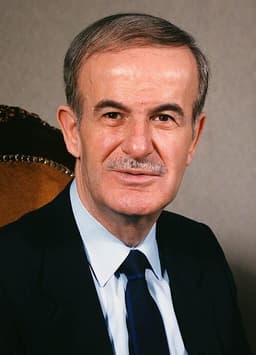
Fayez al-Sarraj
Politician · Modern
41.3Total

Thorbjorn Falldin
Politician · Modern
46.2Total
Basic Information
Born
1960
1926
Died
—
—
Era
Modern
Modern
Nationality
Libya
Sweden
Occupation
Politician
Politician
Civilization
Middle Eastern
Western
Score Comparison
Military (10%)
29.8
50.0
Political (20%)
30.8
43.7
Influence (20%)
47.1
47.1
Legacy (20%)
37.5
39.2
Leadership (15%)
48.4
58.8
Strategy (15%)
52.8
43.0
TOTAL
41.3
46.2
Fayez al-Sarraj — Complete Timeline
2015 AD
Signing of the Libyan Political AgreementPolitical Action◆ Major
Al-Sarraj signed the Libyan Political Agreement on December 17, 2015, in Skhirat, Morocco. This UN-brokered deal established the GNA as the unity government, though it was rejected by the eastern parliament.
Peace AgreementUnity Government
Impact: nationalconstructive
2016 AD
Appointment as GNA Prime MinisterPolitical Action
Fayez al-Sarraj was appointed Prime Minister of the UN-backed Government of National Accord (GNA) on March 30, 2016. He arrived in Tripoli by sea to establish the government, facing opposition from rival factions.
Government FormationUN Process
Impact: nationalconstructive
2019 AD
Defense of Tripoli Against LNA OffensiveWar◆ Major
Al-Sarraj's GNA forces successfully defended Tripoli against the LNA offensive launched in April 2019. With Turkish military support, the GNA repelled the attack and regained territory by June 2020.
DefenseCivil War
Impact: national
2020 AD
Resignation AnnouncementPolitical Action◆ Major
Al-Sarraj announced his intention to resign on September 16, 2020, citing frustration with political infighting. He stepped down in March 2021 after the formation of a new interim government.
ResignationPolitical Transition
Impact: nationaltragic
Thorbjorn Falldin — Complete Timeline
1976 AD
Became Prime Minister of SwedenPolitical Action
On October 8, 1976, F
CoalitionNon-SocialistPolitical Shift
Impact: national
1978 AD
Coalition Government CollapsePolitical Action◆ Major
In October 1978, F
CoalitionNuclear PowerGovernment Crisis
Impact: national
1979 AD
Returned as Prime MinisterPolitical Action
After the 1979 election, F
CoalitionElectionGovernment
Impact: national
1980 AD
Nuclear Power ReferendumPolitical Action◆ Major
Fälldin's government held a national referendum on nuclear power in March 1980. The result led to a decision to phase out nuclear power by 2010, though the policy was later modified. The issue divided his coalition and contributed to its collapse.
Nuclear PowerReferendumEnergy Policy
Impact: national
1982 AD
Resigned as Prime MinisterPolitical Action◆ Major
Fälldin resigned as Prime Minister in October 1982 after the Social Democrats won the general election. His tenure was marked by economic difficulties, including high inflation and unemployment, and the failure to maintain stable coalition governments.
ResignationElectionEconomic Crisis
Impact: national
This comparison has not been analyzed yet.
One-time AI generation (~1 minute). Scores and timeline are already available below.
Rankings
🥇
Thorbjorn FalldinLeader
Mil: 50.0Pol: 43.7Inf: 47.1
46.2
🥈
Fayez al-Sarraj
Mil: 29.8Pol: 30.8Inf: 47.1
41.3
+4.9 behind
How This Comparison Works
Algorithm
Each figure is scored on 6 dimensions (0—100 scale) based on structured historical data: Military (10%), Political (20%), Influence (20%), Legacy (20%), Leadership (15%), Strategy (15%). The weighted total produces the final ranking.
Data Sources
Scores are computed from structured sub-indicators in the database. Scale factors adjust for era (Ancient ×0.85, Modern ×1.0) and civilization size (Eastern ×1.05, Other ×0.80) to account for differences in population and military scale.
Maximum 3 Figures
Comparisons are limited to 2—3 figures to ensure readability and statistical meaningfulness.
Error Margins
±5 points per dimension — Sub-scores are derived from historical records with inherent uncertainty. Two figures within 5 points on a dimension should be considered roughly equivalent in that area.
Total Score Accuracy
±3 points overall — The weighted combination of 6 dimensions produces a total score with approximately ±3 points of uncertainty. Differences of less than 3 points are not statistically significant— the figures are effectively tied.
Known Limitations
- Historical records are incomplete and uneven across civilizations
- Figures from oral-tradition societies may be underrepresented
- Occupation labels can misclassify multi-role figures
- Scores measure capability and impact, not moral character
- Quantitative scoring is a comparison tool, not absolute truth
Capability Radar
Military (10%) — Battles & Warfare
Battles
5
27
Win Rate
5
35
Expansion
5
33
Political (20%) — Governance & Reform
Reform
20
40
Diplomacy
25
35
Economy
15
30
Influence (20%) — Cultural & Global Reach
Cultural
10
10
Global
10
10
Legacy (20%) — Historical Impact
Historical
15
20
Longevity
10
15
Leadership (15%) — Power & Stability
Tenure
30
30
Stability
10
25
Strategy (15%) — Tactics & Innovation
Strategy
5
40
Tactics
5
41
Reform
5
43
Similar Comparisons
Comments & Discussion
No comments yet. Be the first to share your thoughts!