Loading...
F. W. de Klerk vs Thorbjorn Falldin
F. W. de Klerk leads by 8.5 pts · 2 figures compared
…

F. W. de Klerk
Politician · Modern
54.7Total
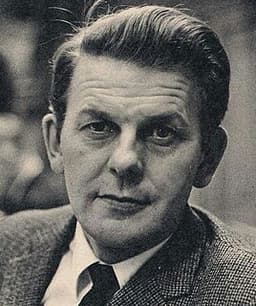
Thorbjorn Falldin
Politician · Modern
46.2Total
Basic Information
Born
1936
1926
Died
—
—
Era
Modern
Modern
Nationality
South Africa
Sweden
Occupation
Politician
Politician
Civilization
Other
Western
Score Comparison
Military (10%)
16.7
50.0
Political (20%)
70.0
43.7
Influence (20%)
58.3
47.1
Legacy (20%)
52.0
39.2
Leadership (15%)
74.0
58.8
Strategy (15%)
38.3
43.0
TOTAL
54.7
46.2
F. W. de Klerk — Complete Timeline
1989 AD
Became Leader of the National PartyPolitical Action◆ Major
F. W. de Klerk was elected leader of the National Party, succeeding P. W. Botha. He became State President of South Africa later that year, inheriting a country under international sanctions and internal unrest.
LeadershipSouth AfricaApartheid
Impact: national
1990 AD
Unbanned ANC and Freed MandelaPolitical Action
De Klerk announced the unbanning of the African National Congress (ANC) and other liberation movements, and ordered the release of Nelson Mandela after 27 years in prison. This was a pivotal step towards ending apartheid.
ApartheidMandelaSouth Africa
Impact: globalconstructive
Negotiated End of ApartheidPolitical Action
De Klerk led the National Party in negotiations with the ANC and other parties to dismantle apartheid. The negotiations resulted in the 1993 Interim Constitution and the first multi-racial elections in 1994.
NegotiationsApartheidSouth Africa
Impact: globalconstructive
1993 AD
Won Nobel Peace PrizeCultural◆ Major
De Klerk shared the Nobel Peace Prize with Nelson Mandela for their roles in the peaceful transition from apartheid to democracy. The award recognized their efforts in negotiating a peaceful end to racial segregation.
Nobel PrizePeaceSouth Africa
Impact: globalconstructive
1994 AD
Served as Deputy President Under MandelaPolitical Action◆ Major
After the 1994 elections, de Klerk served as Deputy President in Nelson Mandela's Government of National Unity. He held the position until 1996, when the National Party withdrew from the coalition.
Government of National UnitySouth AfricaTransition
Impact: nationalconstructive
1996 AD
Apologized for ApartheidPolitical Action◆ Major
De Klerk publicly apologized for apartheid, stating that the policy was morally wrong and had caused immense suffering. The apology was seen as a significant gesture of reconciliation.
ApologyReconciliationSouth Africa
Impact: nationalconstructive
Thorbjorn Falldin — Complete Timeline
1976 AD
Became Prime Minister of SwedenPolitical Action
On October 8, 1976, F
CoalitionNon-SocialistPolitical Shift
Impact: national
1978 AD
Coalition Government CollapsePolitical Action◆ Major
In October 1978, F
CoalitionNuclear PowerGovernment Crisis
Impact: national
1979 AD
Returned as Prime MinisterPolitical Action
After the 1979 election, F
CoalitionElectionGovernment
Impact: national
1980 AD
Nuclear Power ReferendumPolitical Action◆ Major
Fälldin's government held a national referendum on nuclear power in March 1980. The result led to a decision to phase out nuclear power by 2010, though the policy was later modified. The issue divided his coalition and contributed to its collapse.
Nuclear PowerReferendumEnergy Policy
Impact: national
1982 AD
Resigned as Prime MinisterPolitical Action◆ Major
Fälldin resigned as Prime Minister in October 1982 after the Social Democrats won the general election. His tenure was marked by economic difficulties, including high inflation and unemployment, and the failure to maintain stable coalition governments.
ResignationElectionEconomic Crisis
Impact: national
Expert Analysis
Origins
F. W. de Klerk was born on March 18, 1936, in Johannesburg, South Africa, into a prominent Afrikaner political family. His father, Jan de Klerk, served as a minister in the apartheid government, and his uncle was Prime Minister J. G. Strijdom. De Klerk studied law at Potchefstroom University, graduating in 1958, and practiced as a lawyer before entering politics. His background was deeply rooted in the National Party and the apartheid system.
Thorbjorn Falldin was born on April 24, 1926, in Högsjö, Sweden, to a farming family. He did not attend university but took over the family farm, becoming a farmer. His political career began in the Centre Party (formerly the Agrarian Party), which represented rural interests. Falldin's lack of formal higher education contrasted with de Klerk's legal training, but his agricultural background connected him with Sweden's rural voters.
Rise to Power
De Klerk rose through the ranks of the National Party, becoming a member of parliament in 1972. He held several ministerial posts, including Education and Energy, before being elected leader of the National Party in February 1989, succeeding P. W. Botha. He became State President in September 1989, inheriting a country in crisis due to international sanctions and internal unrest.
Falldin entered the Swedish parliament in 1958 and became leader of the Centre Party in 1971. He led the party to electoral gains, and in the 1976 general election, the non-socialist coalition won a majority, ending 44 years of Social Democratic rule. On October 8, 1976, Falldin became Prime Minister, heading a three-party coalition government.
Leadership & Governance
De Klerk's leadership was defined by his decision to dismantle apartheid. In his opening address to parliament on February 2, 1990, he announced the unbanning of the ANC and other liberation movements and the release of Nelson Mandela. He engaged in negotiations with the ANC, leading to the 1993 Interim Constitution and the first democratic elections in 1994. His governance style was pragmatic and reformist, but he maintained control over the security forces during the transition. Politically, de Klerk scored 70.0, reflecting his ability to navigate complex negotiations.
Falldin's leadership was marked by coalition management and economic challenges. His government faced high inflation and unemployment, and his promise to phase out nuclear power led to internal conflict. In March 1980, a referendum resulted in a decision to phase out nuclear power, but the policy was later reversed. His first coalition collapsed in 1978 over nuclear power disagreements. He returned as Prime Minister after the 1979 election but resigned in 1982 after electoral defeat. His political score of 43.7 indicates less effective governance compared to de Klerk.
Triumph & Tragedy
De Klerk's greatest triumph was negotiating the peaceful end of apartheid, for which he shared the Nobel Peace Prize with Mandela in 1993. He successfully transitioned South Africa to democracy, avoiding a racial civil war. However, his tragedy was that he lost power to the ANC; he served as Deputy President from 1994 to 1996 but then left politics. Many Afrikaners viewed him as a traitor for dismantling apartheid, and his legacy is mixed: he scored 52.0 in legacy, lower than his political score.
Falldin's triumph was breaking the Social Democrats' long hold on power, demonstrating that non-socialist coalitions could govern Sweden. His tragedy was the failure to implement lasting reforms; economic problems persisted, and his coalition was unstable. The nuclear power referendum, while a democratic exercise, did not resolve the issue. His legacy score of 39.2 reflects limited long-term impact.
Character & Destiny
De Klerk was pragmatic and cautious, willing to change his stance on apartheid when faced with reality. He was a skilled negotiator but often seen as aloof. His character allowed him to make the bold decision to release Mandela, but his reluctance to fully embrace change hurt his legacy. He scored 74.0 in leadership, indicating strong decision-making.
Falldin was principled but indecisive, often caught between coalition partners. His farming background made him appear trustworthy, but he lacked the political acumen to manage crises. His leadership score of 58.8 reflects moderate effectiveness. His destiny was to be a transitional figure, overshadowed by the return of the Social Democrats.
Legacy
De Klerk's legacy is the end of apartheid and the establishment of a democratic South Africa. His political score of 70.0 and influence of 58.3 highlight his role in a historic transformation. However, his legacy is contested; some view him as a reformer, others as a last-ditch apartheid leader.
Falldin's legacy is more modest. He proved that non-socialist governments could rule, but his tenure was brief and unstable. His influence score of 47.1 and legacy of 39.2 suggest limited lasting impact. Sweden returned to Social Democratic rule after his resignation.
Conclusion
F. W. de Klerk had a greater impact than Thorbjorn Falldin. De Klerk's total score of 54.7 is 8.5 points higher than Falldin's 46.2. De Klerk's actions ended a system of racial oppression and set South Africa on a new path, while Falldin's premiership was a temporary break in Sweden's socialist dominance. De Klerk's political score of 70.0 and leadership of 74.0 far exceed Falldin's 43.7 and 58.8. Although both faced challenges, de Klerk's role in a global historical shift outweighs Falldin's local political achievement.
Rankings
🥇
F. W. de KlerkLeader
Mil: 16.7Pol: 70.0Inf: 58.3
54.7
🥈
Thorbjorn Falldin
Mil: 50.0Pol: 43.7Inf: 47.1
46.2
+8.5 behind
How This Comparison Works
Algorithm
Each figure is scored on 6 dimensions (0—100 scale) based on structured historical data: Military (10%), Political (20%), Influence (20%), Legacy (20%), Leadership (15%), Strategy (15%). The weighted total produces the final ranking.
Data Sources
Scores are computed from structured sub-indicators in the database. Scale factors adjust for era (Ancient ×0.85, Modern ×1.0) and civilization size (Eastern ×1.05, Other ×0.80) to account for differences in population and military scale.
Maximum 3 Figures
Comparisons are limited to 2—3 figures to ensure readability and statistical meaningfulness.
Error Margins
±5 points per dimension — Sub-scores are derived from historical records with inherent uncertainty. Two figures within 5 points on a dimension should be considered roughly equivalent in that area.
Total Score Accuracy
±3 points overall — The weighted combination of 6 dimensions produces a total score with approximately ±3 points of uncertainty. Differences of less than 3 points are not statistically significant— the figures are effectively tied.
Known Limitations
- Historical records are incomplete and uneven across civilizations
- Figures from oral-tradition societies may be underrepresented
- Occupation labels can misclassify multi-role figures
- Scores measure capability and impact, not moral character
- Quantitative scoring is a comparison tool, not absolute truth
Capability Radar
Military (10%) — Battles & Warfare
Battles
22
27
Win Rate
22
35
Expansion
25
33
Political (20%) — Governance & Reform
Reform
85
40
Diplomacy
80
35
Economy
50
30
Influence (20%) — Cultural & Global Reach
Cultural
55
10
Global
65
10
Legacy (20%) — Historical Impact
Historical
70
20
Longevity
60
15
Leadership (15%) — Power & Stability
Tenure
60
30
Stability
30
25
Strategy (15%) — Tactics & Innovation
Strategy
32
40
Tactics
35
41
Reform
39
43
Similar Comparisons
Comments & Discussion
No comments yet. Be the first to share your thoughts!