Loading...
Faure Gnassingbe vs Herbert Hoover
Herbert Hoover leads by 6.6 pts · 2 figures compared
…

Faure Gnassingbe
Politician · Modern
47.2Total
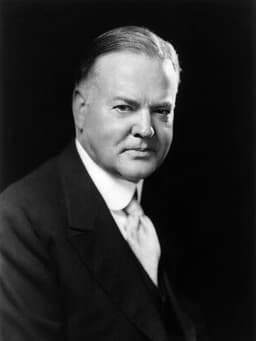
Herbert Hoover
Politician · Modern
53.8Total
Basic Information
Born
1966
1874
Died
—
1964
Era
Modern
Modern
Nationality
Togo
United States
Occupation
Politician
Politician
Civilization
Other
Western
Score Comparison
Military (10%)
50.0
49.1
Political (20%)
39.4
54.7
Influence (20%)
47.1
58.0
Legacy (20%)
36.7
49.2
Leadership (15%)
74.0
65.0
Strategy (15%)
42.8
41.8
TOTAL
47.2
53.8
Faure Gnassingbe — Complete Timeline
2005 AD
Became President of Togo After Father's DeathPolitical Action◆ Major
After the death of President Gnassingb
TogoSuccessionConstitutional Crisis
Impact: nationaldestructive
Elected President of TogoPolitical Action◆ Major
Gnassingbé won the presidential election with 60.2% of the vote, though the election was marred by allegations of fraud and violence. He succeeded his father, extending the Eyadéma dynasty's rule.
TogoElectionEyadéma Dynasty
Impact: national
2015 AD
Reelected for Third TermPolitical Action
Gnassingbé won a third presidential term with 58.8% of the vote. The election was boycotted by the opposition and criticized internationally, but Gnassingbé remained in power, continuing his family's long rule.
TogoElectionControversy
Impact: national
Herbert Hoover — Complete Timeline
1928 AD
Election as President of the United StatesPolitical Action◆ Major
Hoover, a Republican, won the 1928 presidential election in a landslide against Democrat Al Smith. Hoover's reputation as a successful businessman and humanitarian, particularly for his relief work in Europe during and after World War I, contributed to his victory.
Presidential ElectionRepublican Party
Impact: national
1929 AD
Stock Market Crash of 1929Other
The Wall Street Crash of 1929 occurred in October, marking the beginning of the Great Depression. Hoover's response, including calls for voluntary cooperation and limited federal intervention, was widely criticized as inadequate, and the depression deepened.
Great DepressionEconomic Crisis
Impact: globaltragic
1930 AD
Signing of the Smoot-Hawley TariffPolitical Action◆ Major
Hoover signed the Smoot-Hawley Tariff, which raised tariffs on thousands of imported goods to record levels. The tariff sparked retaliatory measures from other countries, contributing to a collapse in international trade and worsening the Great Depression.
Tariff PolicyGreat Depression
Impact: globaldestructive
Expert Analysis
Origins
Faure Gnassingbe was born on June 6, 1966, in Afagnan, Togo, into the ruling family of President Gnassingbe Eyadema, who had seized power in a 1967 coup. Faure studied at the University of Paris-Dauphine and later at the Sorbonne, earning a degree in finance. He worked briefly in the private sector before entering politics in 2002 as a deputy in Togo's National Assembly. His entire life was shaped by his father's autocratic rule, which lasted 38 years.
Herbert Hoover was born on August 10, 1874, in West Branch, Iowa, to a Quaker family. Orphaned by age nine, he was raised by relatives and worked his way through Stanford University, graduating in 1895 with a degree in geology. He became a successful mining engineer and businessman, amassing a fortune by managing mines on several continents. His humanitarian work during World War I, leading relief efforts in Belgium and later as U.S. Food Administrator, earned him international acclaim.
Rise to Power
Faure Gnassingbe rose to power abruptly on February 5, 2005, when his father died. The military, loyal to the Eyadema family, immediately installed Faure as president, bypassing the constitutional line of succession that called for the parliamentary speaker to take over. International condemnation forced him to step down and hold elections in April 2005, which he won with 60.2% of the vote amid allegations of fraud and violence. His rise was entirely dynastic, leveraging his father's legacy and military support.
Hoover's rise was meritocratic. He entered politics as U.S. Food Administrator under President Woodrow Wilson in 1917, then served as Secretary of Commerce under Presidents Harding and Coolidge from 1921 to 1928. He was a highly visible and effective administrator, promoting efficiency and business cooperation. In 1928, he won the presidency in a landslide over Democrat Al Smith, carrying 40 states. His reputation as a humanitarian and technocrat was at its peak.
Leadership & Governance
Gnassingbe's leadership is characterized by consolidation of power and suppression of dissent. He has won three presidential elections (2005, 2010, 2015) with 58-60% of the vote, each marred by opposition boycotts and international criticism. His government has been accused of human rights abuses, including crackdowns on protests in 2005 and 2017. He amended the constitution in 2019 to reset term limits, potentially allowing him to rule until 2030. Economically, Togo has seen modest growth under his rule, but poverty remains widespread, and the country ranks low on corruption indexes. His political score of 39.4 reflects this authoritarian style.
Hoover's governance was defined by his response to the Great Depression. He believed in voluntary cooperation between business and government, opposing direct federal relief. He signed the Smoot-Hawley Tariff Act in 1930, which raised tariffs to historic highs and triggered retaliatory measures, worsening global trade. He created the Reconstruction Finance Corporation to support banks and businesses, but it was too little, too late. His leadership score of 65.0 is tempered by his failure to adapt. By 1932, unemployment had reached 25%, and his approval ratings had collapsed.
Triumph & Tragedy
Gnassingbe's greatest success is maintaining stability and his family's grip on power for over 15 years, navigating Togo through regional instability. He has also overseen infrastructure projects like the port of Lome, which has become a regional hub. His tragedy is the lack of democratic progress: Togo remains a one-party state in practice, with political opponents jailed and press freedoms curtailed. His legacy score of 36.7 reflects this mixed record.
Hoover's triumph was his humanitarian work before the presidency. He saved millions from starvation in Belgium and Russia, and his food administration kept the U.S. military supplied. As president, his tragedy was the Depression. Despite his best efforts, he was unable to reverse the economic collapse, and his policies arguably worsened it. His legacy score of 49.2 is higher than Gnassingbe's, but his reputation is deeply tarnished by the Depression.
Character & Destiny
Gnassingbe is pragmatic and cautious, but also ruthless when challenged. His destiny is tied to his father's legacy; he inherited a system of patronage and military control. He has shown willingness to use force to stay in power, as in 2005 when security forces killed hundreds of protesters. His strategy score of 42.8 indicates a focus on survival over long-term transformation.
Hoover was a technocrat, deeply principled in his belief in individualism and limited government. His Quaker upbringing made him averse to coercion, which hampered his ability to act decisively. His destiny was to be president at the worst possible time. His character—his stubbornness and faith in voluntary solutions—became his undoing, as he resisted the kind of massive federal intervention that might have alleviated the Depression.
Legacy
Gnassingbe's legacy is that of a dynastic autocrat who preserved his family's rule in a small West African nation. He is likely to be remembered as a continuity figure, not a transformative leader. His influence score of 47.1 is modest, as his impact is largely confined to Togo.
Hoover's legacy is more complex. He is remembered primarily as the president who failed to stop the Great Depression, but his earlier humanitarian work and his post-presidential service (including chairing the Hoover Commission on government reorganization) have partially rehabilitated his reputation. His influence score of 58.0 reflects his broader impact on U.S. and global policy, particularly his role in shaping American isolationism and the New Deal's reaction.
Conclusion
Herbert Hoover had a greater impact on world history than Faure Gnassingbe. Despite his failure during the Depression, Hoover's pre-presidential humanitarian efforts saved millions of lives, and his presidency shaped the American response to economic crisis, influencing the New Deal and subsequent policy. Gnassingbe, by contrast, has maintained a small, impoverished country under authoritarian rule without significant global influence. Hoover's total score of 53.8 versus Gnassingbe's 47.2 reflects this difference. While both leaders faced crises they could not fully overcome, Hoover's broader historical footprint, including his role in the Smoot-Hawley Tariff and the RFC, makes him the more consequential figure.
Rankings
🥇
Herbert HooverLeader
Mil: 49.1Pol: 54.7Inf: 58.0
53.8
🥈
Faure Gnassingbe
Mil: 50.0Pol: 39.4Inf: 47.1
47.2
+6.6 behind
How This Comparison Works
Algorithm
Each figure is scored on 6 dimensions (0—100 scale) based on structured historical data: Military (10%), Political (20%), Influence (20%), Legacy (20%), Leadership (15%), Strategy (15%). The weighted total produces the final ranking.
Data Sources
Scores are computed from structured sub-indicators in the database. Scale factors adjust for era (Ancient ×0.85, Modern ×1.0) and civilization size (Eastern ×1.05, Other ×0.80) to account for differences in population and military scale.
Maximum 3 Figures
Comparisons are limited to 2—3 figures to ensure readability and statistical meaningfulness.
Error Margins
±5 points per dimension — Sub-scores are derived from historical records with inherent uncertainty. Two figures within 5 points on a dimension should be considered roughly equivalent in that area.
Total Score Accuracy
±3 points overall — The weighted combination of 6 dimensions produces a total score with approximately ±3 points of uncertainty. Differences of less than 3 points are not statistically significant— the figures are effectively tied.
Known Limitations
- Historical records are incomplete and uneven across civilizations
- Figures from oral-tradition societies may be underrepresented
- Occupation labels can misclassify multi-role figures
- Scores measure capability and impact, not moral character
- Quantitative scoring is a comparison tool, not absolute truth
Capability Radar
Military (10%) — Battles & Warfare
Battles
24
30
Win Rate
23
29
Expansion
29
38
Political (20%) — Governance & Reform
Reform
20
30
Diplomacy
40
55
Economy
30
40
Influence (20%) — Cultural & Global Reach
Cultural
10
30
Global
10
50
Legacy (20%) — Historical Impact
Historical
10
55
Longevity
10
40
Leadership (15%) — Power & Stability
Tenure
60
60
Stability
25
20
Strategy (15%) — Tactics & Innovation
Strategy
33
36
Tactics
32
40
Reform
36
44
Similar Comparisons
Comments & Discussion
No comments yet. Be the first to share your thoughts!