Loading...
This comparison has not been analyzed yet.
One-time AI generation (~1 minute). Scores and timeline are already available below.
Fang Xiaoru vs Liu Zongyuan
Liu Zongyuan leads by 2.2 pts · 2 figures compared
…

Fang Xiaoru
Politician · Medieval
49.0Total
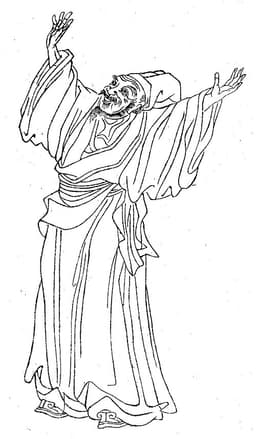
Liu Zongyuan
Politician · Medieval
51.2Total
Basic Information
Born
1357
773
Died
1402
819
Era
Medieval
Medieval
Nationality
China
China
Occupation
Politician
Politician
Civilization
Eastern
Eastern
Score Comparison
Military (10%)
45.7
44.2
Political (20%)
33.6
43.7
Influence (20%)
59.0
62.0
Legacy (20%)
58.0
54.0
Leadership (15%)
43.8
50.7
Strategy (15%)
35.9
36.0
TOTAL
49.0
51.2
Fang Xiaoru — Complete Timeline
1402 AD
Refused to Draft Edict for Yongle EmperorPolitical Action
After the Yongle Emperor usurped the throne, he ordered Fang Xiaoru to draft the accession edict. Fang refused, calling the usurper a traitor. This act of defiance led to his execution and the massacre of his entire clan.
Ming DynastyConfucian ScholarDefiance
Impact: nationaltragic
Executed with Ten ClansPolitical Action◆ Major
Fang Xiaoru was executed by dismemberment, and his family, students, and associates
Ming DynastyMassacreConfucian Resistance
Impact: nationaldestructive
Liu Zongyuan — Complete Timeline
805 AD
Participated in the Yongzhen ReformPolitical Action◆ Major
Liu Zongyuan joined the Yongzhen Reform, a short-lived reform movement under Emperor Shunzong aimed at reducing eunuch power and corruption. The reform failed after a few months, and Liu was exiled to Yongzhou (modern Hunan).
Political ReformExileTang Dynasty
Impact: nationaltragic
Exiled to YongzhouPolitical Action◆ Major
Liu Zongyuan was exiled to Yongzhou as a result of the Yongzhen Reform's failure. He spent ten years in remote southern posts, where he wrote many of his most famous essays and poems, including 'Eight Records of Yongzhou'.
ExileLiteratureTang Dynasty
Impact: nationaltragic
810 AD
Composed 'The Snake Catcher'Cultural◆ Major
Liu Zongyuan wrote the essay 'The Snake Catcher' (Bu She Zhe Shuo), a critique of oppressive taxation and government corruption. The work used a parable to expose the suffering of common people under Tang rule, becoming a classic of social criticism.
LiteratureSocial CriticismTang Dynasty
Impact: nationalconstructive
815 AD
Exiled to LiuzhouPolitical Action
Liu Zongyuan was transferred to an even more remote post in Liuzhou (modern Guangxi). He served as prefect there until his death, implementing local reforms and writing extensively about the region's customs and landscapes.
ExileLocal GovernanceTang Dynasty
This comparison has not been analyzed yet.
One-time AI generation (~1 minute). Scores and timeline are already available below.
Rankings
🥇
Liu ZongyuanLeader
Mil: 44.2Pol: 43.7Inf: 62.0
51.2
🥈
Fang Xiaoru
Mil: 45.7Pol: 33.6Inf: 59.0
49.0
+2.2 behind
How This Comparison Works
Algorithm
Each figure is scored on 6 dimensions (0—100 scale) based on structured historical data: Military (10%), Political (20%), Influence (20%), Legacy (20%), Leadership (15%), Strategy (15%). The weighted total produces the final ranking.
Data Sources
Scores are computed from structured sub-indicators in the database. Scale factors adjust for era (Ancient ×0.85, Modern ×1.0) and civilization size (Eastern ×1.05, Other ×0.80) to account for differences in population and military scale.
Maximum 3 Figures
Comparisons are limited to 2—3 figures to ensure readability and statistical meaningfulness.
Error Margins
±5 points per dimension — Sub-scores are derived from historical records with inherent uncertainty. Two figures within 5 points on a dimension should be considered roughly equivalent in that area.
Total Score Accuracy
±3 points overall — The weighted combination of 6 dimensions produces a total score with approximately ±3 points of uncertainty. Differences of less than 3 points are not statistically significant— the figures are effectively tied.
Known Limitations
- Historical records are incomplete and uneven across civilizations
- Figures from oral-tradition societies may be underrepresented
- Occupation labels can misclassify multi-role figures
- Scores measure capability and impact, not moral character
- Quantitative scoring is a comparison tool, not absolute truth
Capability Radar
Military (10%) — Battles & Warfare
Battles
38
40
Win Rate
41
40
Expansion
45
44
Political (20%) — Governance & Reform
Reform
20
40
Diplomacy
10
15
Economy
10
20
Influence (20%) — Cultural & Global Reach
Cultural
55
70
Global
40
40
Legacy (20%) — Historical Impact
Historical
60
65
Longevity
65
60
Leadership (15%) — Power & Stability
Tenure
15
20
Stability
5
10
Strategy (15%) — Tactics & Innovation
Strategy
45
48
Tactics
53
50
Reform
54
55
Similar Comparisons
Comments & Discussion
No comments yet. Be the first to share your thoughts!