Loading...
Eleanor of Aquitaine vs Fang Xiaoru
Eleanor of Aquitaine leads by 6.2 pts · 2 figures compared
…

Eleanor of Aquitaine
Politician · Medieval
55.2Total
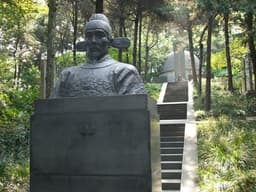
Fang Xiaoru
Politician · Medieval
49.0Total
Basic Information
Born
1122
1357
Died
1204
1402
Era
Medieval
Medieval
Nationality
France
China
Occupation
Politician
Politician
Civilization
Western
Eastern
Score Comparison
Military (10%)
24.8
45.7
Political (20%)
70.0
33.6
Influence (20%)
65.0
59.0
Legacy (20%)
40.0
58.0
Leadership (15%)
72.0
43.8
Strategy (15%)
52.0
35.9
TOTAL
55.2
49.0
Eleanor of Aquitaine — Complete Timeline
1137 AD
Marriage to Louis VII of FrancePolitical Action◆ Major
Eleanor married Louis VII, becoming Queen of France. The marriage brought the Duchy of Aquitaine under French control. She accompanied Louis on the Second Crusade.
MarriageFranceAquitaine
Impact: regional
1152 AD
Annulment of marriage to Louis VIIPolitical Action
Eleanor's marriage to Louis VII was annulled on grounds of consanguinity. She regained control of Aquitaine, which remained independent of France. This event reshaped the political map of Western Europe.
AnnulmentAquitainePolitics
Impact: regional
Marriage to Henry II of EnglandPolitical Action
Eight weeks after her annulment, Eleanor married Henry Plantagenet, who became King Henry II of England in 1154. The marriage created the Angevin Empire, with English control over much of France.
MarriageEnglandAngevin Empire
Impact: regional
1173 AD
Rebellion against Henry IIPolitical Action◆ Major
Eleanor supported her sons' rebellion against Henry II. The revolt failed, and Henry imprisoned Eleanor for 15 years. This event highlighted the fractured Plantagenet family dynamics.
RebellionImprisonmentPlantagenet
Impact: regionaldestructive
1190 AD
Regency of England during Richard I's crusadePolitical Action◆ Major
While Richard I was on the Third Crusade, Eleanor acted as regent in England. She managed the kingdom, raised ransom money when Richard was captured, and negotiated his release.
RegencyCrusadeRichard I
Impact: nationalconstructive
Fang Xiaoru — Complete Timeline
1402 AD
Refused to Draft Edict for Yongle EmperorPolitical Action
After the Yongle Emperor usurped the throne, he ordered Fang Xiaoru to draft the accession edict. Fang refused, calling the usurper a traitor. This act of defiance led to his execution and the massacre of his entire clan.
Ming DynastyConfucian ScholarDefiance
Impact: nationaltragic
Executed with Ten ClansPolitical Action◆ Major
Fang Xiaoru was executed by dismemberment, and his family, students, and associates
Ming DynastyMassacreConfucian Resistance
Impact: nationaldestructive
Expert Analysis
Origins
Eleanor of Aquitaine (1122-1204) was born into the House of Poitiers, inheriting the Duchy of Aquitaine at age 15 upon her father's death in 1137. As one of the wealthiest and most powerful territories in France, Aquitaine made Eleanor a coveted bride. She received an education typical for noblewomen, including literature, languages, and courtly skills. Her mother died when she was young, and she was raised at the cultured court of Poitiers.
Fang Xiaoru (1357-1402) was born into a scholarly family in Ming China. His father, Fang Keqin, was a Confucian official. Fang excelled in the civil service examinations, earning the jinshi degree in 1382. He became a leading Confucian scholar, known for his expertise in classics and his strict moral principles. His upbringing emphasized loyalty, filial piety, and the ethical duties of a minister.
Rise to Power
Eleanor's rise came through marriage. In 1137, she married Louis VII of France, becoming queen. She accompanied him on the Second Crusade (1147-1149), where her behavior and alleged affair with her uncle Raymond of Antioch led to marital strain. The marriage was annulled in 1152 on grounds of consanguinity. Eight weeks later, she married Henry Plantagenet, who became King Henry II of England in 1154. This union created the Angevin Empire, stretching from Scotland to the Pyrenees. Eleanor held significant influence, acting as regent when Henry was abroad and managing her own court in Poitiers.
Fang Xiaoru rose through scholarly merit. He served under the Hongwu Emperor (Zhu Yuanzhang) as a tutor and advisor. His reputation as a Confucian purist grew. After Hongwu's death in 1398, his grandson Zhu Yunwen became the Jianwen Emperor. Fang was appointed Grand Secretary, a top advisor. He helped the young emperor implement reforms to reduce the power of feudal princes, directly threatening Zhu Di, the Prince of Yan. This conflict led to the Jingnan Campaign (1399-1402), a civil war.
Leadership & Governance
Eleanor's leadership was pragmatic and resilient. As queen consort of France and England, she used her political acumen to navigate complex feudal politics. She administered Aquitaine independently, holding court and patronizing arts. As regent for Richard I during the Third Crusade (1190-1194), she raised funds, managed the kingdom, and negotiated Richard's release from captivity in 1194. Her governance score of 72.0 reflects her effectiveness in maintaining order and leveraging her position.
Fang Xiaoru's leadership was ideological and rigid. He prioritized Confucian orthodoxy and loyalty to the Jianwen Emperor. His political score of 33.6 indicates limited practical governance. He advised the emperor to resist Zhu Di's rebellion with moral suasion rather than military force. His strategy score of 35.9 shows a lack of tactical flexibility. When Zhu Di captured Nanjing in 1402, Fang refused to draft the accession edict for the new Yongle Emperor, calling him a usurper. This act of defiance led to his execution.
Triumph & Tragedy
Eleanor's triumphs include securing her inheritance, bearing ten children (including two kings, Richard I and John), and playing a key role in the Angevin Empire. She lived into her 80s, a remarkable age for the time. Her tragedy was the failed rebellion against Henry II in 1173-1174, which led to her imprisonment for 15 years. She also witnessed the decline of the Angevin Empire under John.
Fang Xiaoru's triumph was his unwavering adherence to Confucian principles, earning him a posthumous reputation as a model of loyalty. His tragedy was his brutal execution: he was cut in two at the waist, and his family, students, and associates—ten clans—were killed, totaling about 873 people. This punishment was unprecedented in scale and terrorized the scholarly class.
Character & Destiny
Eleanor was pragmatic and adaptable. She used her intelligence and charm to influence kings and popes. Her character score of 72.0 and leadership of 72.0 show a flexible, resilient leader. She survived imprisonment and outlived her husband and most of her children, maintaining influence until her death.
Fang Xiaoru was principled and uncompromising. His total score of 49.0 reflects a narrow but intense impact. He chose death over dishonor, embodying the Confucian ideal of the loyal minister. His destiny was sealed by his refusal to bend to political reality. His influence score of 59.0 and legacy of 58.0 show that his moral stance resonated through Chinese history.
Legacy
Eleanor's legacy is multifaceted. She is remembered as a powerful medieval queen, a patron of courtly love and literature, and a key figure in the development of the Angevin Empire. Her inheritance of Aquitaine shaped the Hundred Years' War. Her legacy score of 40.0 is moderate but enduring in popular culture.
Fang Xiaoru's legacy is that of a martyr for Confucian integrity. He is celebrated in Chinese history as a symbol of resistance to tyranny. His story is taught in schools, and his execution is seen as a cautionary tale of absolute power. His legacy score of 58.0 reflects his lasting moral impact, despite his political failure.
Conclusion
Eleanor of Aquitaine had a greater impact on history. Her political maneuvering shaped the destinies of France and England, and her actions influenced the course of medieval Europe. Her total score of 55.2 versus Fang Xiaoru's 49.0 reflects her broader influence. Fang's moral courage is admirable, but his impact was limited to a symbolic legacy. Eleanor's practical governance and strategic marriages created tangible, long-lasting change. While Fang's story inspires, Eleanor's actions changed the map and power structures of Europe. Therefore, Eleanor of Aquitaine holds a more significant place in world history.
Rankings
🥇
Eleanor of AquitaineLeader
Mil: 24.8Pol: 70.0Inf: 65.0
55.2
🥈
Fang Xiaoru
Mil: 45.7Pol: 33.6Inf: 59.0
49.0
+6.2 behind
How This Comparison Works
Algorithm
Each figure is scored on 6 dimensions (0—100 scale) based on structured historical data: Military (10%), Political (20%), Influence (20%), Legacy (20%), Leadership (15%), Strategy (15%). The weighted total produces the final ranking.
Data Sources
Scores are computed from structured sub-indicators in the database. Scale factors adjust for era (Ancient ×0.85, Modern ×1.0) and civilization size (Eastern ×1.05, Other ×0.80) to account for differences in population and military scale.
Maximum 3 Figures
Comparisons are limited to 2—3 figures to ensure readability and statistical meaningfulness.
Error Margins
±5 points per dimension — Sub-scores are derived from historical records with inherent uncertainty. Two figures within 5 points on a dimension should be considered roughly equivalent in that area.
Total Score Accuracy
±3 points overall — The weighted combination of 6 dimensions produces a total score with approximately ±3 points of uncertainty. Differences of less than 3 points are not statistically significant— the figures are effectively tied.
Known Limitations
- Historical records are incomplete and uneven across civilizations
- Figures from oral-tradition societies may be underrepresented
- Occupation labels can misclassify multi-role figures
- Scores measure capability and impact, not moral character
- Quantitative scoring is a comparison tool, not absolute truth
Capability Radar
Military (10%) — Battles & Warfare
Battles
10
38
Win Rate
5
41
Expansion
15
45
Political (20%) — Governance & Reform
Reform
65
20
Diplomacy
80
10
Economy
60
10
Influence (20%) — Cultural & Global Reach
Cultural
75
55
Global
70
40
Legacy (20%) — Historical Impact
Historical
80
60
Longevity
75
65
Leadership (15%) — Power & Stability
Tenure
70
15
Stability
55
5
Strategy (15%) — Tactics & Innovation
Strategy
20
45
Tactics
15
53
Reform
10
54
Similar Comparisons
Comments & Discussion
No comments yet. Be the first to share your thoughts!