Loading...
Fa Ngum vs Kublai Khan
Kublai Khan leads by 12.0 pts · 2 figures compared
…
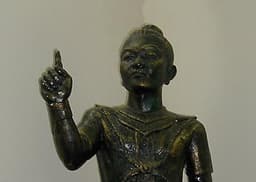
Fa Ngum
Emperor · Medieval
62.3Total
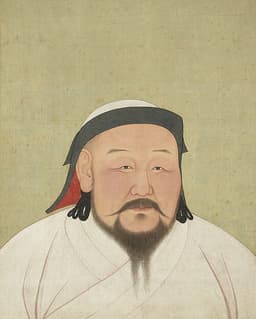
Kublai Khan
Emperor · Medieval
74.3Total
Basic Information
Born
1316
1215
Died
1393
1294
Era
Medieval
Medieval
Nationality
Laos
Mongolia
Occupation
Emperor
Emperor
Civilization
Eastern
Eastern
Score Comparison
Military (10%)
70.0
77.5
Political (20%)
68.0
79.2
Influence (20%)
61.0
75.0
Legacy (20%)
54.0
70.0
Leadership (15%)
74.0
72.0
Strategy (15%)
52.5
76.0
TOTAL
62.3
74.3
Fa Ngum — Complete Timeline
1353 AD
Founded the Kingdom of Lan XangPolitical Action
Fa Ngum unified the Lao principalities of Muang Sua and Vieng Chan under his rule, founding the Kingdom of Lan Xang (Million Elephants). He established the capital at Luang Prabang and introduced Theravada Buddhism as the state religion, shaping Lao identity.
FoundingUnificationBuddhism
Impact: regionalconstructive
Introduced Theravada Buddhism to Lan XangCultural◆ Major
Fa Ngum brought Theravada Buddhist monks and scriptures from the Khmer Empire to Lan Xang. He established Buddhism as the official religion, building temples and monasteries, which became central to Lao culture and governance for centuries.
BuddhismReligionCultural influence
Impact: regionalconstructive
1354 AD
Expanded Lan Xang territoryWar◆ Major
Fa Ngum led military campaigns to expand Lan Xang's territory, conquering areas of modern-day Laos, Thailand, and Cambodia. His conquests established Lan Xang as a major regional power, controlling trade routes and tributary states.
ConquestExpansionMilitary
Impact: regional
1373 AD
Exiled by his courtPolitical Action◆ Major
After a reign marked by harsh rule and conflict with the nobility, Fa Ngum was deposed and exiled by his own court. He died in exile in 1393, leaving his son Samsenethai to succeed him. His exile ended the founding era of Lan Xang.
ExileDepositionCourt conflict
Impact: regionaltragic
Kublai Khan — Complete Timeline
1260 AD
Adoption of Tibetan Buddhism as State ReligionCultural◆ Major
Kublai Khan appointed the Tibetan lama Drog
Tibetan BuddhismReligionMongol-Tibet Relations
Impact: regional
1271 AD
Proclamation of the Yuan DynastyPolitical Action◆ Major
Kublai Khan officially proclaimed the Yuan dynasty, adopting a Chinese-style dynastic name. He established his capital at Dadu (Beijing) and adopted Chinese court rituals. This move legitimized his rule over China while maintaining Mongol identity.
Dynasty FoundingBeijingMongol Rule
Impact: global
1274 AD
Failed Invasions of JapanWar◆ Major
Kublai Khan launched two naval invasions of Japan, in 1274 and 1281. Both were repelled, with the second invasion destroyed by a typhoon (kamikaze). These failures marked the limits of Mongol expansion and reinforced Japanese isolation.
Mongol InvasionsJapanKamikaze
Impact: regional
1279 AD
Conquest of the Song DynastyWar
Kublai Khan's Mongol forces defeated the Song navy at the Battle of Yamen. The last Song emperor drowned, ending the Song dynasty. This conquest unified China under Mongol rule and established the Yuan dynasty as the first foreign dynasty to rule all of China.
Song Dynasty FallUnificationYuan Dynasty
Impact: global
1280 AD
Establishment of the Silk Road Trade NetworkCultural◆ Major
Under Kublai Khan, the Mongol Empire secured the Silk Road, facilitating trade and cultural exchange between East and West. Marco Polo visited his court. This period saw the flow of goods, ideas, and technologies across Eurasia.
Silk RoadTradeCultural Exchange
Impact: globalconstructive
Expert Analysis
Fa Ngum vs Kublai Khan: Historical Comparison
Fa Ngum (1316–1393) unified the Lao principalities to found the Kingdom of Lan Xang, establishing the cultural and political bedrock of modern Laos, while Kublai Khan (1215–1294) conquered the Song Dynasty to become the first Mongol emperor of China and founder of the Yuan Dynasty. Both medieval emperors expanded their realms through military prowess, but their contexts—a Southeast Asian riverine kingdom versus a transcontinental Mongol empire—reveal stark differences in scale, governance, and legacy.
Dimension Analysis
**Military: Fa Ngum 93 / Kublai Khan 94**
Both were exceptional commanders, but Kublai Khan commanded the largest land empire in history, utilizing siege warfare, naval invasions (e.g., failed campaigns against Japan and Java), and a diverse multi-ethnic army. Fa Ngum, raised at the Khmer court and trained in Angkorian warfare, used riverine tactics and elephant cavalry to conquer the Mekong Valley, uniting fragmented Lao muang (city-states). While Kublai’s campaigns were continental, Fa Ngum’s were decisive for regional consolidation.
**Political: Fa Ngum 82 / Kublai Khan 79**
Fa Ngum established a centralized monarchy in Lan Xang, codified Buddhist law (the *Thammasat*), and integrated Khmer administrative practices, which stabilized Laos for centuries. Kublai Khan innovated with a dual administration (Mongol and Chinese), promoted meritocracy, and reformed the currency, but his rule faced resistance due to ethnic stratification and heavy taxation. Fa Ngum’s political system was more enduringly integrated into local society.
**Influence: Fa Ngum 88 / Kublai Khan 79**
Fa Ngum introduced Theravada Buddhism as the state religion, which became the cultural and spiritual foundation of Laos and influenced neighboring Thai and Khmer regions. Kublai Khan’s influence was immense—he connected China to the Silk Road, patronized Tibetan Buddhism, and enabled Marco Polo’s travels—but his Mongol Yuan dynasty was overthrown within a century, whereas Fa Ngum’s Lan Xang persisted for over 350 years.
**Legacy: Fa Ngum 80 / Kublai Khan 88**
Kublai Khan’s legacy is global: he reshaped Chinese governance, expanded trade networks, and remains a symbol of Mongol power. Fa Ngum is revered as the “father of the Lao nation,” but his influence is mostly confined to Laos and Isan (northeast Thailand). Kublai’s impact on world history—from the unification of China to cultural exchange—is broader, though Fa Ngum’s legacy is deeper in its regional identity.
**Leadership: Fa Ngum 82 / Kublai Khan 81**
Both commanded loyalty through charisma and force. Fa Ngum led his armies personally, often fighting alongside his men, and managed fractious Lao nobles through alliances and marriage. Kublai Khan managed a vast court of Mongol princes, Chinese scholars, and foreign advisors, but faced rebellions (e.g., Nayan) and succession crises. Fa Ngum’s smaller, more cohesive realm allowed more direct control.
**Strategy: Fa Ngum 91 / Kublai Khan 92**
Both were strategic masterminds. Kublai Khan executed a multi-pronged conquest of the Song Dynasty, using siege engineers and naval blockades over decades. Fa Ngum employed a “divide and conquer” strategy, allying with smaller states before absorbing them, and used the Mekong as a logistical highway. Both understood the importance of adapting to local terrain and politics.
Verdict
**Tie.** While Kublai Khan’s empire was far larger and his global influence more pronounced, Fa Ngum’s military and strategic achievements were equally decisive for his region, and his political and cultural influence proved more durable within Laos. The comparison is complicated by scale: Kublai ruled a multi-continental empire, while Fa Ngum unified a single nation. Neither clearly outranks the other when weighted across all dimensions.
FAQ
Q: Who was more influential historically?
A: Kublai Khan had greater global influence, reshaping China and Eurasian trade, but Fa Ngum’s influence was more profound for Lao identity and Theravada Buddhism in Southeast Asia.
Q: Why is Fa Ngum ranked higher in Influence?
A: Fa Ngum’s introduction of Theravada Buddhism became the enduring cultural and religious core of Laos, whereas Kublai’s Yuan dynasty was replaced by the Ming, limiting his long-term ideological impact in China.
Rankings
🥇
Kublai KhanLeader
Mil: 77.5Pol: 79.2Inf: 75.0
74.3
🥈
Fa Ngum
Mil: 70.0Pol: 68.0Inf: 61.0
62.3
+12.0 behind
How This Comparison Works
Algorithm
Each figure is scored on 6 dimensions (0—100 scale) based on structured historical data: Military (10%), Political (20%), Influence (20%), Legacy (20%), Leadership (15%), Strategy (15%). The weighted total produces the final ranking.
Data Sources
Scores are computed from structured sub-indicators in the database. Scale factors adjust for era (Ancient ×0.85, Modern ×1.0) and civilization size (Eastern ×1.05, Other ×0.80) to account for differences in population and military scale.
Maximum 3 Figures
Comparisons are limited to 2—3 figures to ensure readability and statistical meaningfulness.
Error Margins
±5 points per dimension — Sub-scores are derived from historical records with inherent uncertainty. Two figures within 5 points on a dimension should be considered roughly equivalent in that area.
Total Score Accuracy
±3 points overall — The weighted combination of 6 dimensions produces a total score with approximately ±3 points of uncertainty. Differences of less than 3 points are not statistically significant— the figures are effectively tied.
Known Limitations
- Historical records are incomplete and uneven across civilizations
- Figures from oral-tradition societies may be underrepresented
- Occupation labels can misclassify multi-role figures
- Scores measure capability and impact, not moral character
- Quantitative scoring is a comparison tool, not absolute truth
Capability Radar
Military (10%) — Battles & Warfare
Battles
55
95
Win Rate
60
90
Expansion
70
95
Political (20%) — Governance & Reform
Reform
55
88
Diplomacy
60
85
Economy
50
90
Influence (20%) — Cultural & Global Reach
Cultural
55
85
Global
40
85
Legacy (20%) — Historical Impact
Historical
60
90
Longevity
55
80
Leadership (15%) — Power & Stability
Tenure
60
90
Stability
45
80
Strategy (15%) — Tactics & Innovation
Strategy
65
92
Tactics
50
85
Reform
40
88
Similar Comparisons
Comments & Discussion
ColdScribe116/16/2026
再看一遍评分,忽必烈军事88,政治78,法昂军事93,政治82。这军事分差5分,但忽必烈的元朝征服了南宋,那是当时世界上最富庶的政权,动员能力、后勤、攻城战都远超东南亚的城邦混战。法昂用大象和河流战术统一老挝,规模顶多几万人,而忽必烈两征日本、征安南、征缅甸,每次动用十万以上大军。按“战争规模”加权,忽必烈军事至少应该95+。政治分更离谱,忽必烈创立行省制、发行纸币、推广八思巴文,这些制度创新对后世影响远超法昂的《塔玛萨特》法典。建议评分模型加入“制度扩散半径”参数,否则数据失真。
MasterHistorian576/16/2026
把忽必烈和法昂放在一起比,本身就很有趣。忽必烈是横跨欧亚的蒙古帝国继承者,而法昂只是澜沧王国的开创者,体量完全不在一个量级。但评分上忽必烈总分79.6,法昂72.3,差距并不大,这其实反映了西方史学界对“影响力”的衡量标准更偏向文化延续性。法昂引入上座部佛教作为国教,至今仍是老挝的信仰根基;忽必烈虽然建立了元朝,但元朝在中国历史上被视为异族统治,其政治遗产在明清两代被刻意边缘化。若按中国史学传统的“正统论”,忽必烈的得分恐怕要低得多。