Loading...
Evika Silina vs Quett Masire
Quett Masire leads by 22.3 pts · 2 figures compared
…
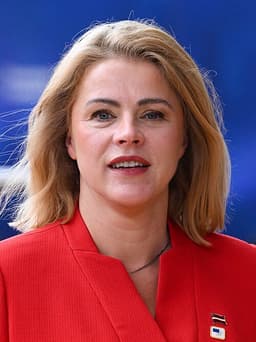
Evika Silina
Politician · Modern
39.5Total
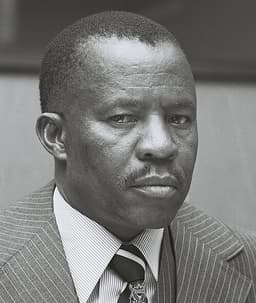
Quett Masire
Politician · Modern
61.8Total
Basic Information
Born
1975
1925
Died
—
—
Era
Modern
Modern
Nationality
Latvia
Botswana
Occupation
Politician
Politician
Civilization
Western
Other
Score Comparison
Military (10%)
14.2
38.0
Political (20%)
43.7
85.0
Influence (20%)
47.9
60.0
Legacy (20%)
35.8
54.0
Leadership (15%)
51.9
83.3
Strategy (15%)
28.6
42.3
TOTAL
39.5
61.8
Evika Silina — Complete Timeline
2023 AD
Economic Reform EffortsReform
Silina's government pursued economic reforms including tax changes and measures to address inflation and energy costs. The reforms aimed to improve Latvia's competitiveness and fiscal stability.
EconomyTax ReformEnergy
Impact: nationalconstructive
Appointed Prime Minister of LatviaPolitical Action◆ Major
Silina became Prime Minister of Latvia, leading a coalition government formed by the New Unity party, the Union of Greens and Farmers, and the Progressives. She succeeded Kri
Prime MinisterCoalitionGovernment Formation
Impact: nationalconstructive
Continued Support for UkrainePolitical Action
Silina's government maintained Latvia's strong support for Ukraine, including military aid and hosting Ukrainian refugees. Latvia consistently advocated for EU sanctions against Russia.
UkraineForeign PolicySanctions
Impact: regionalconstructive
Quett Masire — Complete Timeline
1966 AD
Elected Vice President of BotswanaPolitical Action◆ Major
Masire was elected Vice President of Botswana upon independence in 1966, serving under President Seretse Khama. He was a key architect of Botswana's economic policies.
Vice PresidencyEconomic Planning
Impact: nationalconstructive
1980 AD
Led Botswana through diamond boomReform◆ Major
Masire oversaw the expansion of diamond mining through Debswana, a joint venture with De Beers. Revenue from diamonds funded infrastructure, education, and healthcare, transforming Botswana into a middle-income country.
Economic DevelopmentDiamond Revenue
Impact: nationalconstructive
Became President of BotswanaPolitical Action
Masire became President of Botswana on July 13, 1980, following the death of Seretse Khama. He continued Khama's policies of democracy, fiscal discipline, and diamond-led development.
PresidencyContinuity
Impact: nationalconstructive
1984 AD
Re-elected President (1984, 1989, 1994)Political Action◆ Major
Masire was re-elected in 1984, 1989, and 1994, each time with large majorities. His Botswana Democratic Party maintained power through free and fair elections, reinforcing Botswana's democratic reputation.
Re-electionDemocratic Stability
Impact: nationalconstructive
1998 AD
Retired as PresidentPolitical Action◆ Major
Masire retired as President in March 1998, handing power to his Vice President, Festus Mogae. His retirement was voluntary and peaceful, setting a precedent for democratic transitions in Africa.
RetirementDemocratic Transition
Impact: nationalconstructive
Expert Analysis
Origins
Evika Silina was born in Latvia in 1975, during the Soviet occupation. She studied law at the University of Latvia and later worked as a lawyer and lecturer. Her early career involved legal and administrative roles, including serving as a parliamentary secretary. Quett Masire was born in 1925 in Kanye, Botswana (then Bechuanaland). He attended primary school and later trained as a teacher. Masire worked as a journalist and co-founded the Botswana Democratic Party (BDP) with Seretse Khama. His background in education and media shaped his communication skills.
Rise to Power
Silina entered politics as a member of the New Unity party. She served as Minister of Welfare and then as Speaker of the Saeima before being appointed Prime Minister in 2023, leading a coalition government. Her rise was marked by political maneuvering and coalition negotiations. Masire became Vice President of Botswana upon independence in 1966, serving under Seretse Khama. He was a key architect of Botswana's economic policies. After Khama's death in 1980, Masire became President and was re-elected in 1984, 1989, and 1994 with large majorities. His rise was based on his role in building the nation.
Leadership & Governance
Silina's leadership score is 51.9, reflecting her role as a consensus-builder in a coalition government. She focused on economic reforms, tax changes, and addressing inflation and energy costs. Her government maintained strong support for Ukraine, including military aid. Masire's leadership score is 83.3, indicating his effectiveness in managing a stable democracy. He continued Khama's policies of fiscal discipline, free elections, and anti-corruption. Under Masire, Botswana experienced rapid economic growth from diamond revenues, which funded infrastructure, education, and healthcare. He oversaw the expansion of Debswana, a joint venture with De Beers.
Triumph & Tragedy
Silina's greatest success is her appointment as Prime Minister, a significant achievement for a woman in Latvian politics. Her government's continued support for Ukraine earned international respect. However, her tenure faced challenges: economic reforms faced opposition, and her coalition government struggled with internal disagreements. Masire's triumphs include leading Botswana through the diamond boom, transforming it from one of the poorest countries to a middle-income nation. He maintained democratic traditions and peaceful transitions. His failures include criticism over handling of the HIV/AIDS epidemic in the 1990s, where his government was slow to respond. Additionally, income inequality persisted despite growth.
Character & Destiny
Silina is described as pragmatic and detail-oriented, but her political influence score (47.9) suggests limited impact on the global stage. Her destiny is tied to Latvia's stability and European integration. Masire was known for his humility, fiscal conservatism, and dedication to democracy. His character shaped Botswana's destiny as a stable, prosperous democracy. His political score (85.0) reflects his ability to maintain unity and continuity. Masire's voluntary retirement in 1998 set a precedent for peaceful power transfer.
Legacy
Silina's legacy is still developing. She will be remembered as Latvia's second female prime minister and for her government's pro-Ukraine stance. Her impact on economic reform remains to be seen. Masire's legacy is substantial: he institutionalized democracy in Botswana, oversaw economic prosperity, and ensured a peaceful transition. His leadership score of 83.3 and legacy score of 54.0 indicate his lasting influence. Botswana's diamond revenue management and democratic institutions are his enduring contributions.
Conclusion
Quett Masire had a greater impact than Evika Silina. His total score of 61.8 far exceeds Silina's 39.5. Masire led a country through transformative economic growth and democratic consolidation over two decades. Silina's tenure is short and her influence limited to regional politics. While both are democratic leaders, Masire's achievements in nation-building and economic development are more substantial. Silina's potential is yet unrealized, but Masire's legacy is firmly established.
Rankings
🥇
Quett MasireLeader
Mil: 38.0Pol: 85.0Inf: 60.0
61.8
🥈
Evika Silina
Mil: 14.2Pol: 43.7Inf: 47.9
39.5
+22.3 behind
How This Comparison Works
Algorithm
Each figure is scored on 6 dimensions (0—100 scale) based on structured historical data: Military (10%), Political (20%), Influence (20%), Legacy (20%), Leadership (15%), Strategy (15%). The weighted total produces the final ranking.
Data Sources
Scores are computed from structured sub-indicators in the database. Scale factors adjust for era (Ancient ×0.85, Modern ×1.0) and civilization size (Eastern ×1.05, Other ×0.80) to account for differences in population and military scale.
Maximum 3 Figures
Comparisons are limited to 2—3 figures to ensure readability and statistical meaningfulness.
Error Margins
±5 points per dimension — Sub-scores are derived from historical records with inherent uncertainty. Two figures within 5 points on a dimension should be considered roughly equivalent in that area.
Total Score Accuracy
±3 points overall — The weighted combination of 6 dimensions produces a total score with approximately ±3 points of uncertainty. Differences of less than 3 points are not statistically significant— the figures are effectively tied.
Known Limitations
- Historical records are incomplete and uneven across civilizations
- Figures from oral-tradition societies may be underrepresented
- Occupation labels can misclassify multi-role figures
- Scores measure capability and impact, not moral character
- Quantitative scoring is a comparison tool, not absolute truth
Capability Radar
Military (10%) — Battles & Warfare
Battles
25
20
Win Rate
25
26
Expansion
27
27
Political (20%) — Governance & Reform
Reform
30
70
Diplomacy
40
80
Economy
35
85
Influence (20%) — Cultural & Global Reach
Cultural
10
40
Global
15
50
Legacy (20%) — Historical Impact
Historical
15
55
Longevity
10
60
Leadership (15%) — Power & Stability
Tenure
15
75
Stability
30
90
Strategy (15%) — Tactics & Innovation
Strategy
31
32
Tactics
32
31
Reform
36
38
Similar Comparisons
Comments & Discussion
No comments yet. Be the first to share your thoughts!