Loading...
This comparison has not been analyzed yet.
One-time AI generation (~1 minute). Scores and timeline are already available below.
Eumenes II of Pergamon vs Thrasamund
Eumenes II of Pergamon leads by 17.3 pts · 2 figures compared
…
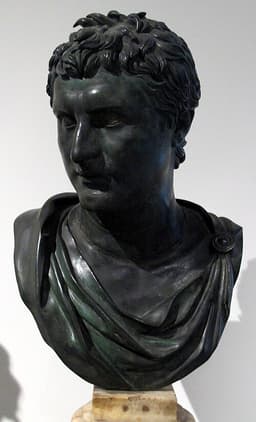
Eumenes II of Pergamon
Emperor · Ancient
63.6Total

Thrasamund
Emperor · Ancient
46.3Total
Basic Information
Born
-221
450
Died
-159
523
Era
Ancient
Ancient
Nationality
Pergamon
Vandals
Occupation
Emperor
Emperor
Civilization
Western
Western
Score Comparison
Military (10%)
70.0
47.5
Political (20%)
60.0
48.0
Influence (20%)
72.0
53.3
Legacy (20%)
58.0
42.5
Leadership (15%)
66.0
40.0
Strategy (15%)
52.5
43.7
TOTAL
63.6
46.3
Eumenes II of Pergamon — Complete Timeline
190 BC
Battle of MagnesiaWar◆ Major
Eumenes II fought alongside the Romans at the Battle of Magnesia, where the Seleucid king Antiochus III was defeated. This victory secured Roman dominance in Asia Minor and expanded Pergamon's territory, making it a key Roman ally.
Roman-Seleucid WarAllianceTerritorial Expansion
Impact: regionalconstructive
188 BC
Treaty of ApameaPolitical Action◆ Major
Eumenes II benefited from the Treaty of Apamea, which ended the war with Antiochus III. Pergamon received large territories in Asia Minor, including Phrygia and Lydia, greatly increasing its wealth and influence.
TreatyTerritorial GainRoman Alliance
Impact: regionalconstructive
180 BC
Construction of the Pergamon AltarCultural◆ Major
Eumenes II commissioned the Great Altar of Pergamon, a monumental structure adorned with a frieze depicting the Gigantomachy. This masterpiece of Hellenistic art symbolized the Attalid dynasty's power and cultural patronage.
Hellenistic ArtArchitecturePatronage
Impact: regionalconstructive
Thrasamund — Complete Timeline
496 AD
Cultural PatronageCultural◆ Major
Thrasamund sponsored poets, scholars, and artists at his court in Carthage, including the Latin poet Luxorius. He promoted a revival of Roman culture within the Vandal Kingdom, commissioning buildings and literary works.
PatronageCultural RevivalVandal Kingdom
Impact: regionalconstructive
500 AD
Marriage to AmalafridaPolitical Action
Thrasamund married Amalafrida, sister of the Ostrogothic king Theodoric the Great, to forge an alliance with the Ostrogoths. The marriage strengthened Vandal-Ostrogothic relations and provided military support against the Byzantines.
Marriage AllianceOstrogothic-Vandal RelationsDiplomacy
Impact: regionalconstructive
510 AD
War with the Byzantine EmpireWar
Thrasamund fought a war with the Byzantine Empire over control of North African coastal cities. The conflict ended in a stalemate, with the Vandals retaining their territory but suffering economic losses.
Byzantine-Vandal WarConflictNorth Africa
Impact: regionaldestructive
515 AD
Construction of the Basilica of Saint CyprianCultural
Thrasamund built the Basilica of Saint Cyprian in Carthage, a major Christian monument. The church demonstrated his support for Catholic Christianity, despite the Vandal elite's Arianism, and promoted religious harmony.
Church BuildingReligious PatronageCarthage
Impact: regionalconstructive
This comparison has not been analyzed yet.
One-time AI generation (~1 minute). Scores and timeline are already available below.
Rankings
🥇
Eumenes II of PergamonLeader
Mil: 70.0Pol: 60.0Inf: 72.0
63.6
🥈
Thrasamund
Mil: 47.5Pol: 48.0Inf: 53.3
46.3
+17.3 behind
How This Comparison Works
Algorithm
Each figure is scored on 6 dimensions (0—100 scale) based on structured historical data: Military (10%), Political (20%), Influence (20%), Legacy (20%), Leadership (15%), Strategy (15%). The weighted total produces the final ranking.
Data Sources
Scores are computed from structured sub-indicators in the database. Scale factors adjust for era (Ancient ×0.85, Modern ×1.0) and civilization size (Eastern ×1.05, Other ×0.80) to account for differences in population and military scale.
Maximum 3 Figures
Comparisons are limited to 2—3 figures to ensure readability and statistical meaningfulness.
Error Margins
±5 points per dimension — Sub-scores are derived from historical records with inherent uncertainty. Two figures within 5 points on a dimension should be considered roughly equivalent in that area.
Total Score Accuracy
±3 points overall — The weighted combination of 6 dimensions produces a total score with approximately ±3 points of uncertainty. Differences of less than 3 points are not statistically significant— the figures are effectively tied.
Known Limitations
- Historical records are incomplete and uneven across civilizations
- Figures from oral-tradition societies may be underrepresented
- Occupation labels can misclassify multi-role figures
- Scores measure capability and impact, not moral character
- Quantitative scoring is a comparison tool, not absolute truth
Capability Radar
Military (10%) — Battles & Warfare
Battles
55
20
Win Rate
60
25
Expansion
50
15
Political (20%) — Governance & Reform
Reform
65
40
Diplomacy
75
50
Economy
70
45
Influence (20%) — Cultural & Global Reach
Cultural
75
50
Global
60
30
Legacy (20%) — Historical Impact
Historical
70
40
Longevity
65
35
Leadership (15%) — Power & Stability
Tenure
70
60
Stability
65
55
Strategy (15%) — Tactics & Innovation
Strategy
60
20
Tactics
55
20
Reform
40
15
Similar Comparisons
Comments & Discussion
No comments yet. Be the first to share your thoughts!