Loading...
Eumenes II of Pergamon vs Napoleon Bonaparte
Napoleon Bonaparte leads by 7.3 pts · 2 figures compared
…
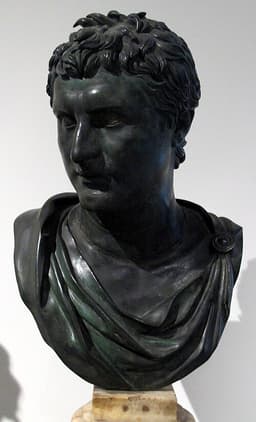
Eumenes II of Pergamon
Emperor · Ancient
63.6Total

Napoleon Bonaparte
General · Modern
70.9Total
Basic Information
Born
-221
1769
Died
-159
1821
Era
Ancient
Modern
Nationality
Pergamon
France
Occupation
Emperor
General
Civilization
Western
Western
Score Comparison
Military (10%)
70.0
94.0
Political (20%)
60.0
72.0
Influence (20%)
72.0
40.0
Legacy (20%)
58.0
80.0
Leadership (15%)
66.0
78.0
Strategy (15%)
52.5
90.0
TOTAL
63.6
70.9
Eumenes II of Pergamon — Complete Timeline
190 BC
Battle of MagnesiaWar◆ Major
Eumenes II fought alongside the Romans at the Battle of Magnesia, where the Seleucid king Antiochus III was defeated. This victory secured Roman dominance in Asia Minor and expanded Pergamon's territory, making it a key Roman ally.
Roman-Seleucid WarAllianceTerritorial Expansion
Impact: regionalconstructive
188 BC
Treaty of ApameaPolitical Action◆ Major
Eumenes II benefited from the Treaty of Apamea, which ended the war with Antiochus III. Pergamon received large territories in Asia Minor, including Phrygia and Lydia, greatly increasing its wealth and influence.
TreatyTerritorial GainRoman Alliance
Impact: regionalconstructive
180 BC
Construction of the Pergamon AltarCultural◆ Major
Eumenes II commissioned the Great Altar of Pergamon, a monumental structure adorned with a frieze depicting the Gigantomachy. This masterpiece of Hellenistic art symbolized the Attalid dynasty's power and cultural patronage.
Hellenistic ArtArchitecturePatronage
Impact: regionalconstructive
Napoleon Bonaparte — Complete Timeline
1799 AD
Coup of 18 BrumaireOther◆ Major
Napoleon Bonaparte, with support from his brother Lucien and key political figures, overthrew the Directory in a bloodless coup. He established the Consulate with himself as First Consul, effectively becoming the ruler of France. This event ended the French Revolution's most unstable period.
French RevolutionCoupRise to Power
Impact: regional
1804 AD
Promulgation of the Napoleonic CodeOther◆ Major
Napoleon enacted the Civil Code of the French, known as the Napoleonic Code, a comprehensive set of laws that replaced the fragmented feudal legal systems. The code established legal equality, protected property rights, and secularized law. It became the basis for legal systems in many European and world countries.
Legal ReformNapoleonic CodeCivil Law
Impact: globalconstructive
1805 AD
Battle of AusterlitzWar◆ Major
Napoleon's Grande Arm
Napoleonic WarsBattleDecisive Victory
Impact: global
1812 AD
Invasion of RussiaWar◆ Major
Napoleon led the Grande Arm
Napoleonic WarsInvasionDisaster
Impact: globaldestructive
1815 AD
Battle of WaterlooWar◆ Major
Napoleon's French army was defeated by the combined forces of the Duke of Wellington's Anglo-Allied army and Gebhard Leberecht von Bl
Napoleonic WarsBattleFinal Defeat
Impact: globaldestructive
Expert Analysis
eumenes-ii-of-pergamon-vs-napoleon-bonaparte
# The Conqueror and the Kingmaker
On a September morning in 1812, Napoleon Bonaparte stood before the burning ruins of Moscow, watching his grand army dissolve into ashes. Nineteen centuries earlier, another ruler faced a very different kind of triumph: Eumenes II of Pergamon stood atop his acropolis, looking out over a kingdom that had just doubled in size without a single soldier lost in battle. One man conquered through fire and steel, the other through alliance and art. Both shaped their worlds, yet their paths could not have been more different. Why did Napoleon’s empire crumble while Eumenes’ kingdom flourished, and what does that tell us about the nature of power itself?
Origins
Napoleon was born in 1769 on the island of Corsica, a place of rugged independence that had only recently become French. His family was minor nobility, but his world was one of revolution and upheaval. The French Revolution, which erupted when he was twenty, shattered the old order and created opportunities unknown in the ancien régime. A young artillery officer with talent and ambition could rise faster than any duke’s son. Napoleon’s era was one of chaos, and chaos rewards those who can seize it.
Eumenes II was born around 221 BC into a very different world. His father, Attalus I, had transformed Pergamon from a minor Greek city into a significant kingdom through careful diplomacy with the rising power of Rome. Eumenes grew up not in revolution but in courtship—learning the subtle arts of negotiation, patronage, and strategic patience. His era was one of empires in collision: the Roman Republic was expanding eastward, the Seleucid Empire was crumbling, and smaller kingdoms had to navigate between giants.
Rise to Power
Napoleon’s ascent was meteoric. By 1796, at just twenty-seven, he was commanding the French Army of Italy, where his lightning campaigns against the Austrians stunned Europe. His victory at the Battle of Rivoli in 1797 made him a national hero. The coup of 18 Brumaire in 1799 placed him at the head of France as First Consul. By 1804, he crowned himself Emperor. Each step was a gamble, each victory a building block. He rose because he was willing to risk everything, and because the Revolution had swept away the old structures that might have stopped him.
Eumenes’ rise was slower and more deliberate. He inherited the throne in 197 BC, but his position was precarious. Pergamon was a small kingdom, surrounded by the Seleucid Empire of Antiochus III, the Macedonian kingdom of Philip V, and the ever-present shadow of Rome. Eumenes chose not to fight his way to greatness but to attach himself to the rising star of Roman power. When Antiochus III invaded Greece in 192 BC, Eumenes offered his full support to Rome. At the Battle of Magnesia in 190 BC, he fought alongside the Roman legions, commanding the cavalry that shattered the Seleucid left flank. His reward came not from conquest but from negotiation: the Treaty of Apamea in 188 BC gave Pergamon vast territories in Asia Minor, including the rich lands of Lydia and Phrygia.
Leadership & Governance
Napoleon governed through force and genius. His military strategy was revolutionary: he divided his armies into corps that could move independently and converge rapidly, overwhelming enemies with speed and mass. His political wisdom was more mixed. The Napoleonic Code, which he enacted in 1804, standardized French law and influenced legal systems across Europe. But his governance was authoritarian, centralizing power in his own hands and suppressing dissent. His military score of 94.0 reflects his battlefield brilliance, but his political score of 75.0 reveals the limits of his rule.
Eumenes governed through alliance and culture. His military score of 52.4 suggests he was no great general, but his leadership score of 81.0 and political score of 87.5 tell a different story. He understood that his kingdom’s survival depended on Roman favor. He sent regular embassies to Rome, cultivated friendships with senators, and never gave the Romans reason to doubt his loyalty. At home, he built Pergamon into a cultural jewel. The Great Altar of Pergamon, begun around 180 BC, was a masterpiece of Hellenistic art, its frieze depicting the Gigantomachy—a metaphor for the triumph of civilization over barbarism. He also expanded the Library of Pergamon, rivaling Alexandria itself, and attracted scholars, artists, and philosophers to his court.
Triumph & Tragedy
Napoleon’s greatest triumph was his early military campaign: Austerlitz in 1805, where he crushed the combined armies of Austria and Russia. His empire stretched from Spain to Poland, and he reshaped Europe’s borders with the stroke of a pen. But his tragedy was hubris. The invasion of Russia in 1812 cost him his Grand Army—over 400,000 men lost to cold, hunger, and guerilla warfare. Defeated at Leipzig in 1813, exiled to Elba in 1814, he returned for one hundred days only to meet final defeat at Waterloo in 1815. His total score of 82.4 reflects a life of brilliant peaks and catastrophic falls.
Eumenes’ triumph was more subtle but more lasting. The Treaty of Apamea gave Pergamon security and prosperity for decades. His greatest achievement was not a battle but a building: the Pergamon Altar, which survives today in Berlin as a testament to Hellenistic art. His tragedy was the cost of dependence. After his death in 159 BC, his son Attalus III bequeathed the kingdom to Rome, ending Pergamon’s independence. Yet even this was a kind of success: Eumenes had built a kingdom that Rome valued enough to absorb rather than destroy.
Character & Destiny
Napoleon’s character was defined by ambition and restlessness. “Impossible is a word to be found only in the dictionary of fools,” he once said. He believed he could remake the world through sheer will. This drove him to extraordinary heights but also to overreach. He could not stop, could not consolidate, could not accept limits. His personality shaped his destiny: a man who rose by breaking rules and fell by breaking too many.
Eumenes’ character was defined by patience and pragmatism. He understood that power is not always about winning battles but about choosing the right allies. “A kingdom is not won by the sword alone,” he might have said, “but by the treaties that follow.” He accepted that Pergamon could never rival Rome, so he made himself indispensable to Rome. His personality shaped a destiny of quiet success: a kingdom that flourished for decades and left a cultural legacy that outlasted its political independence.
Legacy
Napoleon’s legacy is a paradox. He is remembered as a military genius who reshaped Europe, but his empire collapsed within a decade of his death. The Napoleonic Code remains influential, but his name is also synonymous with tyranny and war. His influence score of 82.0 and legacy score of 78.0 reflect a figure who changed the world but left a mixed inheritance.
Eumenes’ legacy is more modest but more enduring. His cultural patronage made Pergamon a beacon of Hellenistic civilization. The Pergamon Altar is one of the great monuments of antiquity, and his library helped preserve Greek literature. His influence score of 70.5 and legacy score of 71.3 suggest a ruler who built something that lasted, even if it was not an empire. He is remembered not as a conqueror but as a builder.
Conclusion
Napoleon and Eumenes stand at opposite ends of the spectrum of power. One tried to conquer the world and failed; the other built a kingdom that outlived him. Their stories remind us that greatness is not always measured in battles won or territory gained. Sometimes it is measured in alliances forged, cultures nurtured, and legacies that survive the fall of empires. Napoleon’s fire consumed itself; Eumenes’ light still glows in the marble of the Pergamon Altar. The conqueror and the kingmaker: both sought power, but only one understood that true power lies not in taking but in building.
Rankings
🥇
Napoleon BonaparteLeader
Mil: 94.0Pol: 72.0Inf: 40.0
70.9
🥈
Eumenes II of Pergamon
Mil: 70.0Pol: 60.0Inf: 72.0
63.6
+7.3 behind
How This Comparison Works
Algorithm
Each figure is scored on 6 dimensions (0—100 scale) based on structured historical data: Military (10%), Political (20%), Influence (20%), Legacy (20%), Leadership (15%), Strategy (15%). The weighted total produces the final ranking.
Data Sources
Scores are computed from structured sub-indicators in the database. Scale factors adjust for era (Ancient ×0.85, Modern ×1.0) and civilization size (Eastern ×1.05, Other ×0.80) to account for differences in population and military scale.
Maximum 3 Figures
Comparisons are limited to 2—3 figures to ensure readability and statistical meaningfulness.
Error Margins
±5 points per dimension — Sub-scores are derived from historical records with inherent uncertainty. Two figures within 5 points on a dimension should be considered roughly equivalent in that area.
Total Score Accuracy
±3 points overall — The weighted combination of 6 dimensions produces a total score with approximately ±3 points of uncertainty. Differences of less than 3 points are not statistically significant— the figures are effectively tied.
Known Limitations
- Historical records are incomplete and uneven across civilizations
- Figures from oral-tradition societies may be underrepresented
- Occupation labels can misclassify multi-role figures
- Scores measure capability and impact, not moral character
- Quantitative scoring is a comparison tool, not absolute truth
Capability Radar
Military (10%) — Battles & Warfare
Battles
55
95
Win Rate
60
90
Expansion
50
95
Political (20%) — Governance & Reform
Reform
65
95
Diplomacy
75
80
Economy
70
85
Influence (20%) — Cultural & Global Reach
Cultural
75
85
Global
60
90
Legacy (20%) — Historical Impact
Historical
70
95
Longevity
65
90
Leadership (15%) — Power & Stability
Tenure
70
85
Stability
65
70
Strategy (15%) — Tactics & Innovation
Strategy
60
95
Tactics
55
98
Reform
40
92
Similar Comparisons
Comments & Discussion
No comments yet. Be the first to share your thoughts!