Loading...
This comparison has not been analyzed yet.
One-time AI generation (~1 minute). Scores and timeline are already available below.
Ernesto Geisel vs Ivan Chernyakhovsky
Ivan Chernyakhovsky leads by 0.9 pts · 2 figures compared
…

Ernesto Geisel
General · Modern
53.5Total
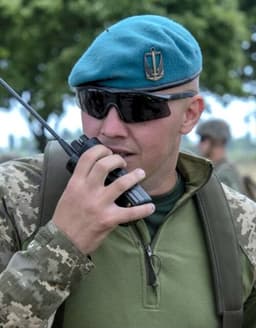
Ivan Chernyakhovsky
General · Modern
54.4Total
Basic Information
Born
1907
1906
Died
1996
1945
Era
Modern
Modern
Nationality
Brazil
USSR
Occupation
General
General
Civilization
Western
Western
Score Comparison
Military (10%)
22.6
78.0
Political (20%)
72.0
35.1
Influence (20%)
55.7
58.0
Legacy (20%)
50.0
50.0
Leadership (15%)
68.0
50.7
Strategy (15%)
38.3
67.2
TOTAL
53.5
54.4
Ernesto Geisel — Complete Timeline
1974 AD
Initiated the Abertura (Political Opening)Reform
Geisel began the process of abertura (political opening) in 1974, a gradual and controlled transition from military rule to democracy. He allowed limited political opposition and reduced censorship, though repression continued.
DemocratizationAberturaBrazil
Impact: nationalprogressive
Appointed President of Brazil by the MilitaryPolitical Action◆ Major
Ernesto Geisel was appointed president of Brazil by the military high command in 1974, serving from March 15, 1974, to March 15, 1979. He was the fourth president of the military dictatorship that began in 1964.
PresidencyMilitary DictatorshipBrazil
Impact: national
1975 AD
Signed the Nuclear Agreement with West GermanyPolitical Action◆ Major
Geisel signed a nuclear cooperation agreement with West Germany in 1975, which included the transfer of nuclear technology for peaceful purposes. The deal was controversial due to concerns about nuclear proliferation.
Nuclear EnergyInternational RelationsBrazil
Impact: regional
Repressed the 1975 Riocentro IncidentOther
During Geisel's presidency, the military regime continued to repress leftist opposition. The 1975 Riocentro incident, where a bomb exploded at a concert, was blamed on leftists but later revealed to be a false flag operation by hardline military elements.
RepressionFalse FlagBrazil
Impact: nationaldestructive
1977 AD
Ordered the Dismissal of Hardline Minister Silvio FrotaPolitical Action◆ Major
Geisel dismissed Army Minister Silvio Frota in October 1977, who opposed the abertura and represented hardline military factions. This move consolidated Geisel's control over the transition process and prevented a coup by hardliners.
Political ControlMilitaryBrazil
Impact: national
Ivan Chernyakhovsky — Complete Timeline
1943 AD
Battle of KurskWar◆ Major
Chernyakhovsky commanded the 60th Army during the Battle of Kursk. His forces defended the northern face and later participated in the counteroffensive, liberating Kursk and advancing toward Ukraine.
World War IIKurskCounteroffensive
Impact: regional
1944 AD
Command of the 3rd Belorussian FrontWar◆ Major
Chernyakhovsky was appointed commander of the 3rd Belorussian Front at age 37, becoming the youngest front commander in the Soviet Army. He led the front in Operation Bagration and the liberation of Vilnius.
World War IIBelorussian FrontYoungest
Impact: regional
1945 AD
East Prussian OffensiveWar◆ Major
Chernyakhovsky commanded the 3rd Belorussian Front in the East Prussian Offensive. His forces advanced into East Prussia, capturing towns and encircling German forces in K
World War IIEast PrussiaOffensive
Impact: regional
Death in combat near MelzakWar◆ Major
Chernyakhovsky was killed by artillery shell fragments near Melzak (now Pieni
World War IIKilled in ActionEast Prussia
Impact: nationaltragic
This comparison has not been analyzed yet.
One-time AI generation (~1 minute). Scores and timeline are already available below.
Rankings
🥇
Ivan ChernyakhovskyLeader
Mil: 78.0Pol: 35.1Inf: 58.0
54.4
🥈
Ernesto Geisel
Mil: 22.6Pol: 72.0Inf: 55.7
53.5
+0.9 behind
How This Comparison Works
Algorithm
Each figure is scored on 6 dimensions (0—100 scale) based on structured historical data: Military (10%), Political (20%), Influence (20%), Legacy (20%), Leadership (15%), Strategy (15%). The weighted total produces the final ranking.
Data Sources
Scores are computed from structured sub-indicators in the database. Scale factors adjust for era (Ancient ×0.85, Modern ×1.0) and civilization size (Eastern ×1.05, Other ×0.80) to account for differences in population and military scale.
Maximum 3 Figures
Comparisons are limited to 2—3 figures to ensure readability and statistical meaningfulness.
Error Margins
±5 points per dimension — Sub-scores are derived from historical records with inherent uncertainty. Two figures within 5 points on a dimension should be considered roughly equivalent in that area.
Total Score Accuracy
±3 points overall — The weighted combination of 6 dimensions produces a total score with approximately ±3 points of uncertainty. Differences of less than 3 points are not statistically significant— the figures are effectively tied.
Known Limitations
- Historical records are incomplete and uneven across civilizations
- Figures from oral-tradition societies may be underrepresented
- Occupation labels can misclassify multi-role figures
- Scores measure capability and impact, not moral character
- Quantitative scoring is a comparison tool, not absolute truth
Capability Radar
Military (10%) — Battles & Warfare
Battles
10
75
Win Rate
10
80
Expansion
5
70
Political (20%) — Governance & Reform
Reform
65
20
Diplomacy
55
25
Economy
50
15
Influence (20%) — Cultural & Global Reach
Cultural
30
35
Global
35
45
Legacy (20%) — Historical Impact
Historical
55
55
Longevity
40
40
Leadership (15%) — Power & Stability
Tenure
60
30
Stability
45
20
Strategy (15%) — Tactics & Innovation
Strategy
20
78
Tactics
15
82
Reform
30
60
Similar Comparisons
Comments & Discussion
No comments yet. Be the first to share your thoughts!