Loading...
Emperor Wen of Sui vs Pachacuti
Emperor Wen of Sui leads by 10.9 pts · 2 figures compared
…
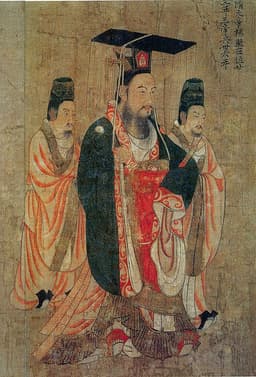
Emperor Wen of Sui
Emperor · Medieval
80.3Total
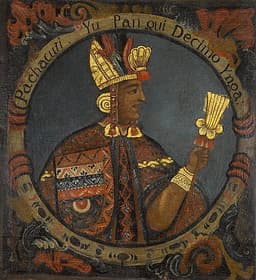
Pachacuti
Emperor · Medieval
69.4Total
Basic Information
Born
541
1418
Died
604
1472
Era
Medieval
Medieval
Nationality
China
Inca Empire
Occupation
Emperor
Emperor
Civilization
Eastern
Other
Score Comparison
Military (10%)
76.0
78.5
Political (20%)
75.0
58.1
Influence (20%)
88.0
65.0
Legacy (20%)
80.0
72.0
Leadership (15%)
80.0
78.0
Strategy (15%)
75.0
69.2
TOTAL
80.3
69.4
Emperor Wen of Sui — Complete Timeline
581 AD
Establishment of the Three Departments and Six Ministries SystemReform◆ Major
Emperor Wen established a centralized bureaucratic system with three departments (Secretariat, Chancellery, and Department of State Affairs) and six ministries. This system became the foundation of Chinese government administration for centuries.
Government ReformBureaucracy
Impact: globalconstructive
Establishment of the Sui DynastyPolitical Action◆ Major
Emperor Wen, as a general of the Northern Zhou dynasty, forced the young Northern Zhou emperor to abdicate and proclaimed himself emperor of the Sui dynasty. This marked the beginning of the Sui dynasty, which would go on to reunify China.
Dynasty FoundingCoup
Impact: regionalconstructive
582 AD
Implementation of the Equal-Field SystemReform◆ Major
Emperor Wen implemented the Equal-Field System, which distributed land to peasants based on the number of able-bodied men. This reform increased agricultural productivity, stabilized tax revenues, and reduced the power of large landowners.
Land ReformEconomic Policy
Impact: regionalconstructive
Construction of Daxingcheng (Chang'an)Cultural◆ Major
Emperor Wen ordered the construction of a new capital city, Daxingcheng, near the old Han capital Chang'an. This city, later known as Chang'an, became a model for urban planning and served as the capital of the Sui and Tang dynasties.
Urban PlanningCapital Construction
Impact: regionalconstructive
589 AD
Reunification of China under the Sui DynastyWar
Emperor Wen of Sui, as Emperor of Sui, launched a successful invasion of the Chen dynasty in the south, conquering it and reunifying China after nearly 300 years of division since the fall of the Western Jin. This ended the Northern and Southern Dynasties period.
UnificationConquest
Impact: globalconstructive
Pachacuti — Complete Timeline
1438 AD
Conquest of the Chanka KingdomWar
Pachacuti led the Inca army to defeat the Chanka, a powerful rival, in a decisive battle near Cusco. This victory secured his position as Sapa Inca and initiated a period of rapid expansion, transforming the Inca from a small kingdom into a vast empire.
ConquestInca ExpansionChanka
Impact: regional
1440 AD
Reconstruction of CuscoCultural◆ Major
Pachacuti rebuilt Cusco as the imperial capital, designing it in the shape of a puma and constructing massive stone structures like Sacsayhuam
Urban PlanningArchitectureInca Empire
Impact: regionalconstructive
1450 AD
Initiation of Machu Picchu's ConstructionCultural◆ Major
Pachacuti ordered the construction of Machu Picchu, a royal estate and ceremonial site high in the Andes. The complex featured sophisticated dry-stone masonry and terraced agriculture, serving as a symbol of Inca engineering and a retreat for the emperor.
ArchitectureRoyal EstateInca Engineering
Impact: regionalconstructive
Expert Analysis
Pachacuti vs Emperor Wen of Sui: Historical Comparison
Two transformative medieval emperors who reshaped their civilizations: Pachacuti expanded the Inca Empire from a small kingdom into a vast Andean state, while Emperor Wen of Sui reunified a fractured China after centuries of division.
Dimension Analysis
**Military: Pachacuti 67 / Emperor Wen of Sui 76**
Pachacuti conquered neighboring tribes and designed the Inca military system, but Emperor Wen’s campaigns were more strategically efficient, reunifying a larger, more populous region with fewer resources and consolidating power through minimal bloodshed.
**Political: Pachacuti 71 / Emperor Wen of Sui 79**
Pachacuti centralized Inca governance through a network of administrators and roads, yet Wen’s political reforms—including the establishment of the Three Departments and Six Ministries—created a durable bureaucratic model that outlasted his dynasty.
**Influence: Pachacuti 78 / Emperor Wen of Sui 77**
Pachacuti’s architectural and agricultural innovations (Machu Picchu, terracing) left a profound cultural imprint, while Wen’s influence on Chinese legal codes and land reforms (equal-field system) shaped subsequent dynasties, though his impact was more institutional than iconic.
**Legacy: Pachacuti 66 / Emperor Wen of Sui 85**
The Inca Empire collapsed within decades of Spanish contact, limiting Pachacuti’s long-term legacy; Wen’s Sui dynasty was short-lived, but his unification and reforms directly enabled the Tang Golden Age, giving him a far more sustained historical impact.
**Leadership: Pachacuti 84 / Emperor Wen of Sui 80**
Pachacuti’s visionary leadership inspired rapid expansion and cultural renaissance, while Wen’s pragmatic, frugal rule stabilized a war-torn land; Pachacuti edges ahead for sheer charismatic transformation, but Wen’s steady hand proved more sustainable.
Verdict
Emperor Wen of Sui leads overall due to his superior political unification, enduring bureaucratic legacy, and foundational role in China’s medieval revival, despite Pachacuti’s higher leadership charisma.
FAQ
Q: Who ranks higher? A: Emperor Wen of Sui (80) edges Pachacuti (74) thanks to stronger political and legacy scores, reflecting his more lasting institutional contributions to Chinese civilization.
Rankings
🥇
Emperor Wen of SuiLeader
Mil: 76.0Pol: 75.0Inf: 88.0
80.3
🥈
Pachacuti
Mil: 78.5Pol: 58.1Inf: 65.0
69.4
+10.9 behind
How This Comparison Works
Algorithm
Each figure is scored on 6 dimensions (0—100 scale) based on structured historical data: Military (10%), Political (20%), Influence (20%), Legacy (20%), Leadership (15%), Strategy (15%). The weighted total produces the final ranking.
Data Sources
Scores are computed from structured sub-indicators in the database. Scale factors adjust for era (Ancient ×0.85, Modern ×1.0) and civilization size (Eastern ×1.05, Other ×0.80) to account for differences in population and military scale.
Maximum 3 Figures
Comparisons are limited to 2—3 figures to ensure readability and statistical meaningfulness.
Error Margins
±5 points per dimension — Sub-scores are derived from historical records with inherent uncertainty. Two figures within 5 points on a dimension should be considered roughly equivalent in that area.
Total Score Accuracy
±3 points overall — The weighted combination of 6 dimensions produces a total score with approximately ±3 points of uncertainty. Differences of less than 3 points are not statistically significant— the figures are effectively tied.
Known Limitations
- Historical records are incomplete and uneven across civilizations
- Figures from oral-tradition societies may be underrepresented
- Occupation labels can misclassify multi-role figures
- Scores measure capability and impact, not moral character
- Quantitative scoring is a comparison tool, not absolute truth
Capability Radar
Military (10%) — Battles & Warfare
Battles
75
85
Win Rate
80
90
Expansion
85
90
Political (20%) — Governance & Reform
Reform
95
92
Diplomacy
85
75
Economy
90
80
Influence (20%) — Cultural & Global Reach
Cultural
70
85
Global
65
65
Legacy (20%) — Historical Impact
Historical
85
80
Longevity
70
70
Leadership (15%) — Power & Stability
Tenure
80
85
Stability
75
82
Strategy (15%) — Tactics & Innovation
Strategy
85
88
Tactics
70
80
Reform
90
85
Similar Comparisons
Comments & Discussion
ArchQuill116/16/2026
把Pachacuti和隋文帝放在一起比,本身就是个有趣的跨文明尝试。但说实话,这个评分体系对隋文帝的军事分(76)可能偏低了。他平定南陈时,用“分兵合击”战术,五路大军共51万人,仅用四个月就完成统一,而南陈当时还有长江天险和10万水军——这效率比Pachacuti打奇穆王国快得多。另外,隋文帝的“三省六部制”影响中国官制一千多年,而印加帝国的驿站和结绳记事再精巧,也没有形成全球性制度遗产。不过Pachacuti的“领袖分”(84)确实高得有道理,他在短短三十年内从库斯科一个小部落扩张到整个安第斯山脉,这种个人魅力是隋文帝那种“抠门节俭”的务实风格无法比拟的。
Chronicler26236/16/2026
仔细分析一下这个评分,发现几个数据矛盾。军事分:隋文帝76 vs Pachacuti 67,但隋文帝统一过程中真正的大仗只有灭陈一战,而且隋军兵力优势明显(50万 vs 10万);而Pachacuti从1438年继位到1471年去世,几乎每年都在征服新部落,比如对昌卡人的反攻战,他带着3万新兵击败了5万昌卡老兵——这种逆风翻盘的战役应该加分。再说影响力分,Pachacuti 78 vs 隋文帝 77,但隋文帝的《开皇律》废除了宫刑、枭首等酷刑,直接被唐律继承,再传到日本、朝鲜——这影响的广度难道不比马丘比丘那几座石头房子更深远?我建议把隋文帝影响力至少调到80以上。