Loading...
Emperor Wen of Sui vs Henry the Fowler
Emperor Wen of Sui leads by 19.4 pts · 2 figures compared
…
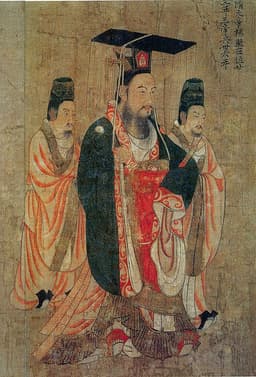
Emperor Wen of Sui
Emperor · Medieval
80.3Total
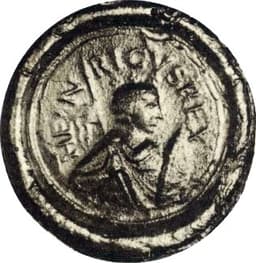
Henry the Fowler
Emperor · Medieval
60.9Total
Basic Information
Born
541
876
Died
604
936
Era
Medieval
Medieval
Nationality
China
East Francia
Occupation
Emperor
Emperor
Civilization
Eastern
Western
Score Comparison
Military (10%)
76.0
70.0
Political (20%)
75.0
59.3
Influence (20%)
88.0
55.0
Legacy (20%)
80.0
52.0
Leadership (15%)
80.0
85.0
Strategy (15%)
75.0
55.0
TOTAL
80.3
60.9
Emperor Wen of Sui — Complete Timeline
581 AD
Establishment of the Three Departments and Six Ministries SystemReform◆ Major
Emperor Wen established a centralized bureaucratic system with three departments (Secretariat, Chancellery, and Department of State Affairs) and six ministries. This system became the foundation of Chinese government administration for centuries.
Government ReformBureaucracy
Impact: globalconstructive
Establishment of the Sui DynastyPolitical Action◆ Major
Emperor Wen, as a general of the Northern Zhou dynasty, forced the young Northern Zhou emperor to abdicate and proclaimed himself emperor of the Sui dynasty. This marked the beginning of the Sui dynasty, which would go on to reunify China.
Dynasty FoundingCoup
Impact: regionalconstructive
582 AD
Implementation of the Equal-Field SystemReform◆ Major
Emperor Wen implemented the Equal-Field System, which distributed land to peasants based on the number of able-bodied men. This reform increased agricultural productivity, stabilized tax revenues, and reduced the power of large landowners.
Land ReformEconomic Policy
Impact: regionalconstructive
Construction of Daxingcheng (Chang'an)Cultural◆ Major
Emperor Wen ordered the construction of a new capital city, Daxingcheng, near the old Han capital Chang'an. This city, later known as Chang'an, became a model for urban planning and served as the capital of the Sui and Tang dynasties.
Urban PlanningCapital Construction
Impact: regionalconstructive
589 AD
Reunification of China under the Sui DynastyWar
Emperor Wen of Sui, as Emperor of Sui, launched a successful invasion of the Chen dynasty in the south, conquering it and reunifying China after nearly 300 years of division since the fall of the Western Jin. This ended the Northern and Southern Dynasties period.
UnificationConquest
Impact: globalconstructive
Henry the Fowler — Complete Timeline
919 AD
Election as King of East FranciaPolitical Action
Henry the Fowler was elected King of East Francia by the Saxon and Frankish nobles at Fritzlar on May 6, 919. He was the first Saxon king, marking the transition from Carolingian to Ottonian rule. His election was contested by other dukes but he prevailed.
ElectionAccessionOttonian Dynasty
Impact: regionalconstructive
921 AD
Treaty of Bonn (921)Political Action◆ Major
Henry the Fowler signed the Treaty of Bonn with Charles the Simple of West Francia, recognizing each other's royal titles and establishing peaceful relations. This treaty ended Carolingian claims over East Francia and solidified Henry's legitimacy as an independent king.
TreatyRecognitionDiplomacy
Impact: regionalconstructive
924 AD
Nine-Year Truce with the MagyarsPolitical Action◆ Major
Henry the Fowler negotiated a nine-year truce with the Magyars, agreeing to pay tribute in exchange for a halt to their raids. He used this period to fortify towns, reorganize the army, and train cavalry. This strategic pause was crucial for his later military reforms.
TruceMagyarsMilitary Reform
Impact: regionalconstructive
929 AD
Battle of Lenzen (929)War◆ Major
Henry the Fowler's forces defeated a Slavic army at the Battle of Lenzen, securing the eastern frontier of East Francia. This victory allowed Henry to consolidate control over the Elbe region and establish the March of Brandenburg, a key step in German eastward expansion.
BattleSlavic WarsEastern Expansion
Impact: regionalconstructive
933 AD
Battle of Riade (933)War
After the truce with the Magyars expired, Henry the Fowler led a German army to victory at the Battle of Riade (near Merseburg). The defeat of the Magyar cavalry ended their raids into East Francia for a generation and established Henry's reputation as a defender of Christendom.
BattleMagyarsVictory
Impact: regionalconstructive
936 AD
Death of Henry the FowlerOther◆ Major
Henry the Fowler died on July 2, 936, at Memleben. He was succeeded by his son, Otto I, who would become Holy Roman Emperor. Henry's reign laid the foundations for the Ottonian dynasty and the medieval German kingdom.
DeathSuccessionOttonian
Impact: regional
Expert Analysis
Henry the Fowler vs Emperor Wen of Sui
# The Unifier and the Founder: Two Kings Who Forged Nations from Chaos
In the year 589, a Chinese emperor stood victorious on the banks of the Yangtze River, watching the last vestiges of the Chen dynasty collapse before him. Three centuries of division—the bloody chaos of the Sixteen Kingdoms and the Northern and Southern dynasties—had finally ended. Half a continent away and three centuries earlier, on a windswept plain near the Unstrut River in 933, a Saxon king watched his cavalry shatter the dreaded Magyar horsemen who had terrorized East Francia for a generation. Both men had taken shattered realms and hammered them into something new. But their paths, their tools, and their outcomes could not have been more different.
Origins
Emperor Wen of Sui, born Yang Jian in 541, emerged from the perilous world of the Northern Zhou court, where noble families schemed and murdered their way to power. His father was a general, and the son inherited not only military command but also a deep understanding of how fragile imperial authority could be. The China of his youth was a landscape of warring dynasties, where the north was ruled by sinicized nomads and the south by a decaying Chinese court at Jiankang. Wen learned early that survival meant mastering both the sword and the scroll.
Henry the Fowler, born in 876, came from a very different world. The duchies of East Francia—Saxony, Bavaria, Swabia, Franconia—were barely held together by the crumbling Carolingian dynasty. Henry’s father was Otto the Illustrious, duke of Saxony, and young Henry grew up in the shadow of Viking raids, Magyar invasions, and Slavic uprisings. His was a world of local loyalties, where a king was only as strong as the dukes who elected him. Where Wen inherited a sophisticated bureaucracy, Henry inherited a warrior’s tradition and a land of fortified hilltops.
Rise to Power
Wen’s path to power was a masterpiece of calculated patience. In 580, when the Northern Zhou emperor died suddenly, Wen seized the regency for the infant successor. Within a year, he had crushed a rebellion by rival generals, forced the boy-emperor to abdicate, and proclaimed the Sui dynasty in 581. He did not conquer his way to the throne; he maneuvered his way there, using political marriages, alliances, and the systematic elimination of rivals.
Henry’s rise was more straightforward but no less remarkable. When King Conrad I of East Francia lay dying in 918, he reportedly told his brother: “Henry is the most capable man for the kingship.” Conrad’s gesture—choosing competence over dynasty—was extraordinary. In 919, the Saxon and Frankish nobles elected Henry king at Fritzlar. But unlike Wen, who inherited a centralized state, Henry had to earn every shred of authority. The dukes of Bavaria and Swabia initially refused to recognize him. He had to persuade, bargain, and occasionally fight for their allegiance.
Leadership & Governance
Emperor Wen governed through systems. In 581, he established the Three Departments and Six Ministries, a bureaucratic framework that would endure for centuries. The following year, he implemented the Equal-Field System, redistributing land to peasants and breaking the power of aristocratic estates. He built Daxingcheng, a new capital that would later be known as Chang’an, with grid-like precision and grand avenues. Wen believed that order came from institutions, not from the whims of men. His reforms were sweeping, rational, and remarkably effective.
Henry governed through relationships. He signed the Treaty of Bonn in 921 with Charles the Simple of West Francia, not to create a permanent peace but to secure his western flank. In 924, he negotiated a nine-year truce with the Magyars, paying tribute to buy time. While Wen built walls of stone and law, Henry built walls of trust and obligation. He spent those nine years fortifying towns, training cavalry, and binding the German duchies into a fragile confederation. His was a leadership of patience and personal authority, not bureaucratic decree.
Where Wen centralized, Henry decentralized. Wen’s China became a unified empire with standardized laws, currency, and administration. Henry’s East Francia remained a collection of powerful duchies, each with its own traditions and loyalties. Wen’s system was designed to control; Henry’s was designed to hold together.
Triumph & Tragedy
Wen’s greatest triumph was the reunification of China in 589. His invasion of the Chen dynasty was a model of planning: 500,000 troops, coordinated river and land operations, and a propaganda campaign that painted the Chen rulers as decadent and corrupt. When Jiankang fell, Wen wept—not from joy, but from the weight of what he had achieved. He had ended 300 years of division.
But Wen’s tragedy was his own family. His son, Yang Guang, later Emperor Yang, would squander his father’s achievements through grandiose projects and disastrous wars. Wen himself died under suspicious circumstances in 604, possibly murdered by his own son. The dynasty he founded would last only 37 years.
Henry’s triumph came at the Battle of Riade in 933. When the Magyar truce expired, Henry refused to pay further tribute. The Magyar army, confident from years of plunder, rode into Saxony. Henry met them with a new weapon: heavily armored cavalry trained during the years of peace. The victory was decisive. For the first time, a German king had defeated the Magyars in open battle.
Henry’s tragedy was that he never saw his greatest achievement. He died in 936, leaving his son Otto to inherit a kingdom that was stable, respected, and ready for greatness. Otto would become the first Holy Roman Emperor, but he stood on foundations his father had laid.
Character & Destiny
Wen was a man of cold calculation. He was frugal, suspicious, and ruthless. He executed rivals, purged officials, and distrusted everyone, including his own sons. His personality drove him to build systems that would outlast any individual, but it also drove him to isolate himself, leaving his dynasty vulnerable to the very family he had tried to control.
Henry was a man of pragmatic warmth. He was known as “the Fowler” because he was reportedly trapping birds when informed of his election—a story that suggests a man who valued patience and simplicity over courtly ambition. He ruled by persuasion, not terror. His personality allowed the German duchies to retain their pride while accepting his leadership.
Wen built for eternity and got a generation. Henry built for his time and got an empire.
Legacy
Emperor Wen of Sui is remembered as the man who reunified China, whose bureaucratic innovations shaped the Tang dynasty that followed, and whose capital became the model for East Asian city planning. His legacy score of 85.0 reflects a figure who, despite his dynasty’s brevity, changed the course of Chinese history.
Henry the Fowler is remembered as the founder of the Ottonian dynasty, the first truly German king, and the man who turned back the Magyar tide. His legacy score of 65.7 reflects a figure whose achievements were overshadowed by his son Otto’s imperial coronation. Yet every Holy Roman Emperor who followed—for nearly a millennium—could trace his authority back to the Saxon king who preferred bird-trapping to throne-grabbing.
Conclusion
One built an empire of laws, the other an empire of loyalties. One unified a civilization that had been broken for centuries; the other forged a nation from fragments that had never been whole. Emperor Wen of Sui and Henry the Fowler both understood that the deepest foundations are not laid in a single generation. But where Wen sought to control the future through institutions, Henry trusted it to the men he had bound together. In the end, both were proven right—and both were proven wrong. Their stories remind us that there is no single path to greatness, only the one that fits the hour and the hand that holds the reins.
Rankings
🥇
Emperor Wen of SuiLeader
Mil: 76.0Pol: 75.0Inf: 88.0
80.3
🥈
Henry the Fowler
Mil: 70.0Pol: 59.3Inf: 55.0
60.9
+19.4 behind
How This Comparison Works
Algorithm
Each figure is scored on 6 dimensions (0—100 scale) based on structured historical data: Military (10%), Political (20%), Influence (20%), Legacy (20%), Leadership (15%), Strategy (15%). The weighted total produces the final ranking.
Data Sources
Scores are computed from structured sub-indicators in the database. Scale factors adjust for era (Ancient ×0.85, Modern ×1.0) and civilization size (Eastern ×1.05, Other ×0.80) to account for differences in population and military scale.
Maximum 3 Figures
Comparisons are limited to 2—3 figures to ensure readability and statistical meaningfulness.
Error Margins
±5 points per dimension — Sub-scores are derived from historical records with inherent uncertainty. Two figures within 5 points on a dimension should be considered roughly equivalent in that area.
Total Score Accuracy
±3 points overall — The weighted combination of 6 dimensions produces a total score with approximately ±3 points of uncertainty. Differences of less than 3 points are not statistically significant— the figures are effectively tied.
Known Limitations
- Historical records are incomplete and uneven across civilizations
- Figures from oral-tradition societies may be underrepresented
- Occupation labels can misclassify multi-role figures
- Scores measure capability and impact, not moral character
- Quantitative scoring is a comparison tool, not absolute truth
Capability Radar
Military (10%) — Battles & Warfare
Battles
75
55
Win Rate
80
60
Expansion
85
60
Political (20%) — Governance & Reform
Reform
95
75
Diplomacy
85
70
Economy
90
65
Influence (20%) — Cultural & Global Reach
Cultural
70
55
Global
65
40
Legacy (20%) — Historical Impact
Historical
85
65
Longevity
70
60
Leadership (15%) — Power & Stability
Tenure
80
70
Stability
75
70
Strategy (15%) — Tactics & Innovation
Strategy
85
65
Tactics
70
50
Reform
90
70
Similar Comparisons
Comments & Discussion
SwiftSkeptic6/16/2026
Numbers don't lie: Wen unified 30 million people across a continent-sized empire; Henry scrapped over a few hundred thousand souls in mud-walled villages. Calling them "peers" is like comparing a symphony to a tavern jig. Wen's census reordered 8 million households—Henry couldn't count his own peasants. One built an administrative marvel, the other a tribal patchwork. Sorry, Henry fans, but your guy was a minor league warlord next to a true imperial architect.
德意志圆桌骑士6/16/2026
说亨利是"建国者"?别逗了。他搞的所谓"东法兰克"就是个贵族俱乐部,公爵们看他像看临时工。奥托大帝不过是把亨利的底牌打好了,但亨利自己连王冠都拒绝加冕——怕得罪萨克森贵族。对比文帝杨坚,那可是雷厉风行废了北周幼帝、屠了宇文皇族,干净利落。亨利连血腥政变都不敢搞,算什么"铸造国家"?我看就是个老好人村长。
PhalanxPhil6/16/2026
Give Henry credit: he innovated military doctrine. The Saxon heavy cavalry he refined broke Magyar hit-and-run tactics at Riade in 933—a decisive victory that stabilized Central Europe. Meanwhile, Wen's conquest of Chen was a siege slog; his army suppressed internal revolts more than facing external threats. Henry couldn't build Wen's canals or bureaucracies, sure—but he hardened a frontier kingdom through sheer grit. Different tools, same result: survival. Wen unified; Henry fortified.
古典琴师6/16/2026
杨坚的文化底子比亨利高到不知哪里去。他本人通晓儒学,编修《开皇律》废除了宫刑等酷刑,还推广佛教——别忘了他种下的仁寿舍利塔至今还在。亨利呢?据说叫"捕鸟者"是因为他爱设陷阱捉鸟?拜托文皇帝设立科举制雏形的时候,亨利连拉丁文都念不利索。一个从刀俎中长出的文化帝国,一个靠打猎沟通的蛮族公爵,这叫一个水平?
RevisionistRico6/16/2026
Wen's "unification" was a propaganda myth. The Sui smashed Chen, but southern elites revolted within a decade—the empire was never truly stable. Henry's East Francia, by contrast, became the kernel of Germany, lasting a millennium. Henry built a durable legacy out of fragile alliances; Wen built a house of cards that collapsed under his son. The Magyars were a threat; the Chen dynasty was a punching bag. Who faced down real chaos longer? Henry, hands down.
铁汉柔情6/16/2026
别总拿人口压人。亨利接手的是碎成一地的部落,杨坚继承的可是已经有官僚系统的北周。亨利必须讨价还价、分