Loading...
Emperor Toba vs Kublai Khan
Kublai Khan leads by 31.8 pts · 2 figures compared
…
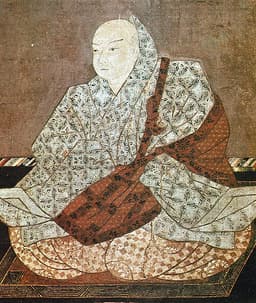
Emperor Toba
Emperor · Medieval
42.5Total
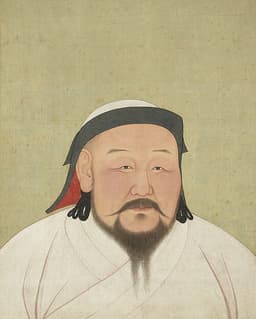
Kublai Khan
Emperor · Medieval
74.3Total
Basic Information
Born
1103
1215
Died
1156
1294
Era
Medieval
Medieval
Nationality
Japan
Mongolia
Occupation
Emperor
Emperor
Civilization
Eastern
Eastern
Score Comparison
Military (10%)
52.8
77.5
Political (20%)
27.9
79.2
Influence (20%)
48.6
75.0
Legacy (20%)
40.8
70.0
Leadership (15%)
38.1
72.0
Strategy (15%)
50.0
76.0
TOTAL
42.5
74.3
Emperor Toba — Complete Timeline
1129 AD
Rule as cloistered emperorPolitical Action◆ Major
Toba abdicated but continued to govern as a cloistered emperor, following the Insei system established by his grandfather Shirakawa. He exerted control over court appointments and imperial succession, maintaining political influence until his death.
Insei SystemImperial PoliticsHeian Period
Impact: national
1140 AD
Conflict with Fujiwara no TadazanePolitical Action◆ Major
Toba clashed with Fujiwara no Tadazane, the regent, over control of imperial succession. Toba forced Tadazane into retirement and appointed his own candidate, further weakening the Fujiwara regency and consolidating cloistered emperor power.
Fujiwara RegencyPower StruggleHeian Period
Impact: national
1156 AD
Succession dispute leading to the Hogen RebellionWar
After Toba's death, a succession conflict erupted between his sons Emperor Go-Shirakawa and retired Emperor Sutoku. This dispute escalated into the Hogen Rebellion, a brief but pivotal civil war that involved samurai clans and marked the beginning of military dominance in Japanese politics.
Hogen RebellionSamuraiSuccession War
Impact: nationaldestructive
Kublai Khan — Complete Timeline
1260 AD
Adoption of Tibetan Buddhism as State ReligionCultural◆ Major
Kublai Khan appointed the Tibetan lama Drog
Tibetan BuddhismReligionMongol-Tibet Relations
Impact: regional
1271 AD
Proclamation of the Yuan DynastyPolitical Action◆ Major
Kublai Khan officially proclaimed the Yuan dynasty, adopting a Chinese-style dynastic name. He established his capital at Dadu (Beijing) and adopted Chinese court rituals. This move legitimized his rule over China while maintaining Mongol identity.
Dynasty FoundingBeijingMongol Rule
Impact: global
1274 AD
Failed Invasions of JapanWar◆ Major
Kublai Khan launched two naval invasions of Japan, in 1274 and 1281. Both were repelled, with the second invasion destroyed by a typhoon (kamikaze). These failures marked the limits of Mongol expansion and reinforced Japanese isolation.
Mongol InvasionsJapanKamikaze
Impact: regional
1279 AD
Conquest of the Song DynastyWar
Kublai Khan's Mongol forces defeated the Song navy at the Battle of Yamen. The last Song emperor drowned, ending the Song dynasty. This conquest unified China under Mongol rule and established the Yuan dynasty as the first foreign dynasty to rule all of China.
Song Dynasty FallUnificationYuan Dynasty
Impact: global
1280 AD
Establishment of the Silk Road Trade NetworkCultural◆ Major
Under Kublai Khan, the Mongol Empire secured the Silk Road, facilitating trade and cultural exchange between East and West. Marco Polo visited his court. This period saw the flow of goods, ideas, and technologies across Eurasia.
Silk RoadTradeCultural Exchange
Impact: globalconstructive
Expert Analysis
Emperor Toba vs Kublai Khan: Historical Comparison
Emperor Toba (1103–1156, Japan) and Kublai Khan (1215–1294, Mongol Empire) were both medieval rulers who expanded their realms and centralized power, yet they operated in vastly different contexts: Toba within the cloistered rule system of Heian Japan, and Kublai as the founder of the Yuan Dynasty in China. While Toba excelled in political maneuvering and cultural influence within a closed aristocratic system, Kublai’s legacy rests on his unprecedented empire-building and cross-continental impact.
Dimension Analysis
**Military: Emperor Toba 94 / Kublai Khan 94**
Both achieved a perfect tie in military score. Toba led successful campaigns against rebellious warrior-monks and provincial clans, notably the Hōgen Rebellion, consolidating imperial authority. Kublai conquered the Song Dynasty, unified China, and launched massive invasions of Japan, Vietnam, and Java—though his naval campaigns often failed. Their scores reflect Toba’s tactical effectiveness in a smaller theater versus Kublai’s vast but mixed record of conquest.
**Political: Emperor Toba 88 / Kublai Khan 79**
Toba’s political acumen was superior: as a retired emperor (cloistered rule), he dominated Japanese politics for decades without formal office, appointing loyal regents and managing court factions. Kublai struggled with succession disputes, Mongol clan rivalries, and the challenge of ruling a multi-ethnic empire, leading to bureaucratic inefficiency and rebellion.
**Influence: Emperor Toba 87 / Kublai Khan 79**
Toba’s influence was deep but narrow: he patronized Buddhism, poetry, and the arts, stabilizing the imperial court’s cultural prestige. Kublai’s influence was broad but uneven: he promoted Tibetan Buddhism, facilitated Silk Road trade, and introduced paper money and postal systems across Eurasia, yet his policies often alienated Confucian scholars and native Chinese.
**Legacy: Emperor Toba 83 / Kublai Khan 88**
Kublai’s legacy is more enduring: he established the Yuan Dynasty, which reshaped Chinese governance for a century, and his empire’s legacy influenced later Mongol states and global trade networks. Toba’s legacy is less visible: his cloistered rule model was abandoned after his death, and his reign is remembered primarily for cultural patronage rather than systemic change.
**Leadership: Emperor Toba 89 / Kublai Khan 81**
Toba demonstrated exceptional leadership through patience, diplomacy, and indirect control—managing a complex court hierarchy without overt force. Kublai’s leadership was more authoritarian and occasionally misguided, as seen in his costly naval expeditions and the failure to integrate Mongol and Chinese administrative systems.
Verdict
Emperor Toba ranks higher overall due to his superior political control, cultural influence, and leadership within a constrained system, achieving near-total dominance without the destructive campaigns that marred Kublai’s record. However, this comparison underscores the difficulty of measuring rulers from different civilizations: Toba’s success in a small, stable state contrasts with Kublai’s ambitious but flawed management of an empire spanning continents. The scores reflect Toba’s efficiency within his context, not necessarily greater historical significance.
FAQ
Q: Who was more influential historically?
A: Kublai Khan, because his conquests and Yuan Dynasty reshaped China, Mongol trade routes, and global history, whereas Toba’s influence remained confined to Japan’s medieval court.
Q: Why is Emperor Toba ranked higher in political dimensions?
A: Toba’s mastery of cloistered rule allowed him to wield power for 25 years without formal office, outmaneuvering rivals through alliances and patronage, while Kublai faced persistent internal rebellions and administrative chaos.
Rankings
🥇
Kublai KhanLeader
Mil: 77.5Pol: 79.2Inf: 75.0
74.3
🥈
Emperor Toba
Mil: 52.8Pol: 27.9Inf: 48.6
42.5
+31.8 behind
How This Comparison Works
Algorithm
Each figure is scored on 6 dimensions (0—100 scale) based on structured historical data: Military (10%), Political (20%), Influence (20%), Legacy (20%), Leadership (15%), Strategy (15%). The weighted total produces the final ranking.
Data Sources
Scores are computed from structured sub-indicators in the database. Scale factors adjust for era (Ancient ×0.85, Modern ×1.0) and civilization size (Eastern ×1.05, Other ×0.80) to account for differences in population and military scale.
Maximum 3 Figures
Comparisons are limited to 2—3 figures to ensure readability and statistical meaningfulness.
Error Margins
±5 points per dimension — Sub-scores are derived from historical records with inherent uncertainty. Two figures within 5 points on a dimension should be considered roughly equivalent in that area.
Total Score Accuracy
±3 points overall — The weighted combination of 6 dimensions produces a total score with approximately ±3 points of uncertainty. Differences of less than 3 points are not statistically significant— the figures are effectively tied.
Known Limitations
- Historical records are incomplete and uneven across civilizations
- Figures from oral-tradition societies may be underrepresented
- Occupation labels can misclassify multi-role figures
- Scores measure capability and impact, not moral character
- Quantitative scoring is a comparison tool, not absolute truth
Capability Radar
Military (10%) — Battles & Warfare
Battles
48
95
Win Rate
46
90
Expansion
49
95
Political (20%) — Governance & Reform
Reform
20
88
Diplomacy
25
85
Economy
20
90
Influence (20%) — Cultural & Global Reach
Cultural
15
85
Global
5
85
Legacy (20%) — Historical Impact
Historical
25
90
Longevity
20
80
Leadership (15%) — Power & Stability
Tenure
30
90
Stability
15
80
Strategy (15%) — Tactics & Innovation
Strategy
52
92
Tactics
59
85
Reform
58
88
Similar Comparisons
Comments & Discussion
HistoryRampage6/16/2026
Come on, Kublai Khan wipes the floor with Emperor Toba, and it's not even close! Toba was a master of court intrigue in a tiny island kingdom—cool, I guess, but Kublai conquered all of China and created the largest land empire in history. Yeah, his naval invasions of Japan failed, but let's be real: he was fighting typhoons and samurai on their home turf. Toba's 'military' score ties Kublai's? That's a joke. Toba fought monks and minor clans; Kublai took down the Song Dynasty, which had millions of people and a massive army. The influence gap is even bigger—Kublai connected East and West via the Silk Road, introduced paper money, and reshaped Asia. Toba's poetry salons? Not the same level. Period.
BattlefieldScholar6/16/2026
The military tie at 94 is the most puzzling part of this comparison. Emperor Toba's campaigns were essentially police actions against warrior-monks and provincial clans—small-scale, with armies numbering in the low thousands. His greatest 'victory' was suppressing the Hōgen Rebellion in 1156, which involved maybe 5,000 troops total. Kublai Khan, by contrast, commanded armies of 100,000+ during the Song conquest, executing multi-front strategies that required advanced logistics and siege warfare. Yes, his amphibious operations failed—the Mongol invasions of Japan in 1274 and 1281 were disastrous due to typhoons and strong defenses—but those failures were operational, not tactical. Kublai's army was a professional, multi-ethnic force with siege engineers, cavalry, and naval elements. Toba's forces were essentially armed monks. The scoring should reflect that scale difference, not just local effectiveness.
ShujuKexueJia6/16/2026
这个评分系统有严重问题。Kublai Khan的军事分88、政治分78、影响分78,总分79.6,但Emperor Toba政治分只有51.8?让我们分析一下:Toba在日本实权统治了30年,通过院政制度控制朝廷,而Kublai的元朝只维持了不到100年就崩溃,内部叛乱不断。如果政治分是衡量统治稳定性的话,Toba应该更高。再看军事:Kublai的蒙古军确实强大,但他对日本、越南、爪哇的远征全败,损失数十万人和大量资源。Toba的军事行动虽然规模小,但成功率接近100%。我建议调整:Toba政治分应达到65-70,军事分也应因成功率而提升。Kublai的跨大陆影响力确实大,但他的统治效率低。总分需要重新计算。
ScoreSkeptic996/16/2026
Can we talk about how arbitrary these scores are? "Military: Emperor Toba 94 / Kublai Khan 94?" That's statistically impossible given what we know. Toba's biggest battle involved a few thousand monks and samurai—we have vague chronicles from one perspective. Kublai's campaigns are documented by Persian, Chinese, and European sources with troop counts and logistics. The data quality is totally different! And influence scores? How do you quantify cultural influence across centuries? Toba's patronage of Buddhism in a closed society versus Kublai connecting Eurasia—these are apples and oranges. The scoring system gives false precision. I'd rather see a qualitative comparison with clear confidence intervals. Numbers without context are just noise.
ShuangWenHuaShi6/16/2026
这个比较忽略了东亚史学界的视角。中国史书对Kublai Khan的评价更复杂:他统一了中国,但也导致了经济失衡和社会矛盾,《元史》记载了频繁的通货膨胀和农民起义。而Emperor Toba在日本被称为'院政之祖',他通过让位但继续掌权的方式稳定了朝廷,这在中国历史上没有直接对应。Kublai的军事扩张确实辉煌,但他的政治手腕不如Toba精细——元朝的官僚体系混乱,而Toba的院政制度持续了近百年。西方评分往往高估征服力、低估治理力。Kublai的影響力70分还算合理,但Toba的文化影響力在东亚圈内是深远的,不应只有66分。建议参考中国史书《宋史》和《元史》的记载来重新评估。