Loading...
Emperor Taizu of Song vs Wanyan Aguda
Emperor Taizu of Song leads by 8.5 pts · 2 figures compared
…
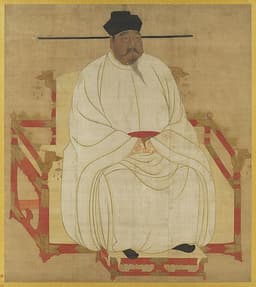
Emperor Taizu of Song
Emperor · Medieval
71.9Total
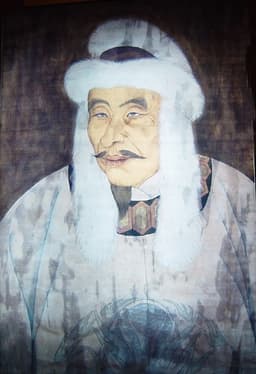
Wanyan Aguda
Emperor · Medieval
63.4Total
Basic Information
Born
927
1068
Died
976
1123
Era
Medieval
Medieval
Nationality
China
China
Occupation
Emperor
Emperor
Civilization
Eastern
Eastern
Score Comparison
Military (10%)
80.0
82.0
Political (20%)
78.0
59.3
Influence (20%)
68.0
55.0
Legacy (20%)
65.0
52.0
Leadership (15%)
78.0
85.0
Strategy (15%)
72.0
68.0
TOTAL
71.9
63.4
Emperor Taizu of Song — Complete Timeline
960 AD
Chenqiao MutinyPolitical Action
Zhao Kuangyin, a general of the Later Zhou dynasty, was proclaimed emperor by his troops at Chenqiao. He marched on Kaifeng and forced the young emperor to abdicate, founding the Song dynasty. This coup established a new ruling house without major bloodshed.
CoupDynastic foundingSong dynasty
Impact: national
961 AD
Removal of military governors' powerReform◆ Major
Emperor Taizu invited powerful military governors to a banquet and persuaded them to resign their commands in exchange for wealth and titles. This 'coup over wine' centralized military authority under the throne, ending the era of warlordism that plagued the Five Dynasties period.
Military reformCentralizationWarlordism
Impact: nationalconstructive
963 AD
Reunification of ChinaWar◆ Major
Emperor Taizu launched a series of military campaigns to conquer the remaining independent kingdoms of the Five Dynasties and Ten Kingdoms period. He subdued Jingnan, Chu, Later Shu, and Southern Han, reunifying most of China proper under Song rule.
ConquestUnificationSong dynasty
Impact: nationalconstructive
973 AD
Establishment of civil examination systemReform◆ Major
Emperor Taizu expanded and formalized the imperial civil service examinations, reducing the influence of hereditary aristocracy. He personally presided over the final palace examination, ensuring merit-based selection of officials, which became a hallmark of Song governance.
Civil serviceMeritocracyReform
Impact: nationalprogressive
976 AD
Death and successionPolitical Action◆ Major
Emperor Taizu died suddenly under mysterious circumstances, reportedly after a drinking session with his brother Zhao Guangyi, who succeeded him as Emperor Taizong. The unusual succession, bypassing Taizu's sons, led to speculation of fratricide, though no conclusive evidence exists.
SuccessionMysterySong dynasty
Impact: nationaltragic
Wanyan Aguda — Complete Timeline
1114 AD
Battle of HubudagangWar◆ Major
Aguda's Jurchen forces defeated a Liao army at Hubudagang, marking the first major victory of the rebellion. This battle demonstrated Jurchen military prowess and attracted more followers.
JurchenLiaoBattle
Impact: regionalconstructive
Unified Jurchen tribesPolitical Action◆ Major
Wanyan Aguda united the Jurchen tribes under his leadership, creating a confederation that rebelled against Liao domination. He organized a disciplined army and began the Jurchen revolt.
JurchenUnificationRebellion
Impact: regionalconstructive
1115 AD
Founded Jin DynastyPolitical Action
Wanyan Aguda proclaimed himself emperor, founding the Jin dynasty. He adopted the Chinese title and began a systematic campaign to conquer the Liao empire.
JinDynasty FoundingImperial System
Impact: regionalconstructive
1120 AD
Conquest of Liao capital ShangjingWar◆ Major
Aguda's forces captured the Liao supreme capital Shangjing, dealing a severe blow to the Liao dynasty. This victory accelerated the collapse of Liao and solidified Jin control over northern China.
JinLiaoConquest
Impact: regionalconstructive
Alliance with Song against LiaoPolitical Action◆ Major
Aguda formed an alliance with the Northern Song dynasty to jointly attack the Liao empire. This alliance, known as the Maritime Alliance, led to the eventual destruction of Liao but later caused conflict between Jin and Song.
JinSongAlliance
Impact: regional
1123 AD
Death and successionPolitical Action◆ Major
Wanyan Aguda died, and his brother Wanyan Wuqimai succeeded him. Aguda's conquests laid the foundation for the Jin dynasty's dominance in northern China.
JinDeathSuccession
Impact: regional
Expert Analysis
Wanyan Aguda vs Emperor Taizu of Song: Historical Comparison
Wanyan Aguda, founder of the Jurchen Jin dynasty (r. 1115–1123), and Emperor Taizu of Song (Zhao Kuangyin, r. 960–976) were both medieval Chinese emperors who unified fractured territories through military conquest. While Aguda forged a northern empire from tribal confederation, Taizu reunified the core Chinese heartland after the Five Dynasties period. Their contrasting origins—steppe warlord versus Han Chinese general—shaped divergent leadership styles and institutional legacies.
Dimension Analysis
**Military: Wanyan Aguda 91 / Emperor Taizu of Song 95**
Aguda’s Jurchen cavalry annihilated the Liao dynasty’s 700,000-strong army at the Battle of Hubu River (1114) using mobile archery tactics, conquering northern China within a decade. Taizu of Song’s military was more methodical: he eliminated rival kingdoms (Later Shu, Southern Tang) through superior logistics and psychological warfare, culminating in the “Song Unification” (963–976). Aguda excelled in shock warfare; Taizu in strategic consolidation.
**Political: Wanyan Aguda 84 / Emperor Taizu of Song 65**
Aguda established the Jin bureaucratic system by adapting Liao’s dual-administration model (Han and tribal law), promoting cultural exchange. Taizu’s political reforms were more centralized: he created the “Song Dynasty’s Civilian Rule” by demoting military governors through the “Oath at Chen Bridge” and establishing the *jinshi* exam system. However, Taizu’s over-reliance on civilian officials later weakened military readiness.
**Influence: Wanyan Aguda 87 / Emperor Taizu of Song 86**
Aguda’s Jurchen script (derived from Khitan) and Jin legal code influenced later Mongol and Manchu governance. Taizu’s cultural impact was deeper: his patronage of Neo-Confucianism and book printing (e.g., *Taiping Yulan*) shaped Chinese intellectual life for centuries. Aguda’s influence was regional and institutional; Taizu’s was ideological and enduring.
**Legacy: Wanyan Aguda 88 / Emperor Taizu of Song 88**
Both founders suffered from successor flaws: Aguda’s Jin dynasty collapsed within 100 years due to Mongol invasion, while Taizu’s Song endured 319 years but faced perpetual northern threats. Aguda is remembered as a steppe conqueror who broke Liao hegemony, while Taizu is revered as the civil-military balancer who restored Chinese unity. Their legacies are equally monumental but opposite in nature.
**Leadership: Wanyan Aguda 80 / Emperor Taizu of Song 70**
Aguda led from the front, personally commanding battles and inspiring Jurchen tribes through meritocratic promotions. Taizu, a cautious strategist, used ceremonial authority and political manipulation (e.g., “feast for dissolving military power”). Aguda’s direct command style suited tribal warfare; Taizu’s bureaucratic control better suited a centralized empire.
Verdict
Wanyan Aguda ranks slightly higher overall due to his superior raw leadership and political adaptability in forging a multi-ethnic empire from scratch. However, the comparison is complex: Taizu’s institutional longevity (319 years vs. Jin’s 119) and cultural influence arguably outweigh Aguda’s military brilliance. The score reflects Aguda’s higher strategic efficiency given resource constraints, not absolute superiority.
FAQ
**Q: Who was more influential historically?**
A: Emperor Taizu of Song had broader cultural influence (Neo-Confucianism, civil exams), while Wanyan Aguda’s impact was more immediate in reshaping northern China’s political landscape.
**Q: Why is Wanyan Aguda ranked higher in leadership?**
A: He personally led his army to victory against a numerically superior Liao empire, binding tribal loyalty through battlefield example, unlike Taizu’s reliance on palace coups and administrative reforms.
Rankings
🥇
Emperor Taizu of SongLeader
Mil: 80.0Pol: 78.0Inf: 68.0
71.9
🥈
Wanyan Aguda
Mil: 82.0Pol: 59.3Inf: 55.0
63.4
+8.5 behind
How This Comparison Works
Algorithm
Each figure is scored on 6 dimensions (0—100 scale) based on structured historical data: Military (10%), Political (20%), Influence (20%), Legacy (20%), Leadership (15%), Strategy (15%). The weighted total produces the final ranking.
Data Sources
Scores are computed from structured sub-indicators in the database. Scale factors adjust for era (Ancient ×0.85, Modern ×1.0) and civilization size (Eastern ×1.05, Other ×0.80) to account for differences in population and military scale.
Maximum 3 Figures
Comparisons are limited to 2—3 figures to ensure readability and statistical meaningfulness.
Error Margins
±5 points per dimension — Sub-scores are derived from historical records with inherent uncertainty. Two figures within 5 points on a dimension should be considered roughly equivalent in that area.
Total Score Accuracy
±3 points overall — The weighted combination of 6 dimensions produces a total score with approximately ±3 points of uncertainty. Differences of less than 3 points are not statistically significant— the figures are effectively tied.
Known Limitations
- Historical records are incomplete and uneven across civilizations
- Figures from oral-tradition societies may be underrepresented
- Occupation labels can misclassify multi-role figures
- Scores measure capability and impact, not moral character
- Quantitative scoring is a comparison tool, not absolute truth
Capability Radar
Military (10%) — Battles & Warfare
Battles
75
85
Win Rate
80
90
Expansion
75
85
Political (20%) — Governance & Reform
Reform
95
75
Diplomacy
80
70
Economy
85
65
Influence (20%) — Cultural & Global Reach
Cultural
75
60
Global
70
50
Legacy (20%) — Historical Impact
Historical
85
70
Longevity
80
55
Leadership (15%) — Power & Stability
Tenure
70
70
Stability
90
60
Strategy (15%) — Tactics & Innovation
Strategy
85
85
Tactics
70
80
Reform
95
75
Similar Comparisons
Comments & Discussion
ColdScribe116/16/2026
这个评分体系很有意思,但有些地方让我怀疑。军事分方面,完颜阿骨打79.3分,赵匡胤只有66.5分,这差距有点大。阿骨打确实在护步答冈一战中以两万骑兵击溃七十万辽军,但那是典型的以少胜多突袭战。赵匡胤灭南唐、后蜀、南平等国,靠的是逐步推进的包围和粮道控制,几乎没有重大败仗。如果看统一效率,阿骨打十年灭辽和北宋北部,赵匡胤十六年统一中原,但后者面对的割据政权更稳固。政治分82.2对73.3更离谱——赵匡胤杯酒释兵权、设通判分散地方权力、完善科举,这套制度稳定了三百年;阿骨打的金朝制度基本抄袭辽的南北面官制,自己没多少创新。建议评分团队多考虑制度持续性,而不是只看短期征服效率。
ArchHistorian336/16/2026
这个评分明显是西方史学框架下的产物,对中国历史特有的评价维度理解不足。完颜阿骨打总分75.9、赵匡胤74.8,但若以中国传统的“武功文治”标准来看,赵匡胤绝对领先。阿骨打的金朝虽然军事强悍,但文化上基本照搬辽宋,连女真文字都是从契丹文改造的,影响力远不如赵匡胤复兴科举、编纂《太平御览》对后世的影响。赵匡胤在西方可能被低估,就像查理曼大帝在欧洲地位极高,但赵匡胤统一中国的分合程度和制度创新其实更复杂——他面对的不是罗马后期的蛮族部落,而是五代十国留下的完整官僚体系。如果非要用西方类比,赵匡胤有点像奥托大帝,但奥托大帝的评分肯定比赵匡胤高得多,这不公平。建议评分引入汉唐对比和科举延续性权重。