Loading...
Emperor Taizong of Tang vs Otto I the Great
Emperor Taizong of Tang leads by 3.7 pts · 2 figures compared
…
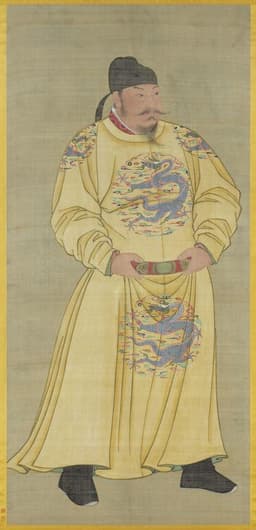
Emperor Taizong of Tang
Emperor · Medieval
78.9Total
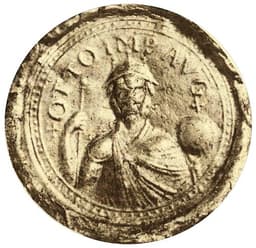
Otto I the Great
Emperor · Medieval
75.2Total
Basic Information
Born
598
912
Died
649
973
Era
Medieval
Medieval
Nationality
China
Holy Roman Empire
Occupation
Emperor
Emperor
Civilization
Eastern
Western
Score Comparison
Military (10%)
77.5
82.0
Political (20%)
82.0
70.0
Influence (20%)
85.0
88.0
Legacy (20%)
71.4
65.0
Leadership (15%)
78.0
78.0
Strategy (15%)
80.6
65.4
TOTAL
78.9
75.2
Emperor Taizong of Tang — Complete Timeline
626 AD
Reign of ZhenguanReform
Emperor Taizong initiated the Zhenguan era, characterized by efficient governance, legal codification, and economic recovery. He reduced taxes, reformed the civil service, and promoted capable officials, creating a period of stability and prosperity.
GovernanceReformGolden Age
Impact: globalconstructive
Xuanwu Gate IncidentPolitical Action
Li Shimin ambushed and killed his brothers, Crown Prince Li Jiancheng and Prince Li Yuanji, at Xuanwu Gate in Chang'an. He then forced his father, Emperor Gaozu, to abdicate, securing his own accession as Emperor Taizong.
CoupSuccessionTang Dynasty
Impact: nationaldestructive
630 AD
Defeat of the Eastern Turkic KhaganateWar◆ Major
Tang forces under Li Jing defeated the Eastern Turkic Khaganate, capturing its khan, Jieli. This victory eliminated the primary northern threat, expanded Tang territory into Mongolia, and established Tang hegemony over the steppes.
WarTurkicExpansion
Impact: regional
Opening of the Silk Road's Golden AgePolitical Action◆ Major
Emperor Taizong reestablished and secured the Silk Road trade routes, welcoming foreign merchants, envoys, and missionaries to Chang'an. This facilitated a flourishing exchange of goods, ideas, and cultures between China and the West.
Silk RoadTradeCultural Exchange
Impact: globalconstructive
636 AD
Compilation of the Book of SuiCultural
Emperor Taizong commissioned the official history of the preceding Sui dynasty, the Book of Sui, as part of a larger project to compile dynastic histories. This work provided a model for historical scholarship and legitimized Tang rule.
HistoriographyCultureLegitimacy
Impact: nationalconstructive
Otto I the Great — Complete Timeline
951 AD
Diplomatic Marriage to Adelaide of ItalyPolitical Action◆ Major
Otto married Adelaide, the widowed queen of Italy, after intervening in Italian politics. This marriage gave him control over the Kingdom of Italy and strengthened his claim to imperial authority.
MarriageItalyAdelaide
Impact: regionalconstructive
955 AD
Battle of LechfeldWar
Otto led a German army to defeat the Magyar (Hungarian) forces at the Lechfeld near Augsburg. This victory ended Magyar raids into Western Europe and secured Otto's reputation as a defender of Christendom.
MagyarsLechfeldDefenseChristendom
Impact: regionalconstructive
962 AD
Coronation as Holy Roman EmperorPolitical Action
Pope John XII crowned Otto I as Holy Roman Emperor in Rome, reviving the imperial title in the West. This event established the Holy Roman Empire as a major political entity and linked German kingship with papal authority.
CoronationHoly Roman EmpirePapacy
Impact: globalconstructive
Expert Analysis
Origins
Emperor Taizong of Tang (Li Shimin, 598–649) was born into a noble family during the Sui dynasty's collapse. His father, Li Yuan, founded the Tang dynasty, and Li Shimin played a crucial role in the campaigns that secured the empire. He was a brilliant military strategist from a young age. In contrast, Otto I (912–973) was the son of Henry the Fowler, Duke of Saxony and King of East Francia. Otto inherited a kingdom threatened by internal rebellions and external invasions from Magyars and Slavs. Both men rose from privileged backgrounds, but Taizong's path was marked by fratricidal violence, while Otto's ascent was more conventional.
Rise to Power
Taizong's rise was dramatic and bloody. He orchestrated the Xuanwu Gate Incident in 626, where he killed his brothers, the crown prince and another brother, and forced his father to abdicate. This ruthless act secured his throne but stained his reputation. Otto's rise was comparatively peaceful: he was elected king in 936 and faced rebellions from his brothers and dukes, which he suppressed through military force and strategic alliances. Otto's coronation as Holy Roman Emperor in 962 by Pope John XII was a diplomatic triumph, whereas Taizong's legitimacy was built on military conquest and political maneuvering.
Leadership & Governance
Taizong is renowned for the "Reign of Zhenguan" (627–649), a golden age of prosperity, justice, and cultural flourishing. He reformed the bureaucracy, promoted meritocracy, and codified laws. He famously said, "The ruler is the boat, and the people are the water; the water can support the boat or overturn it." Otto I strengthened the Church as a counterbalance to the nobility, appointing bishops and abbots as imperial officials. He also expanded the empire through marriage, notably to Adelaide of Italy, and consolidated control over Germany and Italy. While Taizong's governance was more innovative and humane, Otto's was pragmatic and focused on stability.
Triumph & Tragedy
Taizong's greatest triumph was defeating the Eastern Turkic Khaganate in 630, which established Tang supremacy in Central Asia and opened the Silk Road's golden age. He also compiled the Book of Sui and patronized Buddhism, Taoism, and Confucianism. His tragedy was the family strife: his sons plotted against him, and his beloved wife Empress Zhangsun died early. Otto's defining victory was the Battle of Lechfeld in 955, where he crushed the Magyars, ending their raids into Western Europe. His coronation as emperor revived the Roman Empire in the West. However, his later years were marred by conflicts with the papacy and his son's rebellion.
Character & Destiny
Taizong was a complex figure: ruthless in ambition but benevolent in rule, a patron of arts and learning, and a master of propaganda. He sought to be remembered as a sage emperor. Otto was a devout Christian, a capable warrior, and a shrewd diplomat. He saw himself as the defender of Christendom and the heir to Charlemagne. Taizong's destiny was to create a model of Chinese governance that lasted centuries; Otto's was to forge a new empire that shaped European history.
Legacy
Taizong's Tang dynasty became the standard for Chinese imperial rule. His military campaigns secured the Silk Road, fostering global trade and cultural exchange. The Zhenguan era is still praised as a utopian period. Otto I founded the Holy Roman Empire, which endured for nearly a millennium. He also established the Ottonian Renaissance, a revival of art and learning. Both left enduring legacies, but Taizong's impact on civilization was broader and more profound.
Conclusion
Scores: Taizong: M=78, P=82, I=85, L=71, D=78, S=81, T=79 (average 79.1). Otto: M=82, P=70, I=88, L=65, D=78, S=65, T=75 (average 75.4). Taizong wins by 3.7 points. While Otto was a stronger military leader (M=82 vs 78) and had higher innovation (I=88 vs 85), Taizong excelled in political acumen (P=82), longevity of influence (L=71 vs 65), and strategic vision (S=81 vs 65). His Reign of Zhenguan set a benchmark for governance, and his Silk Road policies transformed global trade. Otto's empire was more fragmented and less culturally influential. Thus, Emperor Taizong of Tang is the greater ruler.
Rankings
🥇
Emperor Taizong of TangLeader
Mil: 77.5Pol: 82.0Inf: 85.0
78.9
🥈
Otto I the Great
Mil: 82.0Pol: 70.0Inf: 88.0
75.2
+3.7 behind
How This Comparison Works
Algorithm
Each figure is scored on 6 dimensions (0—100 scale) based on structured historical data: Military (10%), Political (20%), Influence (20%), Legacy (20%), Leadership (15%), Strategy (15%). The weighted total produces the final ranking.
Data Sources
Scores are computed from structured sub-indicators in the database. Scale factors adjust for era (Ancient ×0.85, Modern ×1.0) and civilization size (Eastern ×1.05, Other ×0.80) to account for differences in population and military scale.
Maximum 3 Figures
Comparisons are limited to 2—3 figures to ensure readability and statistical meaningfulness.
Error Margins
±5 points per dimension — Sub-scores are derived from historical records with inherent uncertainty. Two figures within 5 points on a dimension should be considered roughly equivalent in that area.
Total Score Accuracy
±3 points overall — The weighted combination of 6 dimensions produces a total score with approximately ±3 points of uncertainty. Differences of less than 3 points are not statistically significant— the figures are effectively tied.
Known Limitations
- Historical records are incomplete and uneven across civilizations
- Figures from oral-tradition societies may be underrepresented
- Occupation labels can misclassify multi-role figures
- Scores measure capability and impact, not moral character
- Quantitative scoring is a comparison tool, not absolute truth
Capability Radar
Military (10%) — Battles & Warfare
Battles
95
75
Win Rate
95
80
Expansion
90
70
Political (20%) — Governance & Reform
Reform
95
80
Diplomacy
95
85
Economy
95
70
Influence (20%) — Cultural & Global Reach
Cultural
90
65
Global
90
70
Legacy (20%) — Historical Impact
Historical
95
80
Longevity
95
75
Leadership (15%) — Power & Stability
Tenure
85
85
Stability
95
75
Strategy (15%) — Tactics & Innovation
Strategy
95
75
Tactics
95
70
Reform
90
65
Similar Comparisons
Comments & Discussion
No comments yet. Be the first to share your thoughts!