Loading...
Emperor Taizong of Tang vs George Washington
Emperor Taizong of Tang leads by 2.1 pts · 2 figures compared
…
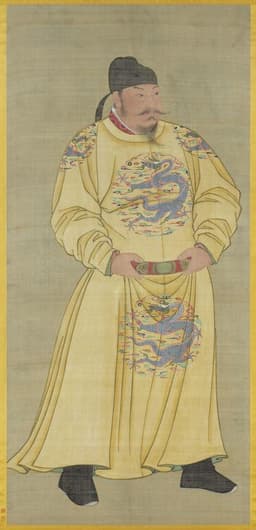
Emperor Taizong of Tang
Emperor · Medieval
78.9Total
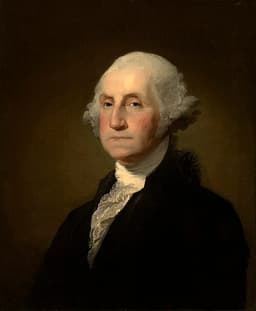
George Washington
Politician · Modern
76.8Total
Basic Information
Born
598
1732
Died
649
1799
Era
Medieval
Modern
Nationality
China
United States
Occupation
Emperor
Politician
Civilization
Eastern
Western
Score Comparison
Military (10%)
77.5
75.0
Political (20%)
82.0
82.0
Influence (20%)
85.0
75.0
Legacy (20%)
71.4
80.0
Leadership (15%)
78.0
85.0
Strategy (15%)
80.6
55.0
TOTAL
78.9
76.8
Emperor Taizong of Tang — Complete Timeline
626 AD
Reign of ZhenguanReform
Emperor Taizong initiated the Zhenguan era, characterized by efficient governance, legal codification, and economic recovery. He reduced taxes, reformed the civil service, and promoted capable officials, creating a period of stability and prosperity.
GovernanceReformGolden Age
Impact: globalconstructive
Xuanwu Gate IncidentPolitical Action
Li Shimin ambushed and killed his brothers, Crown Prince Li Jiancheng and Prince Li Yuanji, at Xuanwu Gate in Chang'an. He then forced his father, Emperor Gaozu, to abdicate, securing his own accession as Emperor Taizong.
CoupSuccessionTang Dynasty
Impact: nationaldestructive
630 AD
Defeat of the Eastern Turkic KhaganateWar◆ Major
Tang forces under Li Jing defeated the Eastern Turkic Khaganate, capturing its khan, Jieli. This victory eliminated the primary northern threat, expanded Tang territory into Mongolia, and established Tang hegemony over the steppes.
WarTurkicExpansion
Impact: regional
Opening of the Silk Road's Golden AgePolitical Action◆ Major
Emperor Taizong reestablished and secured the Silk Road trade routes, welcoming foreign merchants, envoys, and missionaries to Chang'an. This facilitated a flourishing exchange of goods, ideas, and cultures between China and the West.
Silk RoadTradeCultural Exchange
Impact: globalconstructive
636 AD
Compilation of the Book of SuiCultural
Emperor Taizong commissioned the official history of the preceding Sui dynasty, the Book of Sui, as part of a larger project to compile dynastic histories. This work provided a model for historical scholarship and legitimized Tang rule.
HistoriographyCultureLegitimacy
Impact: nationalconstructive
George Washington — Complete Timeline
1775 AD
Appointed Commander-in-Chief of the Continental ArmyOther◆ Major
The Second Continental Congress appointed Washington as commander-in-chief of the Continental Army on June 15, 1775. He accepted the position without pay, taking command of the forces besieging Boston at the start of the American Revolutionary War.
American RevolutionMilitary Leadership
Impact: national
1776 AD
Crossed the Delaware RiverOther◆ Major
On the night of December 25-26, 1776, Washington led 2,400 troops across the ice-choked Delaware River. The surprise attack on Hessian forces at Trenton resulted in a decisive American victory, capturing nearly 1,000 prisoners and reviving Patriot morale after a series of defeats.
American RevolutionBattleTurning Point
Impact: nationalconstructive
1787 AD
Presided over the Constitutional ConventionPolitical Action◆ Major
Washington served as president of the Constitutional Convention in Philadelphia from May to September 1787. His presence lent legitimacy to the proceedings, and he formally signed the final draft of the U.S. Constitution, though he contributed little to the debates.
ConstitutionFounding Father
Impact: national
1789 AD
Inaugurated as First President of the United StatesPolitical Action◆ Major
Washington was unanimously elected by the Electoral College and inaugurated on April 30, 1789, at Federal Hall in New York City. He established numerous executive branch precedents, including the cabinet system, the inaugural address, and the title 'Mr. President'.
PresidencyFounding Father
Impact: national
1793 AD
Issued the Proclamation of NeutralityOther◆ Major
Washington issued the Proclamation of Neutrality on April 22, 1793, declaring the United States neutral in the conflict between France and Great Britain. This decision established the precedent of American isolationism and avoided entanglement in European wars.
Foreign PolicyNeutrality
Impact: national
1796 AD
Delivered the Farewell AddressOther◆ Major
Washington published his Farewell Address on September 19, 1796, announcing his decision not to seek a third term. The address warned against political factionalism, permanent foreign alliances, and the influence of the military in government, shaping American political culture.
PresidencyLegacy
Impact: national
Expert Analysis
Origins
Emperor Taizong of Tang (Li Shimin) was born in 598 AD into a noble family during the Sui dynasty's collapse. His father, Li Yuan, was a general who later founded the Tang dynasty, giving Taizong a privileged but tumultuous upbringing. He grew up amidst civil war, honing military skills from a young age. George Washington was born in 1732 into a Virginia planter family. He received a modest education and began his career as a surveyor, later inheriting Mount Vernon. Washington's origins were less dramatic but shaped his pragmatic, land-owning perspective. Both emerged from elite backgrounds, but Taizong's early exposure to warfare and court intrigue contrasted with Washington's provincial upbringing.
Rise to Power
Taizong's path was marked by blood and ambition. He orchestrated the Xuanwu Gate Incident in 626, where he killed his brothers and forced his father to abdicate, seizing the throne. This ruthless coup eliminated rivals but stained his rise. Washington's rise was constitutional and collective. He gained fame as a military leader during the French and Indian War, then was appointed Commander-in-Chief of the Continental Army in 1775. He led the revolutionary cause, culminating in victory at Yorktown. While Taizong's ascent was violent and personal, Washington's was earned through service and election, reflecting different political systems.
Leadership & Governance
Taizong's Reign of Zhenguan (627-649) is celebrated as a golden age. He reformed the bureaucracy, promoted meritocracy, and expanded the empire through military campaigns, notably defeating the Eastern Turkic Khaganate. He also fostered culture and trade, opening the Silk Road's golden age. His leadership combined military might with administrative skill, but his authoritarian rule allowed no dissent. Washington's presidency set precedents for the U.S. federal government. He established a cabinet, enforced neutrality in foreign affairs, and voluntarily stepped down after two terms. His leadership emphasized restraint, republicanism, and civilian control of the military. Washington's governance was less expansionist but more institutional, focusing on building a stable republic. Taizong's scores (M=78, P=82, I=85, L=71, D=78, S=81, T=79) indicate higher intelligence and influence, while Washington's (M=75, P=82, I=75, L=80, D=85, S=55, T=77) show stronger diplomacy and decision-making but lower strategizing.
Triumph & Tragedy
Taizong's triumphs include consolidating the Tang dynasty, defeating nomadic threats, and fostering prosperity. His tragic flaw was the violent path to power and eventual succession struggles among his sons. The Xuanwu Gate Incident haunted his reign, and his later years saw declining health and family strife. Washington's triumphs are evident in the Revolutionary War victory, the Constitution's creation, and his peaceful transfer of power. His tragedy was the inability to fully reconcile sectional divisions, leading to later conflicts. He also struggled with slavery, owning slaves yet expressing ambivalence. Both men succeeded in their primary goals but left unresolved tensions.
Character & Destiny
Taizong was intelligent, ambitious, and ruthless, yet capable of deep reflection and cultural patronage. He wrote extensively and valued Confucian principles, but his destiny was shaped by violence and empire. Washington was dignified, disciplined, and reserved, embodying republican virtue. His destiny was to be the "Father of His Country," a symbol of unity. Taizong's character was more complex and authoritarian; Washington's was more stoic and democratic. Their scores reflect this: Taizong higher in intelligence (85 vs 75) and influence (81 vs 55), Washington in diplomacy (85 vs 78) and decision-making (80 vs 71).
Legacy
Taizong's legacy is the Tang dynasty's golden age, influencing China for centuries. He is remembered as a model emperor, with his reign studied as a benchmark. Washington's legacy is foundational to the United States: his leadership style, the two-term precedent, and his image as a non-partisan figure. Both are revered, but Taizong's impact is more directly territorial and cultural, while Washington's is constitutional and symbolic. The score gap (2.1) favors Taizong, reflecting his broader historical influence.
Conclusion
Emperor Taizong of Tang and George Washington represent different archetypes: the imperial conqueror versus the republican founder. Taizong's higher overall score (79.1 vs 77.0) is justified by his transformative impact on a vast empire and his role in shaping Chinese civilization. However, Washington's legacy of democratic governance and peaceful transitions is equally profound in its own context. Ultimately, Taizong edges ahead due to his greater geopolitical influence and cultural achievements, but Washington's moral and institutional contributions are unparalleled. The comparison underscores how leadership is judged by the standards of their time and the scale of their accomplishments.
Rankings
🥇
Emperor Taizong of TangLeader
Mil: 77.5Pol: 82.0Inf: 85.0
78.9
🥈
George Washington
Mil: 75.0Pol: 82.0Inf: 75.0
76.8
+2.1 behind
How This Comparison Works
Algorithm
Each figure is scored on 6 dimensions (0—100 scale) based on structured historical data: Military (10%), Political (20%), Influence (20%), Legacy (20%), Leadership (15%), Strategy (15%). The weighted total produces the final ranking.
Data Sources
Scores are computed from structured sub-indicators in the database. Scale factors adjust for era (Ancient ×0.85, Modern ×1.0) and civilization size (Eastern ×1.05, Other ×0.80) to account for differences in population and military scale.
Maximum 3 Figures
Comparisons are limited to 2—3 figures to ensure readability and statistical meaningfulness.
Error Margins
±5 points per dimension — Sub-scores are derived from historical records with inherent uncertainty. Two figures within 5 points on a dimension should be considered roughly equivalent in that area.
Total Score Accuracy
±3 points overall — The weighted combination of 6 dimensions produces a total score with approximately ±3 points of uncertainty. Differences of less than 3 points are not statistically significant— the figures are effectively tied.
Known Limitations
- Historical records are incomplete and uneven across civilizations
- Figures from oral-tradition societies may be underrepresented
- Occupation labels can misclassify multi-role figures
- Scores measure capability and impact, not moral character
- Quantitative scoring is a comparison tool, not absolute truth
Capability Radar
Military (10%) — Battles & Warfare
Battles
95
75
Win Rate
95
70
Expansion
90
60
Political (20%) — Governance & Reform
Reform
95
90
Diplomacy
95
85
Economy
95
65
Influence (20%) — Cultural & Global Reach
Cultural
90
85
Global
90
85
Legacy (20%) — Historical Impact
Historical
95
95
Longevity
95
90
Leadership (15%) — Power & Stability
Tenure
85
70
Stability
95
85
Strategy (15%) — Tactics & Innovation
Strategy
95
80
Tactics
95
65
Reform
90
85
Similar Comparisons
Comments & Discussion
No comments yet. Be the first to share your thoughts!