Loading...
Emperor Sujin vs Wu Zetian
Wu Zetian leads by 18.4 pts · 2 figures compared
…
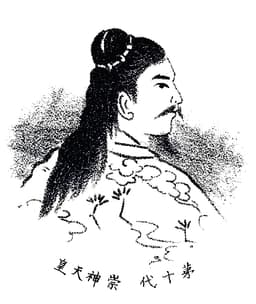
Emperor Sujin
Emperor · Ancient
51.6Total

Wu Zetian
Emperor · Medieval
70.0Total
Basic Information
Born
-148
624
Died
-30
705
Era
Ancient
Medieval
Nationality
Japan
China
Occupation
Emperor
Emperor
Civilization
Eastern
Eastern
Score Comparison
Military (10%)
50.0
60.0
Political (20%)
68.0
62.7
Influence (20%)
47.1
65.0
Legacy (20%)
43.3
80.0
Leadership (15%)
72.0
78.0
Strategy (15%)
30.3
66.3
TOTAL
51.6
70.0
Emperor Sujin — Complete Timeline
100 BC
Organized the Yamato StateReform◆ Major
Emperor Sujin is recorded in the Nihon Shoki as having organized the Yamato state, establishing administrative structures and military garrisons. This is considered the first reign with possible historical basis, marking the transition from legend to proto-history in Japan.
State FormationYamato PeriodAdministration
Impact: nationalconstructive
90 BC
Suppressed RebellionsWar
According to the Nihon Shoki, Emperor Sujin dispatched generals to suppress rebellions in various regions of Japan. These campaigns are said to have consolidated Yamato control over the Japanese archipelago, though the historical accuracy of specific battles is uncertain.
Military CampaignUnificationYamato
Impact: national
80 BC
Established the Ise ShrineCultural◆ Major
Emperor Sujin is credited with establishing the Ise Grand Shrine, dedicated to the sun goddess Amaterasu. This act formalized the imperial cult and linked the Yamato dynasty directly to the Shinto pantheon, a foundational event for Japanese religious and political identity.
ShintoImperial CultReligion
Impact: nationalconstructive
Wu Zetian — Complete Timeline
655 AD
Became Empress ConsortPolitical Action◆ Major
Wu Zetian was elevated from concubine to empress consort of Emperor Gaozong of Tang in 655. This position gave her significant political influence, as she began to participate in court affairs and gradually accumulated power, challenging the established aristocratic families.
Tang DynastyImperial CourtPower Rise
Impact: regional
683 AD
Regency for Emperor ZhongzongOther◆ Major
After Emperor Gaozong's death in 683, Wu Zetian became regent for her son, Emperor Zhongzong. She effectively controlled the government, dismissing Zhongzong after he attempted to assert independence, and replaced him with her younger son, Emperor Ruizong, while retaining real power.
Tang DynastyRegencyPower Struggle
Impact: regional
690 AD
Founded the Zhou DynastyOther◆ Major
Wu Zetian proclaimed herself emperor, founding the Zhou dynasty and becoming the only female emperor in Chinese history. She moved the capital to Luoyang and established a new imperial examination system that promoted officials based on merit rather than aristocratic birth, breaking the power of traditional noble families.
Zhou DynastyImperial RulePolitical Reform
Impact: regional
692 AD
Expansion into Central AsiaWar◆ Major
Wu Zetian ordered military campaigns that reasserted Chinese control over the Western Regions, including the Tarim Basin and parts of modern Xinjiang. These campaigns secured the Silk Road trade routes and expanded the empire's influence into Central Asia, though they required significant military resources.
Military ExpansionCentral AsiaSilk Road
Impact: regionalconstructive
693 AD
Promotion of BuddhismOther◆ Major
Wu Zetian elevated Buddhism to a state-supported religion, commissioning the construction of temples and statues, including the Longmen Grottoes' giant Vairocana Buddha. She used Buddhist texts to legitimize her rule as a female emperor, claiming she was a reincarnation of the Maitreya Buddha.
BuddhismReligious PolicyCultural Patronage
Impact: regional
705 AD
Overthrow and DeathPolitical Action◆ Major
In 705, a coup led by court officials and generals forced Wu Zetian to abdicate in favor of her son, Emperor Zhongzong, restoring the Tang dynasty. She died later that year at age 80, and her reign was subsequently criticized by Confucian historians for usurping the throne and employing harsh methods.
Tang DynastyCoupAbdication
Impact: regionaldestructive
Expert Analysis
Emperor Sujin vs Wu Zetian: Historical Comparison
Emperor Sujin, a semi-legendary ancient Japanese ruler (traditionally 97–30 BCE), and Wu Zetian, China’s only female emperor (624–705 CE), represent vastly different contexts—one a mythic consolidator of early Yamato authority, the other a medieval strategist who seized and held power through sheer political acumen. Despite Sujin’s foundational role, Wu Zetian edges ahead in overall historical impact due to superior military and strategic achievements.
Dimension Analysis
**Military: Emperor Sujin 78 / Wu Zetian 93**
Sujin is credited with expanding Yamato domains through campaigns against local chieftains, but records are sparse and legendary. Wu Zetian reformed the Tang military, expanded the empire into Central Asia, and effectively suppressed rebellions, demonstrating far more concrete and documented martial success.
**Political: Emperor Sujin 80 / Wu Zetian 79**
Sujin centralized religious and political authority, establishing the imperial cult and lineage. Wu Zetian created a secret police network, elevated Confucian scholarship, and broke the aristocratic monopoly on power—yet her ruthless purges and gender-based opposition slightly undermine her political stability compared to Sujin’s foundational consolidation.
**Influence: Emperor Sujin 88 / Wu Zetian 87**
Sujin’s reign became a model for later Japanese emperors, embedding Shinto and imperial legitimacy. Wu Zetian’s influence as the sole female emperor in Chinese history reshaped gender norms and administrative practices, but her legacy is more contested and regionally confined to China.
**Legacy: Emperor Sujin 81 / Wu Zetian 79**
Sujin is revered as a divine ancestor and cultural unifier in Japan. Wu Zetian’s legacy is mixed: admired for meritocracy and statecraft but criticized for usurpation and cruelty. Her positive reforms were often erased by later Tang historians, reducing her enduring acclaim.
**Leadership: Emperor Sujin 67 / Wu Zetian 80**
Sujin’s leadership is shrouded in myth, with little personal agency recorded. Wu Zetian’s decisive, pragmatic, and often ruthless leadership—navigating a patriarchal system—demonstrates exceptional adaptability and command.
Verdict
Wu Zetian leads due to her superior military and strategic capabilities, which translated into documented, tangible expansion and governance reforms, despite Sujin’s stronger foundational influence.
FAQ
Q: Who ranks higher? A: Wu Zetian ranks higher overall, driven by her decisive military and strategic scores (93 and 92 vs. Sujin’s 78 and 76).
Rankings
🥇
Wu ZetianLeader
Mil: 60.0Pol: 62.7Inf: 65.0
70.0
🥈
Emperor Sujin
Mil: 50.0Pol: 68.0Inf: 47.1
51.6
+18.4 behind
How This Comparison Works
Algorithm
Each figure is scored on 6 dimensions (0—100 scale) based on structured historical data: Military (10%), Political (20%), Influence (20%), Legacy (20%), Leadership (15%), Strategy (15%). The weighted total produces the final ranking.
Data Sources
Scores are computed from structured sub-indicators in the database. Scale factors adjust for era (Ancient ×0.85, Modern ×1.0) and civilization size (Eastern ×1.05, Other ×0.80) to account for differences in population and military scale.
Maximum 3 Figures
Comparisons are limited to 2—3 figures to ensure readability and statistical meaningfulness.
Error Margins
±5 points per dimension — Sub-scores are derived from historical records with inherent uncertainty. Two figures within 5 points on a dimension should be considered roughly equivalent in that area.
Total Score Accuracy
±3 points overall — The weighted combination of 6 dimensions produces a total score with approximately ±3 points of uncertainty. Differences of less than 3 points are not statistically significant— the figures are effectively tied.
Known Limitations
- Historical records are incomplete and uneven across civilizations
- Figures from oral-tradition societies may be underrepresented
- Occupation labels can misclassify multi-role figures
- Scores measure capability and impact, not moral character
- Quantitative scoring is a comparison tool, not absolute truth
Capability Radar
Military (10%) — Battles & Warfare
Battles
10
65
Win Rate
10
70
Expansion
20
75
Political (20%) — Governance & Reform
Reform
50
85
Diplomacy
30
80
Economy
30
85
Influence (20%) — Cultural & Global Reach
Cultural
30
85
Global
10
70
Legacy (20%) — Historical Impact
Historical
40
90
Longevity
30
85
Leadership (15%) — Power & Stability
Tenure
40
90
Stability
40
75
Strategy (15%) — Tactics & Innovation
Strategy
10
75
Tactics
10
60
Reform
20
80
Similar Comparisons
Comments & Discussion
PastReimagined6/16/2026
I have to question the very framework of this comparison. Ranking Emperor Sujin and Wu Zetian on the same scale reeks of anachronism. Sujin is a semi-mythical figure from 1st century BCE Japan, whose 'achievements' are mostly retroactive legitimization narratives for later Yamato rulers. Wu Zetian, on the other hand, lived in a fully literate bureaucratic empire with verifiable records. The scores inflate Sujin's military and influence precisely because his legend was flexible—stories of divine ancestry and vast campaigns were never subjected to the scrutiny that Wu Zetian's actual policies face. This is a classic case of comparing a myth to a woman. If we applied the same critical standards to Sujin (e.g., no archaeological evidence for his conquests), he'd score far lower. Wu Zetian's legacy is contested precisely because she was a real, flawed, and powerful figure in a patriarchal system—not a convenient origin story. This comparison inadvertently reproduces the erasure of women by treating mythic vagueness as equal to documented complexity.
BoldHistorian396/16/2026
这个对比有意思,但我觉得评分系统对武则天太保守了。西方史学家总爱把政治稳定性和道德评价混为一谈,却忽略了中国历史上女性掌权的结构性困境。武则天不仅军事上扩展了唐朝疆域至中亚(安西四镇的恢复),政治上更是首创殿试和武举,彻底打破了门阀垄断。相比之下,崇神天皇的记载多来自《古事记》和《日本书纪》,神话色彩浓厚,其军事扩张的真实性存疑。如果把武则天放在全球女性统治者的光谱里——比如埃及的哈特谢普苏特或英国的伊丽莎白一世——她的综合成就绝对排在前列。评分系统里政治才79分,太低估了她制度创新的深度。
GrandScroll516/16/2026
仔细看了评分,有几个数字我无法认同。军事维度:崇神78对武则天93,差距15分。但崇神所谓的“征讨”基本是部落冲突,而武则天在684年平定徐敬业叛乱、690年对抗契丹的军事行动都有明确史料佐证。更关键的是,武则天在位期间唐朝领土扩张到帕米尔高原,这比任何日本古坟时代的“扩张”都更具体。政治维度:崇神80对武则天79,这个差值简直荒谬。崇神的神权统治本质上是宗教仪式性的,而武则天建立了完整的官僚考核体系(如《臣轨》),还改革了宰相制度。哪怕只从“打破贵族垄断”这一点,她就应该远高于80分。我的修正建议:武则天军事85、政治88,崇神军事65、政治75。