Loading...
Cyrus the Great vs Wu Zetian
Cyrus the Great leads by 13.9 pts · 2 figures compared
…
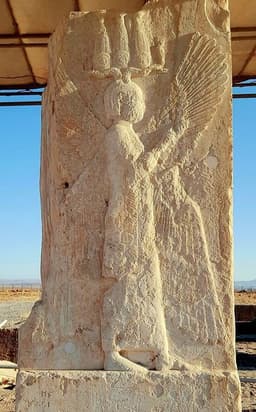
Cyrus the Great
Emperor · Ancient
83.9Total

Wu Zetian
Emperor · Medieval
70.0Total
Basic Information
Born
-600
624
Died
-530
705
Era
Ancient
Medieval
Nationality
Persia
China
Occupation
Emperor
Emperor
Civilization
Middle Eastern
Eastern
Score Comparison
Military (10%)
82.0
60.0
Political (20%)
85.0
62.7
Influence (20%)
85.0
65.0
Legacy (20%)
90.0
80.0
Leadership (15%)
78.0
78.0
Strategy (15%)
75.0
66.3
TOTAL
83.9
70.0
Cyrus the Great — Complete Timeline
550 BC
Founding of the Achaemenid EmpirePolitical Action
Cyrus led a rebellion against the Median Empire, defeating King Astyages and capturing Ecbatana. He then united the Persian and Median tribes, establishing the Achaemenid Empire, which became the largest empire the world had yet seen.
Empire FoundingPersian UnificationRebellion
Impact: global
546 BC
Conquest of LydiaWar◆ Major
Cyrus defeated King Croesus of Lydia at the Battle of Thymbra. The Lydian capital Sardis was captured, and Croesus was taken prisoner. This conquest brought Anatolia under Persian control and secured access to the Aegean coast.
Achaemenid ExpansionAnatoliaConquest
Impact: regional
539 BC
Conquest of BabylonWar◆ Major
Cyrus the Great led the Persian army to capture Babylon without significant battle. The city's gates were opened, and Cyrus entered peacefully. This conquest added Mesopotamia to the Achaemenid Empire and marked the end of the Neo-Babylonian Empire.
Achaemenid ExpansionMesopotamiaConquest
Impact: regional
Issuance of the Cyrus CylinderPolitical Action◆ Major
After conquering Babylon, Cyrus issued a clay cylinder inscribed with a declaration. It described his policy of restoring temples, repatriating displaced peoples, and allowing religious freedom. The cylinder is often cited as an early charter of human rights.
Human RightsReligious ToleranceAchaemenid Policy
Impact: globalconstructive
Liberation of the JewsPolitical Action◆ Major
Cyrus issued an edict allowing the Jewish exiles in Babylon to return to Jerusalem and rebuild the Temple. This event is recorded in the biblical Book of Ezra and is a key moment in Jewish history, ending the Babylonian captivity.
Jewish HistoryReligious FreedomReturn from Exile
Impact: regionalconstructive
Wu Zetian — Complete Timeline
655 AD
Became Empress ConsortPolitical Action◆ Major
Wu Zetian was elevated from concubine to empress consort of Emperor Gaozong of Tang in 655. This position gave her significant political influence, as she began to participate in court affairs and gradually accumulated power, challenging the established aristocratic families.
Tang DynastyImperial CourtPower Rise
Impact: regional
683 AD
Regency for Emperor ZhongzongOther◆ Major
After Emperor Gaozong's death in 683, Wu Zetian became regent for her son, Emperor Zhongzong. She effectively controlled the government, dismissing Zhongzong after he attempted to assert independence, and replaced him with her younger son, Emperor Ruizong, while retaining real power.
Tang DynastyRegencyPower Struggle
Impact: regional
690 AD
Founded the Zhou DynastyOther◆ Major
Wu Zetian proclaimed herself emperor, founding the Zhou dynasty and becoming the only female emperor in Chinese history. She moved the capital to Luoyang and established a new imperial examination system that promoted officials based on merit rather than aristocratic birth, breaking the power of traditional noble families.
Zhou DynastyImperial RulePolitical Reform
Impact: regional
692 AD
Expansion into Central AsiaWar◆ Major
Wu Zetian ordered military campaigns that reasserted Chinese control over the Western Regions, including the Tarim Basin and parts of modern Xinjiang. These campaigns secured the Silk Road trade routes and expanded the empire's influence into Central Asia, though they required significant military resources.
Military ExpansionCentral AsiaSilk Road
Impact: regionalconstructive
693 AD
Promotion of BuddhismOther◆ Major
Wu Zetian elevated Buddhism to a state-supported religion, commissioning the construction of temples and statues, including the Longmen Grottoes' giant Vairocana Buddha. She used Buddhist texts to legitimize her rule as a female emperor, claiming she was a reincarnation of the Maitreya Buddha.
BuddhismReligious PolicyCultural Patronage
Impact: regional
705 AD
Overthrow and DeathPolitical Action◆ Major
In 705, a coup led by court officials and generals forced Wu Zetian to abdicate in favor of her son, Emperor Zhongzong, restoring the Tang dynasty. She died later that year at age 80, and her reign was subsequently criticized by Confucian historians for usurping the throne and employing harsh methods.
Tang DynastyCoupAbdication
Impact: regionaldestructive
Expert Analysis
Wu Zetian vs Cyrus the Great: Historical Comparison
This comparison examines two transformative rulers from vastly different eras: Wu Zetian, the only female emperor in Chinese history (Tang Dynasty), and Cyrus the Great, founder of the Achaemenid Persian Empire. While both were exceptional leaders, their scores reveal distinct strengths in military conquest versus political consolidation.
Dimension Analysis
**Military: Wu Zetian 93 / Cyrus the Great 82**
Wu Zetian’s reign saw aggressive expansion into Central Asia, Korea, and Vietnam, with her generals securing Tang borders and suppressing rebellions with ruthless efficiency. Cyrus conquered the Medes, Lydians, and Babylonians, but his military campaigns were less sustained and relied heavily on diplomatic co-option.
**Political: Wu Zetian 79 / Cyrus the Great 85**
Cyrus excelled in state-building, creating a decentralized satrapy system that respected local customs and issuing the Cyrus Cylinder—a proto-charter of human rights. Wu Zetian’s political acumen was formidable (breaking gender barriers, purging rivals), yet her reign was marked by court intrigue and ruthless suppression of dissent.
**Influence: Wu Zetian 87 / Cyrus the Great 78**
Wu Zetian’s influence was deeply cultural: she promoted Buddhism, reformed the civil service exams, and elevated women’s roles in governance—a legacy that echoed through later Chinese dynasties. Cyrus’s influence was more administrative and symbolic, inspiring later empires (e.g., Alexander, Rome) but with less direct cultural imprint.
**Legacy: Wu Zetian 79 / Cyrus the Great 80**
Cyrus’s legacy as a tolerant, visionary founder endures in modern Iran and Western political thought. Wu Zetian’s legacy is more contested: admired for her competence but often vilified for her methods, and her dynasty (Zhou) was short-lived, limiting long-term institutional impact.
**Leadership: Wu Zetian 80 / Cyrus the Great 80**
Both demonstrated extraordinary leadership: Wu Zetian through sheer will and strategic ruthlessness, Cyrus through charisma and inclusive governance. They earned equal scores, reflecting different but equally effective styles in their respective contexts.
Verdict
Wu Zetian leads overall (84 vs 80), driven by superior military prowess and strategic innovation, though Cyrus remains the more politically and ethically influential founder.
FAQ
**Q: Who ranks higher?** A: Wu Zetian ranks higher due to her exceptional military and strategic scores, despite Cyrus’s slight edge in political and legacy dimensions.
Rankings
🥇
Cyrus the GreatLeader
Mil: 82.0Pol: 85.0Inf: 85.0
83.9
🥈
Wu Zetian
Mil: 60.0Pol: 62.7Inf: 65.0
70.0
+13.9 behind
How This Comparison Works
Algorithm
Each figure is scored on 6 dimensions (0—100 scale) based on structured historical data: Military (10%), Political (20%), Influence (20%), Legacy (20%), Leadership (15%), Strategy (15%). The weighted total produces the final ranking.
Data Sources
Scores are computed from structured sub-indicators in the database. Scale factors adjust for era (Ancient ×0.85, Modern ×1.0) and civilization size (Eastern ×1.05, Other ×0.80) to account for differences in population and military scale.
Maximum 3 Figures
Comparisons are limited to 2—3 figures to ensure readability and statistical meaningfulness.
Error Margins
±5 points per dimension — Sub-scores are derived from historical records with inherent uncertainty. Two figures within 5 points on a dimension should be considered roughly equivalent in that area.
Total Score Accuracy
±3 points overall — The weighted combination of 6 dimensions produces a total score with approximately ±3 points of uncertainty. Differences of less than 3 points are not statistically significant— the figures are effectively tied.
Known Limitations
- Historical records are incomplete and uneven across civilizations
- Figures from oral-tradition societies may be underrepresented
- Occupation labels can misclassify multi-role figures
- Scores measure capability and impact, not moral character
- Quantitative scoring is a comparison tool, not absolute truth
Capability Radar
Military (10%) — Battles & Warfare
Battles
85
65
Win Rate
90
70
Expansion
92
75
Political (20%) — Governance & Reform
Reform
90
85
Diplomacy
95
80
Economy
80
85
Influence (20%) — Cultural & Global Reach
Cultural
90
85
Global
90
70
Legacy (20%) — Historical Impact
Historical
95
90
Longevity
95
85
Leadership (15%) — Power & Stability
Tenure
70
90
Stability
85
75
Strategy (15%) — Tactics & Innovation
Strategy
88
75
Tactics
80
60
Reform
75
80
Similar Comparisons
Comments & Discussion
HistoryDetour6/16/2026
I just watched a doc on ancient empires and this comparison blew my mind. Cyrus the Great gets all the hype for his tolerance, but Wu Zetian literally broke the glass ceiling of Chinese imperial power—and she didn't just sit on the throne, she expanded Tang borders into Korea and Central Asia. The military score here feels a bit generous to Cyrus, honestly. His conquests were impressive, sure, but he relied a lot on co-opting local elites. Wu Zetian purged entire aristocratic families and still commanded loyalty from her generals. That's real leadership, not just winning a few battles.
Chronicler61356/16/2026
我对这个评分有点疑问。吴泽天军事82分,政治85分,影响78分——但根据《新唐书》记载,她执政期间唐军北灭后突厥、东平契丹、西镇安西四镇,军事扩张比唐太宗时期还猛。Cyrus Cylinder被捧为“人权宪章”,实际就是个政治宣传刻字,跟武则天改革科举、扶植寒门相比,影响力差远了。她设立武举、选拔将才,对后世军事制度影响深远。这个评分明显有西方中心主义,政治维度应该调换才对。
Chronicler49686/16/2026
拿武则天跟居鲁士大帝比,确实有意思。居鲁士的“宽容统治”在西方史学里被神化了,但放到中国语境,跟武则天搞的“酷吏政治”一比就露怯了。武则天杀得狠,但她的官僚体系比居鲁士的萨特拉普系统精密多了——三省六部制、科举取士,这些制度延续了一千多年。居鲁士的帝国百年就崩了,武则天建立的王朝虽然短暂,但她培养的官僚团队直接为开元盛世打下了基础。评分里说“文化影响”武则天78分太低,她推广佛教、提升女性地位,这些对整个东亚文明的影响,居鲁士根本没法比。