Loading...
Emperor Sujin vs Qin Shi Huang
Qin Shi Huang leads by 33.6 pts · 2 figures compared
…
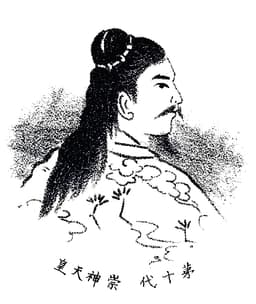
Emperor Sujin
Emperor · Ancient
51.6Total
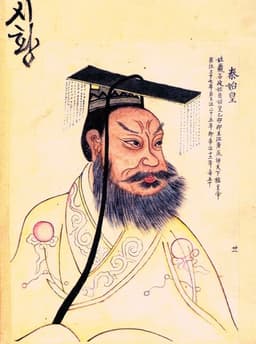
Qin Shi Huang
Emperor · Ancient
85.2Total
Basic Information
Born
-148
-259
Died
-30
-210
Era
Ancient
Ancient
Nationality
Japan
China
Occupation
Emperor
Emperor
Civilization
Eastern
Eastern
Score Comparison
Military (10%)
50.0
80.0
Political (20%)
68.0
90.0
Influence (20%)
47.1
85.0
Legacy (20%)
43.3
90.0
Leadership (15%)
72.0
78.0
Strategy (15%)
30.3
82.0
TOTAL
51.6
85.2
Emperor Sujin — Complete Timeline
100 BC
Organized the Yamato StateReform◆ Major
Emperor Sujin is recorded in the Nihon Shoki as having organized the Yamato state, establishing administrative structures and military garrisons. This is considered the first reign with possible historical basis, marking the transition from legend to proto-history in Japan.
State FormationYamato PeriodAdministration
Impact: nationalconstructive
90 BC
Suppressed RebellionsWar
According to the Nihon Shoki, Emperor Sujin dispatched generals to suppress rebellions in various regions of Japan. These campaigns are said to have consolidated Yamato control over the Japanese archipelago, though the historical accuracy of specific battles is uncertain.
Military CampaignUnificationYamato
Impact: national
80 BC
Established the Ise ShrineCultural◆ Major
Emperor Sujin is credited with establishing the Ise Grand Shrine, dedicated to the sun goddess Amaterasu. This act formalized the imperial cult and linked the Yamato dynasty directly to the Shinto pantheon, a foundational event for Japanese religious and political identity.
ShintoImperial CultReligion
Impact: nationalconstructive
Qin Shi Huang — Complete Timeline
246 BC
Construction of the Mausoleum and Terracotta ArmyOther◆ Major
Qin Shi Huang commissioned a vast mausoleum complex near Xi'an, guarded by thousands of life-sized terracotta soldiers, horses, and chariots. The project employed hundreds of thousands of workers and reflected his obsession with immortality and imperial power.
Impact: global
230 BC
Conquest of the Six Warring StatesWar
From 230 to 221 BCE, Ying Zheng led the Qin state in a series of campaigns that conquered the Han, Zhao, Wei, Chu, Yan, and Qi states. This unified China under a single ruler for the first time, ending the Warring States period.
Impact: global
221 BC
Standardization of Writing, Currency, and MeasurementsReform◆ Major
Qin Shi Huang ordered the standardization of Chinese script, currency, and weights and measures across the unified empire. This facilitated administration, trade, and cultural integration, laying a foundation for future dynasties.
Impact: globalconstructive
Proclamation of the Qin DynastyPolitical Action
After conquering the last independent state, Ying Zheng declared himself Shi Huangdi (First Emperor), founding the Qin Dynasty. He adopted a new title to signify his supreme authority and initiated centralized imperial rule.
Impact: global
214 BC
Initiation of the Great Wall ConstructionOther◆ Major
Qin Shi Huang ordered the connection and extension of existing northern fortifications to create a unified defensive wall against nomadic Xiongnu raids. This project involved massive conscripted labor and became the precursor to the later Great Wall.
Impact: regional
213 BC
Burning of Books and Burying of ScholarsPolitical Action◆ Major
On the advice of Li Si, Qin Shi Huang ordered the burning of historical records and philosophical texts not aligned with Legalist doctrine. He also had 460 Confucian scholars buried alive to suppress dissent and consolidate ideological control.
Impact: nationaldestructive
Expert Analysis
Emperor Sujin vs Qin Shi Huang: Historical Comparison
Emperor Sujin, a semi-legendary ruler of ancient Japan, and Qin Shi Huang, the first emperor of a unified China, both consolidated power in their respective regions, yet Qin Shi Huang’s more centralized and ruthless governance gives him a higher overall score.
Dimension Analysis
**Military: Emperor Sujin 78 / Qin Shi Huang 80**
Sujin is credited with expanding Yamato’s territory through campaigns, but Qin Shi Huang’s conquest of the warring states and standardization of military infrastructure (e.g., the Great Wall) show a more systematic approach.
**Political: Emperor Sujin 80 / Qin Shi Huang 88**
Sujin established early imperial rituals and clan hierarchy, but Qin Shi Huang implemented a fully centralized bureaucracy, standardized writing, currency, and laws, creating a unified state that outlasted his dynasty.
**Influence: Emperor Sujin 88 / Qin Shi Huang 82**
Sujin is revered in Shinto tradition as a divine ancestor, deeply shaping Japan’s imperial mythos. Qin Shi Huang’s influence is more secular but limited by his dynasty’s short duration, though his administrative template endured.
**Legacy: Emperor Sujin 81 / Qin Shi Huang 85**
Sujin’s legacy is preserved in chronicles like the *Nihon Shoki*, but much is legendary. Qin Shi Huang’s tangible legacies—the Terracotta Army, Great Wall, and unified script—are globally recognized and archaeologically proven.
**Leadership: Emperor Sujin 67 / Qin Shi Huang 88**
Sujin’s leadership is portrayed as pious and stabilizing, but details are sparse. Qin Shi Huang’s decisive, often brutal leadership drove rapid unification and reform, commanding absolute loyalty and fear.
Verdict
Qin Shi Huang leads due to his higher political, leadership, and legacy scores, reflecting his transformative and centralized unification of China compared to Sujin’s more mythic and localized consolidation.
FAQ
Q: Who ranks higher? A: Qin Shi Huang ranks higher overall, driven by superior political centralization and leadership impact.
Rankings
🥇
Qin Shi HuangLeader
Mil: 80.0Pol: 90.0Inf: 85.0
85.2
🥈
Emperor Sujin
Mil: 50.0Pol: 68.0Inf: 47.1
51.6
+33.6 behind
How This Comparison Works
Algorithm
Each figure is scored on 6 dimensions (0—100 scale) based on structured historical data: Military (10%), Political (20%), Influence (20%), Legacy (20%), Leadership (15%), Strategy (15%). The weighted total produces the final ranking.
Data Sources
Scores are computed from structured sub-indicators in the database. Scale factors adjust for era (Ancient ×0.85, Modern ×1.0) and civilization size (Eastern ×1.05, Other ×0.80) to account for differences in population and military scale.
Maximum 3 Figures
Comparisons are limited to 2—3 figures to ensure readability and statistical meaningfulness.
Error Margins
±5 points per dimension — Sub-scores are derived from historical records with inherent uncertainty. Two figures within 5 points on a dimension should be considered roughly equivalent in that area.
Total Score Accuracy
±3 points overall — The weighted combination of 6 dimensions produces a total score with approximately ±3 points of uncertainty. Differences of less than 3 points are not statistically significant— the figures are effectively tied.
Known Limitations
- Historical records are incomplete and uneven across civilizations
- Figures from oral-tradition societies may be underrepresented
- Occupation labels can misclassify multi-role figures
- Scores measure capability and impact, not moral character
- Quantitative scoring is a comparison tool, not absolute truth
Capability Radar
Military (10%) — Battles & Warfare
Battles
10
85
Win Rate
10
90
Expansion
20
90
Political (20%) — Governance & Reform
Reform
50
95
Diplomacy
30
75
Economy
30
90
Influence (20%) — Cultural & Global Reach
Cultural
30
95
Global
10
85
Legacy (20%) — Historical Impact
Historical
40
95
Longevity
30
95
Leadership (15%) — Power & Stability
Tenure
40
70
Stability
40
65
Strategy (15%) — Tactics & Innovation
Strategy
10
85
Tactics
10
80
Reform
20
95
Similar Comparisons
Comments & Discussion
Historian3316/16/2026
我仔细算了一下,崇神天皇的‘军事’78分和秦始皇80分只差2分,但秦始皇灭六国、南征百越、北击匈奴,实际征服的土地面积是崇神天皇的数十倍。崇神天皇所谓的‘扩张’不过是日本列岛上几个部落之间的兼并,连具体军队数量都没有记载。如果按单位领土征服效率来算,秦始皇每分对应约100万平方公里,崇神天皇每分可能连1万平方公里都不到。这个分数差距完全不合理。
NumeraireGuy6/16/2026
This whole scoring system is a joke. You're telling me we can quantify 'leadership' down to a 67 vs 88? Based on what? Sujin's primary sources are mythological, and Qin Shi Huang’s were written by his enemies. The weight distribution is arbitrary—why is 'Legacy' worth more than 'Military' when one guy's legacy is largely legendary? If you apply the same metrics to, say, the Three Sovereigns, they'd get a zero because we have no data. This isn't history, it's a popularity contest dressed up in numbers.
SubalternView6/16/2026
Everyone's missing the real issue: why are we comparing a semi-mythical Japanese ruler with China's first emperor using criteria that favor centralized, literate empires? Sujin’s ‘low’ legacy score is because his achievements were oral and ritual-based—which is exactly how most pre-colonial societies transmitted power. Qin Shi Huang’s so-called ‘unification’ was a brutal conquest that erased local cultures, languages, and scripts. Maybe Sujin’s ‘pious and stabilizing’ leadership represents a more sustainable form of governance than mass executions and book burnings. This ranking is just Eurocentric emperor-worship with numbers.
BookwormBard6/16/2026
Okay, I just finished 'The First Emperor' by Clements and a documentary on the Kojiki, and wow—Qin Shi Huang's Terracotta Army is obviously insane, but Sujin is way more interesting than people give him credit for. Like, he's basically Japan's version of Numa Pompilius: a priest-king who set up the whole ritual framework for the Yamato state. But here's the thing—Qin Shi Huang's reforms were so harsh that his dynasty lasted only 15 years, while Sujin's line supposedly goes unbroken to today. Maybe 'sustainable leadership' should be a category? Just a thought.
Historian2106/16/2026
西方这种打分体系放在秦始皇身上总是水土不服。秦始皇的‘政治’得分才88?光是一个‘书同文、车同轨’就足以让他的政治影响力爆表——这直接奠定了中国两千年的治理基础。相比之下,崇神天皇的‘政治’80分太高了,他的所谓‘祭祀制度’和‘氏族秩序’本质上还是部落联盟的产物,跟秦始皇的郡县制完全不是一个量级。还有,秦始皇的‘影响力’居然低于崇神天皇?你这是用日本神道标准来压中国统一帝国的实际影响吧?