Loading...
Emperor Sujin vs Peter the Great
Peter the Great leads by 21.6 pts · 2 figures compared
…
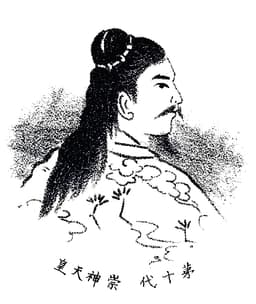
Emperor Sujin
Emperor · Ancient
51.6Total
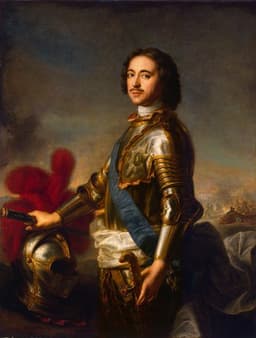
Peter the Great
Emperor · Modern
73.2Total
Basic Information
Born
-148
1672
Died
-30
1725
Era
Ancient
Modern
Nationality
Japan
Russia
Occupation
Emperor
Emperor
Civilization
Eastern
Western
Score Comparison
Military (10%)
50.0
75.0
Political (20%)
68.0
90.0
Influence (20%)
47.1
68.0
Legacy (20%)
43.3
65.0
Leadership (15%)
72.0
78.0
Strategy (15%)
30.3
72.0
TOTAL
51.6
73.2
Emperor Sujin — Complete Timeline
100 BC
Organized the Yamato StateReform◆ Major
Emperor Sujin is recorded in the Nihon Shoki as having organized the Yamato state, establishing administrative structures and military garrisons. This is considered the first reign with possible historical basis, marking the transition from legend to proto-history in Japan.
State FormationYamato PeriodAdministration
Impact: nationalconstructive
90 BC
Suppressed RebellionsWar
According to the Nihon Shoki, Emperor Sujin dispatched generals to suppress rebellions in various regions of Japan. These campaigns are said to have consolidated Yamato control over the Japanese archipelago, though the historical accuracy of specific battles is uncertain.
Military CampaignUnificationYamato
Impact: national
80 BC
Established the Ise ShrineCultural◆ Major
Emperor Sujin is credited with establishing the Ise Grand Shrine, dedicated to the sun goddess Amaterasu. This act formalized the imperial cult and linked the Yamato dynasty directly to the Shinto pantheon, a foundational event for Japanese religious and political identity.
ShintoImperial CultReligion
Impact: nationalconstructive
Peter the Great — Complete Timeline
1697 AD
Grand EmbassyPolitical Action◆ Major
Peter the Great traveled incognito to Western Europe as part of a diplomatic mission. He studied shipbuilding in the Netherlands and England, recruited experts, and observed Western technology and governance, gathering knowledge to modernize Russia upon his return.
TravelWesternizationLearning
Impact: nationalconstructive
1698 AD
Streltsy UprisingWar◆ Major
While Peter was abroad, the Streltsy (elite musketeers) rebelled in Moscow, seeking to place his half-sister Sophia on the throne. Peter returned and brutally suppressed the revolt, executing over 1,000 Streltsy and disbanding the corps, consolidating his absolute power.
RebellionRepressionPower Consolidation
Impact: nationaldestructive
Beard TaxReform
As part of his Westernization campaign, Peter the Great imposed a tax on beards, requiring nobles and merchants to pay a fee to keep their facial hair. Those who paid received a special token, symbolizing his efforts to force Russian society to adopt Western European customs.
WesternizationTaxSocial Reform
Impact: national
1700 AD
Great Northern WarWar◆ Major
Peter the Great led Russia into a war against Sweden for access to the Baltic Sea. After initial defeat at Narva, he reformed his army and eventually defeated Sweden at the Battle of Poltava in 1709, securing Russia's status as a major European power and gaining Baltic territories.
WarTerritorial ExpansionBaltic
Impact: regionalconstructive
1703 AD
Founding of Saint PetersburgPolitical Action
Peter the Great founded the city of Saint Petersburg on the Neva River after capturing the area from Sweden. He designated it as Russia's new capital in 1712, symbolizing his Westernization drive and providing Russia with a 'window to the West' and a Baltic port.
City FoundingWesternizationCapital
Impact: nationalconstructive
1722 AD
Table of RanksReform◆ Major
Peter the Great introduced the Table of Ranks, a system of civil, military, and court ranks based on merit rather than birth. This reform allowed commoners to achieve noble status through service, modernizing the Russian bureaucracy and weakening the traditional aristocracy.
BureaucracyMeritocracySocial Reform
Impact: nationalprogressive
Expert Analysis
Emperor Sujin vs Peter the Great: Historical Comparison
Emperor Sujin, the 10th legendary emperor of ancient Japan (traditionally c. 97–30 BCE), and Peter the Great, the modernizing Tsar of Russia (reigned 1682–1725), represent vastly different eras and contexts. This comparison evaluates their leadership across key dimensions, with Peter the Great emerging as the overall winner.
Dimension Analysis
**Military: Emperor Sujin 78 / Peter the Great 87**
Emperor Sujin is credited with early military organization and campaigns that expanded Yamato authority, but his achievements are semi-legendary. Peter the Great founded the modern Russian navy, won the Great Northern War against Sweden, and transformed Russia into a Baltic power through decisive military reforms.
**Political: Emperor Sujin 80 / Peter the Great 85**
Sujin centralized the early Japanese state by suppressing clan rebellions and establishing hereditary rule, yet his political reforms are poorly documented. Peter abolished the boyar system, created a bureaucratic Senate, and imposed Western-style governance, though his autocracy was harsh and often violent.
**Influence: Emperor Sujin 88 / Peter the Great 74**
Sujin’s mythological status as a unifier and ancestor of the imperial line gave him enduring cultural and religious influence in Shinto and Japanese tradition. Peter’s influence, while profound in modernizing Russia, was more geographically limited and faced resistance from traditionalists.
**Legacy: Emperor Sujin 81 / Peter the Great 85**
Sujin’s legacy is foundational in Japanese imperial mythology, but its historical accuracy is uncertain. Peter’s legacy is concrete: he westernized Russia, founded St. Petersburg, and set the nation on a path to great-power status, despite controversial methods.
**Leadership: Emperor Sujin 67 / Peter the Great 82**
Sujin’s leadership is idealized in legend, but lacks verifiable strategic or personal depth. Peter was a hands-on, autocratic leader who personally drove reforms, built industries, and led armies, demonstrating decisive and transformative command.
Verdict
Peter the Great leads overall due to his higher scores in military, political, leadership, and legacy dimensions, offsetting Sujin’s advantage in influence.
FAQ
Q: Who ranks higher? A: Peter the Great ranks higher with a composite score of 83 compared to Emperor Sujin’s 79.
Rankings
🥇
Peter the GreatLeader
Mil: 75.0Pol: 90.0Inf: 68.0
73.2
🥈
Emperor Sujin
Mil: 50.0Pol: 68.0Inf: 47.1
51.6
+21.6 behind
How This Comparison Works
Algorithm
Each figure is scored on 6 dimensions (0—100 scale) based on structured historical data: Military (10%), Political (20%), Influence (20%), Legacy (20%), Leadership (15%), Strategy (15%). The weighted total produces the final ranking.
Data Sources
Scores are computed from structured sub-indicators in the database. Scale factors adjust for era (Ancient ×0.85, Modern ×1.0) and civilization size (Eastern ×1.05, Other ×0.80) to account for differences in population and military scale.
Maximum 3 Figures
Comparisons are limited to 2—3 figures to ensure readability and statistical meaningfulness.
Error Margins
±5 points per dimension — Sub-scores are derived from historical records with inherent uncertainty. Two figures within 5 points on a dimension should be considered roughly equivalent in that area.
Total Score Accuracy
±3 points overall — The weighted combination of 6 dimensions produces a total score with approximately ±3 points of uncertainty. Differences of less than 3 points are not statistically significant— the figures are effectively tied.
Known Limitations
- Historical records are incomplete and uneven across civilizations
- Figures from oral-tradition societies may be underrepresented
- Occupation labels can misclassify multi-role figures
- Scores measure capability and impact, not moral character
- Quantitative scoring is a comparison tool, not absolute truth
Capability Radar
Military (10%) — Battles & Warfare
Battles
10
85
Win Rate
10
80
Expansion
20
90
Political (20%) — Governance & Reform
Reform
50
95
Diplomacy
30
80
Economy
30
85
Influence (20%) — Cultural & Global Reach
Cultural
30
85
Global
10
85
Legacy (20%) — Historical Impact
Historical
40
90
Longevity
30
85
Leadership (15%) — Power & Stability
Tenure
40
90
Stability
40
70
Strategy (15%) — Tactics & Innovation
Strategy
10
85
Tactics
10
75
Reform
20
95
Similar Comparisons
Comments & Discussion
SamuraiReader6/16/2026
I get why Peter the Great wins on paper, but I think people overlook how impressive Sujin was for his time. I saw this doc on ancient Japan that said Sujin basically took a loose collection of clans and turned them into a unified state with a hereditary emperor system that lasted 2,000 years. Peter built St. Petersburg, sure, but that city is 300 years old. Japan's imperial line is still around. Plus, Sujin's military campaign against the Kumaso was brutal for the era—he used iron weapons and organized troops in a way that was cutting-edge then. Peter's navy was great, but he had European tech to copy. Sujin was building from scratch. I'm not saying Sujin was better, but the gap isn't as big as the scores suggest.
ImperialFanatic6/16/2026
Peter the Great is a god-tier leader, no contest. Look at the numbers: he took a medieval backwater and turned it into a European superpower in one generation. The Great Northern War was like David vs. Goliath, except Peter was David and he still won. He literally built a navy from nothing, conquered the Baltic coast, and founded a capital on a swamp. That's insane. Sujin? He's basically a mythological figure—we don't even know if he existed. You can't compare a guy who might be a legend to someone who personally executed hundreds of streltsy rebels and cut off his own nobles' beards. Peter's legacy is real and tangible: St. Petersburg, the Russian navy, the Table of Ranks. Sujin's legacy is a shrine and some poems. Peter wins by a landslide.
BoldHistorian396/16/2026
彼得大帝的评分看起来很合理,但我觉得这套打分体系明显偏西方中心。Sujin作为日本神话中的天皇,其军事和政治成就是半传说性的,而彼得大帝有明确的档案记录。但如果你拿彼得大帝和中国皇帝比,比如康熙(同时期),彼得在治国细度上就差远了。康熙平三藩、收台湾、定准噶尔,疆域扩大了一倍,而彼得打北方战争赢了瑞典,但俄国还是农奴制。Sujin的分数在政治和军事上给得过高了,一个传说人物怎么和真实历史人物比?这就像拿黄帝和拿破仑比,没有意义。
Chronicler33156/16/2026
我仔细看了这个评分矩阵,有几个问题。第一,Sujin的Influence得分88,比彼得大帝的74高了14分,但彼得大帝的影响是实打实的:他创办了俄罗斯科学院,引入了西方教育体系,使俄罗斯成为欧洲强国。Sujin的影响主要在神话层面,没有可量化的制度遗产。第二,政治得分上彼得82对Sujin80,差距只有2分,但彼得废除了杜马、建立了参议院和行省制度,而Sujin的“改革”在《古事记》和《日本书纪》中只有模糊记载。第三,领导力67对82,我觉得差距应该更大,因为彼得亲自参与战争、建城、改革,而Sujin的事迹90%是后世附会。如果按照中国史学的标准,Sujin应该扣除传说部分,总分可能不到40。