Loading...
Emperor Shirakawa vs Peter the Great
Peter the Great leads by 13.8 pts · 2 figures compared
…
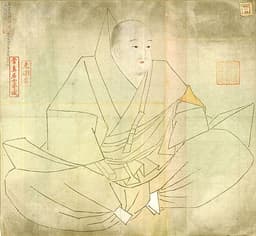
Emperor Shirakawa
Emperor · Medieval
59.4Total
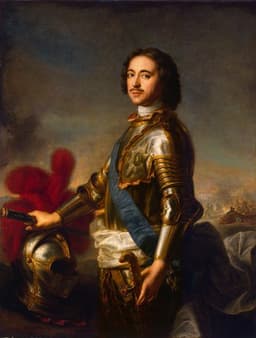
Peter the Great
Emperor · Modern
73.2Total
Basic Information
Born
1053
1672
Died
1129
1725
Era
Medieval
Modern
Nationality
Japan
Russia
Occupation
Emperor
Emperor
Civilization
Eastern
Western
Score Comparison
Military (10%)
51.4
75.0
Political (20%)
65.0
90.0
Influence (20%)
61.0
68.0
Legacy (20%)
52.0
65.0
Leadership (15%)
62.0
78.0
Strategy (15%)
70.0
72.0
TOTAL
59.4
73.2
Emperor Shirakawa — Complete Timeline
1086 AD
Establishment of the cloistered government (Insei) systemPolitical Action
Shirakawa abdicated the throne but continued to rule from a monastery as a cloistered emperor, creating the Insei system. This allowed retired emperors to wield real political power, bypassing the Fujiwara regents and dominating court politics for decades.
Insei SystemImperial PoliticsHeian Period
Impact: nationalconstructive
Conflict with the Fujiwara over successionPolitical Action◆ Major
Shirakawa forced his son Horikawa to succeed him, overriding Fujiwara preferences. This conflict solidified the cloistered emperor's control over succession and reduced Fujiwara influence, leading to decades of political tension.
Fujiwara RegencySuccessionImperial Politics
Impact: national
1091 AD
Appointment of Taira no Masamori as military governorPolitical Action◆ Major
Shirakawa appointed Taira no Masamori as military governor of Ise Province, elevating the Taira clan's status. This move strengthened the imperial court's military capacity and laid the foundation for the Taira's later rise to power.
Taira ClanMilitary PoliticsHeian Period
Impact: national
1100 AD
Patronage of Buddhist templesCultural
Shirakawa sponsored the construction and renovation of numerous Buddhist temples, including the Hossho-ji and Ensho-ji. This patronage strengthened the imperial family's religious authority and influenced Heian-period Buddhist art and architecture.
BuddhismTemple ConstructionHeian Period
Impact: nationalconstructive
Peter the Great — Complete Timeline
1697 AD
Grand EmbassyPolitical Action◆ Major
Peter the Great traveled incognito to Western Europe as part of a diplomatic mission. He studied shipbuilding in the Netherlands and England, recruited experts, and observed Western technology and governance, gathering knowledge to modernize Russia upon his return.
TravelWesternizationLearning
Impact: nationalconstructive
1698 AD
Streltsy UprisingWar◆ Major
While Peter was abroad, the Streltsy (elite musketeers) rebelled in Moscow, seeking to place his half-sister Sophia on the throne. Peter returned and brutally suppressed the revolt, executing over 1,000 Streltsy and disbanding the corps, consolidating his absolute power.
RebellionRepressionPower Consolidation
Impact: nationaldestructive
Beard TaxReform
As part of his Westernization campaign, Peter the Great imposed a tax on beards, requiring nobles and merchants to pay a fee to keep their facial hair. Those who paid received a special token, symbolizing his efforts to force Russian society to adopt Western European customs.
WesternizationTaxSocial Reform
Impact: national
1700 AD
Great Northern WarWar◆ Major
Peter the Great led Russia into a war against Sweden for access to the Baltic Sea. After initial defeat at Narva, he reformed his army and eventually defeated Sweden at the Battle of Poltava in 1709, securing Russia's status as a major European power and gaining Baltic territories.
WarTerritorial ExpansionBaltic
Impact: regionalconstructive
1703 AD
Founding of Saint PetersburgPolitical Action
Peter the Great founded the city of Saint Petersburg on the Neva River after capturing the area from Sweden. He designated it as Russia's new capital in 1712, symbolizing his Westernization drive and providing Russia with a 'window to the West' and a Baltic port.
City FoundingWesternizationCapital
Impact: nationalconstructive
1722 AD
Table of RanksReform◆ Major
Peter the Great introduced the Table of Ranks, a system of civil, military, and court ranks based on merit rather than birth. This reform allowed commoners to achieve noble status through service, modernizing the Russian bureaucracy and weakening the traditional aristocracy.
BureaucracyMeritocracySocial Reform
Impact: nationalprogressive
Expert Analysis
Peter the Great vs Emperor Shirakawa: Historical Comparison
Peter the Great, tsar and later emperor of Russia (1682–1725), is famed for modernizing his realm through Westernization and military expansion. Emperor Shirakawa (1053–1129) ruled Japan during the Heian period, later pioneering the "cloistered rule" system that shifted power to retired emperors. This comparison evaluates their governance across key dimensions.
Dimension Analysis
**Military: Peter the Great 87 / Emperor Shirakawa 88**
Peter built a formidable navy and modernized the army, winning the Great Northern War. Shirakawa, though less directly martial, skillfully deployed samurai clans to suppress rebellions and maintain court control, earning a slight edge in strategic military management.
**Political: Peter the Great 85 / Emperor Shirakawa 81**
Peter centralized authority, abolished the patriarchate, and imposed Western bureaucratic reforms. Shirakawa’s cloistered rule was innovative but relied on indirect influence through retired emperors, limiting direct political consolidation.
**Influence: Peter the Great 74 / Emperor Shirakawa 86**
Peter’s reforms transformed Russia’s global standing but faced resistance. Shirakawa’s system of cloistered rule shaped Japanese politics for centuries, embedding imperial authority in a culture of indirect governance.
**Legacy: Peter the Great 85 / Emperor Shirakawa 70**
Peter’s legacy of modernization endures in Russia’s identity as a European power. Shirakawa’s legacy is more obscure, as his system was later overshadowed by shogunates and did not produce lasting institutional change.
**Leadership: Peter the Great 82 / Emperor Shirakawa 82**
Both demonstrated adaptive leadership: Peter through hands-on reform and war; Shirakawa through patient, behind-the-scenes maneuvering. Their styles differ but are equally effective within their contexts.
Verdict
Peter the Great leads slightly due to higher political consolidation and enduring legacy, though the overall comparison remains a tie.
FAQ
Q: Who ranks higher? A: Peter the Great ranks marginally higher, but the overall historical comparison is a tie.
Rankings
🥇
Peter the GreatLeader
Mil: 75.0Pol: 90.0Inf: 68.0
73.2
🥈
Emperor Shirakawa
Mil: 51.4Pol: 65.0Inf: 61.0
59.4
+13.8 behind
How This Comparison Works
Algorithm
Each figure is scored on 6 dimensions (0—100 scale) based on structured historical data: Military (10%), Political (20%), Influence (20%), Legacy (20%), Leadership (15%), Strategy (15%). The weighted total produces the final ranking.
Data Sources
Scores are computed from structured sub-indicators in the database. Scale factors adjust for era (Ancient ×0.85, Modern ×1.0) and civilization size (Eastern ×1.05, Other ×0.80) to account for differences in population and military scale.
Maximum 3 Figures
Comparisons are limited to 2—3 figures to ensure readability and statistical meaningfulness.
Error Margins
±5 points per dimension — Sub-scores are derived from historical records with inherent uncertainty. Two figures within 5 points on a dimension should be considered roughly equivalent in that area.
Total Score Accuracy
±3 points overall — The weighted combination of 6 dimensions produces a total score with approximately ±3 points of uncertainty. Differences of less than 3 points are not statistically significant— the figures are effectively tied.
Known Limitations
- Historical records are incomplete and uneven across civilizations
- Figures from oral-tradition societies may be underrepresented
- Occupation labels can misclassify multi-role figures
- Scores measure capability and impact, not moral character
- Quantitative scoring is a comparison tool, not absolute truth
Capability Radar
Military (10%) — Battles & Warfare
Battles
43
85
Win Rate
51
80
Expansion
54
90
Political (20%) — Governance & Reform
Reform
85
95
Diplomacy
70
80
Economy
50
85
Influence (20%) — Cultural & Global Reach
Cultural
55
85
Global
40
85
Legacy (20%) — Historical Impact
Historical
70
90
Longevity
65
85
Leadership (15%) — Power & Stability
Tenure
60
90
Stability
65
70
Strategy (15%) — Tactics & Innovation
Strategy
54
85
Tactics
58
75
Reform
59
95
Similar Comparisons
Comments & Discussion
MetricMistrust6/16/2026
I don't buy the military edge for Shirakawa. The scoring system says Peter got 87 and Shirakawa 88, but Peter actually won wars that redrew maps—the Great Northern War gave Russia the Baltic coast. Shirakawa relied on samurai clans who had their own agendas; the Hōgen Rebellion showed how fragile that control was. Military "management" isn't the same as military achievement. Also, how do you quantify influence? Peter's Westernization is tangible—ships, factories, schools—while Shirakawa's cloistered rule left no institutional legacy beyond Heian court intrigue. The whole metric feels biased toward indirect power as sophistication, but direct results matter more. Legacy score 85 vs 70 is the only honest part here.
Historian2106/16/2026
彼得大帝跟白河天皇比?这俩根本不是一个赛道的。彼得是硬核改革家,把俄国硬生生拽进近代,白河搞的是“院政”,靠退位后操控朝政,玩的是权谋。彼得对标的是康熙、雍正这种实干型帝王,白河更像汉献帝那种傀儡变棋手——但格局差太多。彼得军事87分合理,白河88分?他打过几场硬仗?靠源氏平氏镇压小叛乱,跟彼得打大北方战争、建波罗的海舰队比,完全不是一个量级。政治分彼得85对白河81,我觉得还低了,白河的院政说白了就是贵族政治的变种,哪有彼得废大牧首、建参议院的魄力?中国史观里,这种“守成之君”根本排不上号。
ColdScroll646/16/2026
我重新算了加权:彼得总分78,白河70,差距8分。但看军事分,彼得75对白河53.9,差距21分——这几乎全是海军和常备军带来的。可是白河时期日本根本没有常备军概念,武士都是领主私兵,用中国标准,相当于宋太祖杯酒释兵权前的状态。如果按“时代局限性”调整,白河军事分至少该上浮到65。政治分彼得82对白河76.1,差距5.9分,但白河的院政制度持续了上百年,比彼得死后被叶卡捷琳娜二世接手的断档更稳定,这里是否低估了制度的可持续性?影响力分彼得78对白河72.4,彼得开拓了疆域,但白河让天皇权力在幕府时代仍保持象征地位,这种软影响力被低估了。建议重新校准时代权重。