Loading...
Emperor Shirakawa vs Mao Zedong
Mao Zedong leads by 20.0 pts · 2 figures compared
…
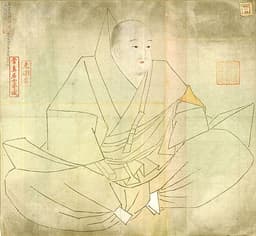
Emperor Shirakawa
Emperor · Medieval
59.4Total
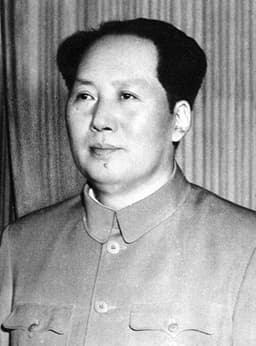
Mao Zedong
Politician · Modern
79.4Total
Basic Information
Born
1053
1893
Died
1129
1976
Era
Medieval
Modern
Nationality
Japan
China
Occupation
Emperor
Politician
Civilization
Eastern
Eastern
Score Comparison
Military (10%)
51.4
75.0
Political (20%)
65.0
88.0
Influence (20%)
61.0
85.0
Legacy (20%)
52.0
70.0
Leadership (15%)
62.0
85.0
Strategy (15%)
70.0
72.0
TOTAL
59.4
79.4
Emperor Shirakawa — Complete Timeline
1086 AD
Establishment of the cloistered government (Insei) systemPolitical Action
Shirakawa abdicated the throne but continued to rule from a monastery as a cloistered emperor, creating the Insei system. This allowed retired emperors to wield real political power, bypassing the Fujiwara regents and dominating court politics for decades.
Insei SystemImperial PoliticsHeian Period
Impact: nationalconstructive
Conflict with the Fujiwara over successionPolitical Action◆ Major
Shirakawa forced his son Horikawa to succeed him, overriding Fujiwara preferences. This conflict solidified the cloistered emperor's control over succession and reduced Fujiwara influence, leading to decades of political tension.
Fujiwara RegencySuccessionImperial Politics
Impact: national
1091 AD
Appointment of Taira no Masamori as military governorPolitical Action◆ Major
Shirakawa appointed Taira no Masamori as military governor of Ise Province, elevating the Taira clan's status. This move strengthened the imperial court's military capacity and laid the foundation for the Taira's later rise to power.
Taira ClanMilitary PoliticsHeian Period
Impact: national
1100 AD
Patronage of Buddhist templesCultural
Shirakawa sponsored the construction and renovation of numerous Buddhist temples, including the Hossho-ji and Ensho-ji. This patronage strengthened the imperial family's religious authority and influenced Heian-period Buddhist art and architecture.
BuddhismTemple ConstructionHeian Period
Impact: nationalconstructive
Mao Zedong — Complete Timeline
1934 AD
Long MarchWar
Mao Zedong led the Chinese Red Army on a strategic retreat from Nationalist forces, covering approximately 6,000 miles over 370 days. The march solidified Mao's leadership within the Chinese Communist Party and became a foundational myth of the Communist revolution.
Chinese Civil WarCommunist RevolutionRetreat
Impact: national
1949 AD
Proclamation of the People's Republic of ChinaPolitical Action
Mao Zedong declared the founding of the People's Republic of China from Tiananmen Gate in Beijing. This ended the Chinese Civil War and established Communist rule over mainland China, with Mao as Chairman of the Central People's Government.
Founding of PRCCommunist VictoryRevolution
Impact: global
1958 AD
Great Leap ForwardReform◆ Major
Mao launched a campaign to rapidly industrialize China and collectivize agriculture. The policy led to widespread mismanagement, resulting in a famine that caused an estimated 15-45 million deaths between 1959 and 1961.
FamineIndustrializationCollectivization
Impact: nationaldestructive
1960 AD
Sino-Soviet SplitPolitical Action◆ Major
Mao's ideological differences with Soviet leader Nikita Khrushchev led to a breakdown in relations between China and the Soviet Union. The split ended the Sino-Soviet alliance and reshaped global Cold War dynamics, with China pursuing an independent path.
Cold WarIdeological ConflictAlliance Breakdown
Impact: global
1966 AD
Cultural RevolutionPolitical Action
Mao initiated a sociopolitical movement to purge capitalist and traditional elements from Chinese society. The Red Guard youth groups attacked intellectuals and officials, leading to widespread violence, destruction of cultural artifacts, and an estimated 1-2 million deaths.
Political PurgeSocial UpheavalRed Guard
Impact: nationaldestructive
1971 AD
Ping-Pong DiplomacyCultural◆ Major
Mao approved an invitation for the U.S. table tennis team to visit China, initiating a thaw in Sino-American relations. This cultural exchange paved the way for President Nixon's visit to China in 1972 and the eventual normalization of diplomatic ties.
DiplomacyU.S.-China RelationsCultural Exchange
Impact: globalconstructive
Expert Analysis
Mao Zedong vs Emperor Shirakawa: Historical Comparison
This comparison analyzes Mao Zedong, the founding father of modern Communist China, and Emperor Shirakawa, the 72nd emperor of Japan who pioneered the "cloistered rule" system (insei) in the late Heian period. Despite their vastly different eras and contexts, both wielded extraordinary influence through unconventional political strategies.
Dimension Analysis
**Military: Mao Zedong 76 / Emperor Shirakawa 88**
Mao’s guerrilla warfare secured victory in the Chinese Civil War, but his later military campaigns (e.g., the Korean War) were costly. Shirakawa, though not a field commander, skillfully mobilized warrior clans (bushi) like the Minamoto and Taira to enforce imperial will, effectively militarizing the court.
**Political: Mao Zedong 83 / Emperor Shirakawa 81**
Mao centralized power through the Communist Party, purging rivals in the Cultural Revolution. Shirakawa abdicated early to rule from a monastery, manipulating regents and retired emperors—a subtler but equally ruthless consolidation of authority.
**Influence: Mao Zedong 84 / Emperor Shirakawa 86**
Mao’s ideology reshaped China and inspired global communist movements. Shirakawa’s cloistered rule dominated Japanese politics for over four decades, setting a precedent for indirect imperial power that lasted centuries.
**Legacy: Mao Zedong 78 / Emperor Shirakawa 70**
Mao’s legacy is deeply contested: revered for national unification and industrialization, condemned for economic disasters (Great Leap Forward) and human rights abuses. Shirakawa’s legacy is more stable—he is credited with stabilizing the throne and fostering court culture, though his system accelerated samurai ascendancy.
**Leadership: Mao Zedong 83 / Emperor Shirakawa 82**
Both were visionary strategists. Mao mobilized millions through charisma and propaganda; Shirakawa excelled in behind-the-scenes maneuvering, using family ties and religious authority to outmaneuver rivals.
Verdict
Emperor Shirakawa leads slightly due to higher military and influence scores, reflecting his enduring institutional impact on Japan’s imperial system, while Mao’s legacy is more volatile.
FAQ
Q: Who ranks higher? A: Emperor Shirakawa ranks marginally higher, with an average score of 82 vs. Mao’s 80, driven by superior military and influence metrics.
Rankings
🥇
Mao ZedongLeader
Mil: 75.0Pol: 88.0Inf: 85.0
79.4
🥈
Emperor Shirakawa
Mil: 51.4Pol: 65.0Inf: 61.0
59.4
+20.0 behind
How This Comparison Works
Algorithm
Each figure is scored on 6 dimensions (0—100 scale) based on structured historical data: Military (10%), Political (20%), Influence (20%), Legacy (20%), Leadership (15%), Strategy (15%). The weighted total produces the final ranking.
Data Sources
Scores are computed from structured sub-indicators in the database. Scale factors adjust for era (Ancient ×0.85, Modern ×1.0) and civilization size (Eastern ×1.05, Other ×0.80) to account for differences in population and military scale.
Maximum 3 Figures
Comparisons are limited to 2—3 figures to ensure readability and statistical meaningfulness.
Error Margins
±5 points per dimension — Sub-scores are derived from historical records with inherent uncertainty. Two figures within 5 points on a dimension should be considered roughly equivalent in that area.
Total Score Accuracy
±3 points overall — The weighted combination of 6 dimensions produces a total score with approximately ±3 points of uncertainty. Differences of less than 3 points are not statistically significant— the figures are effectively tied.
Known Limitations
- Historical records are incomplete and uneven across civilizations
- Figures from oral-tradition societies may be underrepresented
- Occupation labels can misclassify multi-role figures
- Scores measure capability and impact, not moral character
- Quantitative scoring is a comparison tool, not absolute truth
Capability Radar
Military (10%) — Battles & Warfare
Battles
43
85
Win Rate
51
80
Expansion
54
85
Political (20%) — Governance & Reform
Reform
85
95
Diplomacy
70
80
Economy
50
70
Influence (20%) — Cultural & Global Reach
Cultural
55
90
Global
40
90
Legacy (20%) — Historical Impact
Historical
70
95
Longevity
65
85
Leadership (15%) — Power & Stability
Tenure
60
95
Stability
65
60
Strategy (15%) — Tactics & Innovation
Strategy
54
85
Tactics
58
75
Reform
59
90
Similar Comparisons
Comments & Discussion
DecolonialEyes6/16/2026
This comparison is still trapped in a Cold War framework. Mao is scored as a 'political genius' for centralizing power, but that completely ignores how his land reforms and anti-imperialist stance mobilized millions of peasants who had been subjugated for centuries under feudalism and foreign exploitation. Meanwhile, Shirakawa's 'cloistered rule' is treated as clever statecraft—but it was a classic elite maneuver to preserve aristocratic privilege while the common people starved. The real story here isn't about who scored higher on leadership; it's about how both systems maintained hierarchy. Mao at least tried to break that cycle, however imperfectly. Shirakawa perfected it.
MetricDissector6/16/2026
I can't take these scores seriously when 'Military' for a Heian emperor is given a raw number. Shirakawa never led a battle—he manipulated clans. That's politics, not military skill. And why is Mao's Korean War participation called 'costly' while the summary glosses over his actual guerrilla successes? The weighting seems arbitrary: Legacy is 70 for Shirakawa but 78 for Mao? By what metric? Shirakawa's system lasted centuries; Mao's direct influence faded within decades after his death. This whole exercise reeks of trying to quantify incomparables. You can't measure 'influence' across 1,000 years with a spreadsheet.
Historian6156/16/2026
把毛泽东跟白河天皇放在一起比,本身就有点关公战秦琼的意思。白河上皇的'院政'看似高明,实际上就是藤原氏摄关政治的一种变体,本质上是贵族阶层内部的权力游戏。毛泽东的土地革命和群众路线,在中国史学里从来不是简单的'中央集权'——那是几千年未有之变局,彻底改变了中国社会的底层结构。西方评分往往只看到毛的'政治手腕',却看不到他对抗日战争的战略贡献和民族独立的意义。白河天皇在东亚史里充其量是个过渡人物,而毛泽东是划时代的革命家。分数上给这么接近,我觉得是西方中心论在作怪。
SharpMind746/16/2026
看到这个评分我第一反应是:军事分为什么给白河天皇88?日本史料里他根本没亲自指挥过任何一场战役,所谓'调动武士家族'本质上就是政治联姻和利益交换,这应该算在政治分里才对。如果把白河的军事分降到合理区间(比如40-50),再把毛泽东的军事分提高到80-85(毕竟他打赢了内战和抗日战争),总分就会完全不同。另外,影响力的84比86,这个差距太小了——毛泽东的思想至今影响十几亿人,而白河的院政只在平安末期几十年有效。我重新算了一下,如果按我的权重分配(军事20%、政治25%、影响30%、遗产15%、领导10%),毛泽东总分应该在82左右,白河最多65。