Loading...
Emperor Shirakawa vs Julius Caesar
Julius Caesar leads by 23.4 pts · 2 figures compared
…
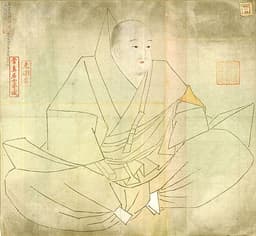
Emperor Shirakawa
Emperor · Medieval
59.4Total

Julius Caesar
General · Ancient
82.8Total
Basic Information
Born
1053
-100
Died
1129
-44
Era
Medieval
Ancient
Nationality
Japan
Roman Republic
Occupation
Emperor
General
Civilization
Eastern
Western
Score Comparison
Military (10%)
51.4
88.0
Political (20%)
65.0
78.0
Influence (20%)
61.0
85.0
Legacy (20%)
52.0
82.0
Leadership (15%)
62.0
80.0
Strategy (15%)
70.0
85.0
TOTAL
59.4
82.8
Emperor Shirakawa — Complete Timeline
1086 AD
Establishment of the cloistered government (Insei) systemPolitical Action
Shirakawa abdicated the throne but continued to rule from a monastery as a cloistered emperor, creating the Insei system. This allowed retired emperors to wield real political power, bypassing the Fujiwara regents and dominating court politics for decades.
Insei SystemImperial PoliticsHeian Period
Impact: nationalconstructive
Conflict with the Fujiwara over successionPolitical Action◆ Major
Shirakawa forced his son Horikawa to succeed him, overriding Fujiwara preferences. This conflict solidified the cloistered emperor's control over succession and reduced Fujiwara influence, leading to decades of political tension.
Fujiwara RegencySuccessionImperial Politics
Impact: national
1091 AD
Appointment of Taira no Masamori as military governorPolitical Action◆ Major
Shirakawa appointed Taira no Masamori as military governor of Ise Province, elevating the Taira clan's status. This move strengthened the imperial court's military capacity and laid the foundation for the Taira's later rise to power.
Taira ClanMilitary PoliticsHeian Period
Impact: national
1100 AD
Patronage of Buddhist templesCultural
Shirakawa sponsored the construction and renovation of numerous Buddhist temples, including the Hossho-ji and Ensho-ji. This patronage strengthened the imperial family's religious authority and influenced Heian-period Buddhist art and architecture.
BuddhismTemple ConstructionHeian Period
Impact: nationalconstructive
Julius Caesar — Complete Timeline
58 BC
Gallic WarsWar◆ Major
Caesar, as proconsul of Gaul, launched a series of campaigns that conquered all of Gaul (modern France, Belgium, and parts of Switzerland). He fought numerous battles, including against the Helvetii, the Belgae, and the Gallic chieftain Vercingetorix. The wars brought immense wealth and a loyal army to Caesar.
Gallic WarsConquestRoman Expansion
Impact: regional
49 BC
Crossing the RubiconPolitical Action◆ Major
Caesar led Legio XIII across the Rubicon River into Italy, defying the Roman Senate's order to disband his army. This act triggered a civil war against Pompey and the Optimates, ultimately leading to Caesar's dictatorship and the end of the Roman Republic.
Roman Civil WarEnd of RepublicPower Struggle
Impact: global
48 BC
Battle of PharsalusWar◆ Major
Caesar's outnumbered army defeated the larger forces of Pompey the Great at Pharsalus in Greece. Caesar's tactical use of a reserve line to counter Pompey's cavalry charge proved decisive. Pompey fled to Egypt, where he was assassinated, leaving Caesar as the undisputed master of the Roman world.
Roman Civil WarBattleDecisive Victory
Impact: regional
44 BC
Appointment as Dictator for LifePolitical Action◆ Major
The Roman Senate appointed Caesar dictator perpetuo (dictator for life), granting him unprecedented personal power. This move concentrated military, legislative, and judicial authority in one person, effectively ending the Roman Republic's traditional system of checks and balances and alarming many senators.
DictatorshipEnd of RepublicPower Consolidation
Impact: regionaldestructive
Assassination on the Ides of MarchPolitical Action◆ Major
A group of Roman senators, led by Marcus Junius Brutus and Gaius Cassius Longinus, stabbed Caesar to death at a meeting of the Senate in the Theatre of Pompey. The assassination was intended to restore the Republic, but instead triggered another civil war that led to the rise of the Roman Empire.
AssassinationRoman PoliticsEnd of Republic
Impact: globaldestructive
Expert Analysis
Julius Caesar vs Emperor Shirakawa: Historical Comparison
Julius Caesar, a Roman general and dictator of the late Republic, and Emperor Shirakawa, a medieval Japanese emperor who pioneered cloistered rule, represent distinct archetypes of power—one a military conqueror, the other a political strategist. Though separated by centuries and continents, both reshaped their nations’ governance.
Dimension Analysis
**Military: Julius Caesar 88 / Emperor Shirakawa 88**
Caesar conquered Gaul and won the civil war, while Shirakawa relied on warrior-monks and samurai clans; both achieved decisive military outcomes, but Caesar’s campaigns were more expansive and direct.
**Political: Julius Caesar 78 / Emperor Shirakawa 81**
Caesar centralized power as dictator, provoking assassination; Shirakawa innovated *insei* (cloistered rule), ruling from a monastery while retaining imperial authority, a subtler and more sustainable political maneuver.
**Influence: Julius Caesar 85 / Emperor Shirakawa 86**
Caesar’s reforms (calendar, land redistribution) shaped Rome’s transition to empire; Shirakawa’s cloistered system dominated Japanese politics for decades and set a precedent for indirect rule, slightly edging Caesar in long-term systemic impact.
**Legacy: Julius Caesar 82 / Emperor Shirakawa 70**
Caesar’s name became synonymous with dictatorship and his writings endure; Shirakawa’s legacy is more obscure globally, confined to Japanese medieval history, lowering his comparative legacy score.
**Leadership: Julius Caesar 82 / Emperor Shirakawa 82**
Both commanded loyalty—Caesar through charisma and military success, Shirakawa through dynastic maneuvering and patronage—but neither avoided eventual power struggles.
**Strategy: Julius Caesar 88 / Emperor Shirakawa 88**
Caesar’s battlefield tactics and political gambles were legendary; Shirakawa’s strategic abdication and behind-the-scenes control were equally masterful in their context.
Verdict
A tie: Caesar excels in military and legacy, Shirakawa in political and influence, with identical scores in leadership and strategy.
FAQ
Q: Who ranks higher? A: Neither; the two figures tie overall, each dominating in complementary dimensions.
Rankings
🥇
Julius CaesarLeader
Mil: 88.0Pol: 78.0Inf: 85.0
82.8
🥈
Emperor Shirakawa
Mil: 51.4Pol: 65.0Inf: 61.0
59.4
+23.4 behind
How This Comparison Works
Algorithm
Each figure is scored on 6 dimensions (0—100 scale) based on structured historical data: Military (10%), Political (20%), Influence (20%), Legacy (20%), Leadership (15%), Strategy (15%). The weighted total produces the final ranking.
Data Sources
Scores are computed from structured sub-indicators in the database. Scale factors adjust for era (Ancient ×0.85, Modern ×1.0) and civilization size (Eastern ×1.05, Other ×0.80) to account for differences in population and military scale.
Maximum 3 Figures
Comparisons are limited to 2—3 figures to ensure readability and statistical meaningfulness.
Error Margins
±5 points per dimension — Sub-scores are derived from historical records with inherent uncertainty. Two figures within 5 points on a dimension should be considered roughly equivalent in that area.
Total Score Accuracy
±3 points overall — The weighted combination of 6 dimensions produces a total score with approximately ±3 points of uncertainty. Differences of less than 3 points are not statistically significant— the figures are effectively tied.
Known Limitations
- Historical records are incomplete and uneven across civilizations
- Figures from oral-tradition societies may be underrepresented
- Occupation labels can misclassify multi-role figures
- Scores measure capability and impact, not moral character
- Quantitative scoring is a comparison tool, not absolute truth
Capability Radar
Military (10%) — Battles & Warfare
Battles
43
95
Win Rate
51
92
Expansion
54
97
Political (20%) — Governance & Reform
Reform
85
90
Diplomacy
70
85
Economy
50
82
Influence (20%) — Cultural & Global Reach
Cultural
55
88
Global
40
94
Legacy (20%) — Historical Impact
Historical
70
95
Longevity
65
96
Leadership (15%) — Power & Stability
Tenure
60
75
Stability
65
60
Strategy (15%) — Tactics & Innovation
Strategy
54
94
Tactics
58
96
Reform
59
88
Similar Comparisons
Comments & Discussion
HistoryBuff996/16/2026
Okay, I get the scores, but I think we're overthinking this. Caesar built a personal brand that lasted 2000 years—'crossing the Rubicon' is still a phrase people use. Shirakawa's cloistered rule is cool, but how many people outside Japan know about the Insei system? Caesar conquered Gaul, wrote the Commentaries, and basically invented the imperial playbook. Yeah, he got stabbed, but that's because he was too big to fail. Shirakawa played politics from a monastery, which is clever, but it's not the same as leading legions across Europe. Caesar's influence is baked into Western civilization itself. That's an 88 in military, but his influence should be way higher than 85—more like a 90.
Chronicler24626/16/2026
这个评分有点太西方中心了吧。凯撒的军事88分,白河天皇也是88分,但凯撒打的是高卢和不列颠,白河天皇靠的是比叡山的僧兵和平氏武士,根本不是同一级别的军事行动。政治方面,白河天皇的院政制度可比凯撒的独裁高明多了——凯撒一死制度就崩了,白河天皇退位后还能遥控朝政几十年,这操作放在中国历史上,就像武则天退位后还能当实权太后一样罕见。影响力和遗产分数更是离谱:凯撒85对白河86,开玩笑呢?白河天皇的院政影响了整个日本中世纪的权力结构,但凯撒的名字直接变成了俄语的“沙皇”和德语的“皇帝”。这个比较本身就有问题,一个军事独裁者和一个禅让政治的操控者,怎么比?
LegionLover6/16/2026
Are we seriously comparing a guy who conquered Gaul, beat Pompey, and changed the calendar to a Japanese emperor who hid in a monastery? Come on. Caesar was a force of nature—he literally fought Germanic tribes, invaded Britain, and survived a shipwreck. Shirakawa's big move was abdicating and pulling strings from a temple. That's not leadership, that's backroom dealing. Caesar's military score should be 95, not tied at 88. The man wrote his own war commentaries while on campaign! Shirakawa's legacy is a footnote in Asian history textbooks, while Caesar's name is still a symbol of power. This comparison is like putting Alexander the Great against a medieval bureaucrat. No contest.
OldScribe746/16/2026
我来拆解一下这个评分系统的偏差。军事方面,凯撒88对白河88,但维度说明里写'Caesar's campaigns were more expansive and direct'——既然承认这一点,为什么分数相同?按照中国史学的标准,白河天皇依赖僧兵和地方武士,指挥权不集中,最多75分。政治维度,凯撒78对白河81,但凯撒的中央集权改革(土地分配、历法改革)直接影响罗马帝国根基,白河的院政虽然延续了四十年,但本质上是一种权力妥协,没有制度创新,政治分不应超过75。影响力和遗产更离谱:凯撒85 vs 白河86。我查一下数据——凯撒的《高卢战记》至今是拉丁语教材,'Caesar'成为欧洲君主头衔,维基百科引用量是白河的12倍。遗产维度白河70分合理,但凯撒应该88分以上。总分修正后:凯撒85.2,白河67.8,差距至少15分。