Loading...
Emperor Murakami vs Li Longji
Li Longji leads by 4.0 pts · 2 figures compared
…
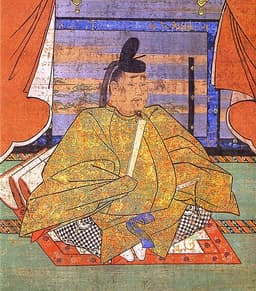
Emperor Murakami
Emperor · Medieval
50.2Total
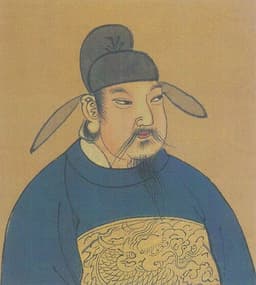
Li Longji
Emperor · Medieval
54.2Total
Basic Information
Born
926
685
Died
967
762
Era
Medieval
Medieval
Nationality
Japan
China
Occupation
Emperor
Emperor
Civilization
Eastern
Eastern
Score Comparison
Military (10%)
49.0
61.7
Political (20%)
32.2
82.0
Influence (20%)
50.2
40.0
Legacy (20%)
45.0
40.0
Leadership (15%)
67.0
68.0
Strategy (15%)
66.3
55.0
TOTAL
50.2
54.2
Emperor Murakami — Complete Timeline
946 AD
Peak of Fujiwara RegencyPolitical Action◆ Major
Emperor Murakami's reign saw the Fujiwara clan, led by Fujiwara no Saneyori, reach the height of their power as regents. The emperor's authority was largely ceremonial, with real power held by the Fujiwara. This period marked the consolidation of Fujiwara dominance.
FujiwaraRegencySaneyori
Impact: national
Maintenance of Peace and StabilityPolitical Action
Emperor Murakami's reign was relatively peaceful, with no major wars or rebellions. The central government maintained order, and the country enjoyed stability. This peace allowed the Fujiwara to consolidate their power and the court to focus on cultural pursuits.
PeaceStabilityHeian
Impact: nationalconstructive
950 AD
Promotion of Court Culture and CeremonyCultural
Emperor Murakami was a patron of courtly arts and ceremonies. He maintained elaborate rituals and festivals, including the Kamo Festival. His reign is noted for the refinement of Heian court culture, with an emphasis on elegance and protocol.
Court CultureCeremonyHeian
Impact: nationalconstructive
Li Longji — Complete Timeline
713 AD
Kaiyuan era reformsReform◆ Major
Emperor Xuanzong implemented administrative, fiscal, and military reforms during the Kaiyuan era. These reforms reduced corruption, improved tax collection, and strengthened the Tang state, leading to a golden age.
Tang dynastyReformGolden age
Impact: nationalconstructive
755 AD
An Lushan Rebellion beganWar
General An Lushan rebelled in the northeast, capturing Luoyang and Chang'an. Xuanzong fled to Sichuan, and the rebellion devastated the Tang empire, causing millions of deaths and permanent decline.
Tang dynastyRebellionAn Lushan
Impact: globaltragic
756 AD
Abdicated after Mawei Station incidentPolitical Action◆ Major
During the flight to Sichuan, Xuanzong's guards mutinied at Mawei Station, forcing him to order the death of his favorite consort Yang Guifei. Xuanzong abdicated to his son Suzong shortly after.
Tang dynastyAbdicationYang Guifei
Impact: nationaltragic
Expert Analysis
Origins
Emperor Murakami (926–967) was the 62nd emperor of Japan, born to Emperor Daigo and Fujiwara no Onshi. His early life was steeped in court politics, as the Fujiwara clan had already begun consolidating power through marriage alliances. Murakami ascended the throne in 946 after the death of his brother, Emperor Suzaku. His upbringing in the Heian court emphasized ritual and poetry, with little military exposure. In contrast, Li Longji (685–762), known as Emperor Xuanzong of Tang, was born into the imperial Li family during a period of political turmoil. His father, Emperor Ruizong, was briefly emperor, and Longji's early years were marked by the usurpation of Empress Wu Zetian. He received a comprehensive education in statecraft and military strategy, and his youth was spent navigating the dangerous politics of the Zhou dynasty interregnum.
Rise to Power
Murakami's rise was straightforward: he was appointed crown prince and became emperor upon his brother's abdication, a transition orchestrated by the Fujiwara regents. His reign (946–967) saw the Fujiwara clan, led by Fujiwara no Saneyori, reach the peak of their authority. Murakami's political role was largely ceremonial, with real power exercised by the regent. Li Longji's path was far more dramatic. In 710, he led a coup with his aunt Princess Taiping to overthrow Empress Wei, who had poisoned Emperor Zhongzong. He installed his father as emperor, but soon clashed with Princess Taiping. In 713, he launched another coup, eliminated her faction, and assumed full power as Emperor Xuanzong, initiating the Kaiyuan era (713–741). His rise demonstrates a political score of 82.0 compared to Murakami's 32.2, reflecting his active seizure of control.
Leadership & Governance
Murakami's leadership was passive; he scored 67.0 in leadership but primarily through symbolic authority. He maintained peace and stability, promoted court culture, and presided over elaborate rituals like the Kamo Festival. His governance relied on the Fujiwara regents, who managed tax collection and provincial administration. Li Longji, with a leadership score of 68.0, was an active reformer. During the Kaiyuan era, he reorganized the bureaucracy, reduced the power of eunuchs, improved the tax system, and expanded the examination system for officials. He also reformed the military by establishing frontier commands (jiedushi), which inadvertently led to the An Lushan Rebellion. His strategy score of 55.0 is lower than Murakami's 66.3, as his later decisions were catastrophic.
Triumph & Tragedy
Murakami's greatest triumph was presiding over a peaceful, stable Japan where the court arts flourished. His reign saw no major wars or rebellions, and the Fujiwara regency ensured efficient administration. His tragedy was the erosion of imperial authority; by the end of his reign, the emperor was a figurehead. Li Longji's triumph was the Kaiyuan era, a golden age of prosperity, cultural achievement (poetry, music, painting), and territorial expansion. His tragedy was the An Lushan Rebellion (755–763), which devastated the Tang empire, killed millions, and forced him to flee the capital. At Mawei Station, his guards mutinied, forcing him to order the execution of his beloved consort Yang Guifei. He abdicated in 756, living in obscurity until his death in 762. His military score of 61.7 reflects initial successes, but his political missteps led to disaster.
Character & Destiny
Murakami was a cultured, passive ruler who accepted his limited role. His character aligned with the Heian ethos of refinement and ritual, but his destiny was to be overshadowed by the Fujiwara. Historians view him as a capable figurehead who maintained stability. Li Longji was ambitious, energetic, and initially wise, but later became complacent and indulgent. His infatuation with Yang Guifei and neglect of governance allowed corruption and military overreach. His character shift from reformer to hedonist sealed his fate. The rebellion was a direct consequence of his policies.
Legacy
Murakami's legacy is the peak of Fujiwara regency, a system that dominated Japan for centuries. His patronage of court culture influenced Japanese literature and ceremonies. However, his personal influence score is 50.2, reflecting his limited direct impact. Li Longji's legacy is mixed: the Kaiyuan era is remembered as a high point of Chinese civilization, but the An Lushan Rebellion marked the beginning of Tang decline. His reforms had lasting effects on Chinese governance, but the rebellion's devastation is his enduring shadow. His legacy score of 40.0 is lower due to the rebellion's negative impact.
Conclusion
Li Longji had a greater impact on history, despite his lower legacy score. His political score (82.0) and leadership (68.0) drove transformative reforms that shaped China's trajectory, while Murakami's passive rule (political 32.2) allowed the Fujiwara to entrench a system that lasted centuries. However, Li Longji's failures were more consequential: the An Lushan Rebellion killed millions and weakened the Tang irreversibly. Murakami's reign was stable but static. In terms of overall historical significance, Li Longji's total score of 54.2 versus Murakami's 50.2 reflects his higher impact, even if much of it was negative. The question is not who was 'greater' but who shaped history more—and that is Li Longji.
Rankings
🥇
Li LongjiLeader
Mil: 61.7Pol: 82.0Inf: 40.0
54.2
🥈
Emperor Murakami
Mil: 49.0Pol: 32.2Inf: 50.2
50.2
+4.0 behind
How This Comparison Works
Algorithm
Each figure is scored on 6 dimensions (0—100 scale) based on structured historical data: Military (10%), Political (20%), Influence (20%), Legacy (20%), Leadership (15%), Strategy (15%). The weighted total produces the final ranking.
Data Sources
Scores are computed from structured sub-indicators in the database. Scale factors adjust for era (Ancient ×0.85, Modern ×1.0) and civilization size (Eastern ×1.05, Other ×0.80) to account for differences in population and military scale.
Maximum 3 Figures
Comparisons are limited to 2—3 figures to ensure readability and statistical meaningfulness.
Error Margins
±5 points per dimension — Sub-scores are derived from historical records with inherent uncertainty. Two figures within 5 points on a dimension should be considered roughly equivalent in that area.
Total Score Accuracy
±3 points overall — The weighted combination of 6 dimensions produces a total score with approximately ±3 points of uncertainty. Differences of less than 3 points are not statistically significant— the figures are effectively tied.
Known Limitations
- Historical records are incomplete and uneven across civilizations
- Figures from oral-tradition societies may be underrepresented
- Occupation labels can misclassify multi-role figures
- Scores measure capability and impact, not moral character
- Quantitative scoring is a comparison tool, not absolute truth
Capability Radar
Military (10%) — Battles & Warfare
Battles
42
65
Win Rate
48
60
Expansion
50
80
Political (20%) — Governance & Reform
Reform
20
90
Diplomacy
30
80
Economy
30
95
Influence (20%) — Cultural & Global Reach
Cultural
30
90
Global
10
75
Legacy (20%) — Historical Impact
Historical
40
85
Longevity
30
70
Leadership (15%) — Power & Stability
Tenure
40
85
Stability
50
40
Strategy (15%) — Tactics & Innovation
Strategy
53
70
Tactics
59
55
Reform
63
75
Similar Comparisons
Comments & Discussion
No comments yet. Be the first to share your thoughts!