Loading...
Emperor Wu of Liang vs Juba II
Emperor Wu of Liang leads by 5.5 pts · 2 figures compared
…

Emperor Wu of Liang
Emperor · Ancient
55.4Total
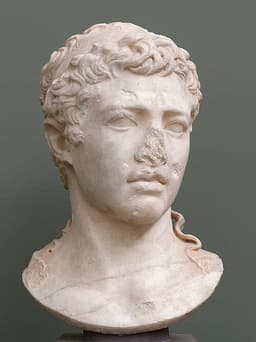
Juba II
Emperor · Ancient
49.9Total
Basic Information
Born
464
-48
Died
549
23
Era
Ancient
Ancient
Nationality
China
Mauretania
Occupation
Emperor
Emperor
Civilization
Eastern
Other
Score Comparison
Military (10%)
30.0
50.0
Political (20%)
60.0
46.6
Influence (20%)
55.0
52.5
Legacy (20%)
58.0
42.5
Leadership (15%)
72.0
74.0
Strategy (15%)
43.3
30.3
TOTAL
55.4
49.9
Emperor Wu of Liang — Complete Timeline
502 AD
Founding of the Liang DynastyPolitical Action
Emperor Wu of Liang, then a general of the Southern Qi dynasty, overthrew the Qi emperor and established the Liang dynasty. He became its first emperor, ruling for 47 years and ushering in a period of cultural and religious flourishing.
Dynasty FoundingCoup
Impact: regionalconstructive
504 AD
Patronage of BuddhismCultural◆ Major
Emperor Wu became a devout Buddhist and promoted Buddhism throughout the Liang dynasty. He built temples, sponsored translations of Buddhist texts, and even took monastic vows multiple times, though he was ransomed back by his court. This patronage made Buddhism a dominant force in southern China.
ReligionCultural Patronage
Impact: regionalconstructive
505 AD
Establishment of the Imperial UniversityCultural
Emperor Wu established an Imperial University to promote Confucian learning and scholarship. This institution helped foster a cultural renaissance in the Liang dynasty, attracting scholars and poets to the court.
EducationCultural Patronage
Impact: nationalconstructive
548 AD
Siege of Jiankang by Hou JingWar
The rebel general Hou Jing besieged the Liang capital Jiankang (modern Nanjing). Emperor Wu was trapped in the palace and died of starvation during the siege. This event marked the beginning of the Liang dynasty's decline and led to widespread devastation.
RebellionSiegeDeath
Impact: regionaltragic
Juba II — Complete Timeline
25 BC
Marriage to Cleopatra Selene IIPolitical Action◆ Major
Juba II married Cleopatra Selene II, daughter of Cleopatra VII and Mark Antony. The marriage was arranged by Augustus to unite the client kingdoms of Mauretania and Numidia under a loyal couple, consolidating Roman influence in North Africa.
Marriage AllianceRoman Client KingdomNorth Africa
Impact: regionalconstructive
Reign as King of MauretaniaPolitical Action◆ Major
Augustus appointed Juba II as king of Mauretania, a Roman client kingdom. Juba ruled for nearly 50 years, promoting Romanization, urban development, and trade. He established the capital at Caesarea (modern Cherchell) and fostered cultural exchange.
KingshipRomanizationUrban Development
Impact: regionalconstructive
20 BC
Publication of Scholarly WorksCultural◆ Major
Juba II wrote numerous scholarly works in Greek on history, geography, natural history, and art. His writings, though mostly lost, were cited by later authors like Pliny the Elder and Plutarch. He was considered one of the most learned kings of antiquity.
ScholarshipGreek LiteratureNatural History
Impact: regionalconstructive
10 BC
Expedition to the Canary IslandsOther
Juba II sent an expedition to the Canary Islands, which he named after the large dogs (canes) found there. He described the islands in his writings, providing one of the earliest known accounts of the archipelago. This expedition expanded geographical knowledge.
ExplorationGeographyCanary Islands
Impact: regionalconstructive
Expert Analysis
Origins
Emperor Wu of Liang, born Xiao Yan in 464 AD in present-day Jiangsu, China, was the son of a general in the Southern Qi dynasty. He received a Confucian education and showed early talent in literature and military strategy. His family background placed him among the elite, but not the imperial line. Juba II was born around 48 BC in Numidia (modern Algeria), the son of King Juba I of Numidia. After his father's defeat by Julius Caesar, Juba II was taken to Rome as a child, where he was raised in the household of Augustus. He received a Greek and Roman education, becoming fluent in Greek and Latin, and was later appointed king of Mauretania.
Rise to Power
Emperor Wu's rise began as a general under the Southern Qi. In 501 AD, he launched a rebellion against the tyrannical Xiao Baojuan, the Qi emperor. After capturing the capital, he established the Liang dynasty in 502 AD, taking the throne as Emperor Wu. His military score of 30.0 reflects limited direct battlefield command, but his political score of 60.0 shows his skill in consolidating power. Conversely, Juba II's rise was orchestrated by Rome. After serving in Augustus's military campaigns, he was granted the throne of Mauretania in 25 BC, a client kingdom. His marriage to Cleopatra Selene II in 20 BC cemented his alliance with Rome. Juba's political score of 46.6 indicates his dependence on Roman favor.
Leadership & Governance
Emperor Wu ruled for 47 years (502-549 AD), promoting Buddhism as a state religion. He built numerous temples, sponsored translations of Buddhist texts, and even attempted to become a monk himself. He also established the Imperial University to foster Confucian learning, creating a cultural renaissance. However, his later years saw administrative neglect, leading to the rebellion of Hou Jing. Juba II ruled Mauretania for nearly 50 years, focusing on Romanization: building cities like Caesarea (modern Cherchell), promoting Roman law, and introducing irrigation systems. His leadership score of 74.0 reflects his long, stable reign, while Wu's 72.0 indicates strong but flawed rule.
Triumph & Tragedy
Emperor Wu's greatest triumph was the establishment of the Liang dynasty and his patronage of Buddhism, which left a lasting mark on Chinese culture. His tragedy was his death: during the Siege of Jiankang by Hou Jing in 549 AD, Wu was trapped in the palace and starved to death at age 85. Juba II's triumph was his scholarly output: he wrote over 50 works on history, geography, and natural history, many cited by later authors like Pliny the Elder. His tragedy is that nearly all his works are lost, and his kingdom was annexed by Rome after his death in 23 AD.
Character & Destiny
Emperor Wu was deeply religious and introspective, but his piety led to neglect of state affairs. His decision to favor Buddhist monasteries over military preparedness contributed to his downfall. Juba II was a scholar-king, more interested in learning than conquest. His Roman upbringing made him a loyal client, but his kingdom never achieved true independence. Historians note that Wu's character was shaped by Confucian ideals of moral rule, while Juba's reflected Hellenistic scholarship.
Legacy
Emperor Wu's legacy is mixed: he is remembered as a great patron of Buddhism, but also as a ruler whose religious zeal weakened his dynasty. The Liang dynasty collapsed soon after his death, but his support for Buddhism influenced later Chinese emperors. Juba II's legacy is primarily intellectual: his writings provided valuable information to Roman scholars, and his naming of the Canary Islands persists today. However, his political legacy faded as Mauretania was absorbed into the Roman Empire.
Conclusion
Emperor Wu of Liang had a greater impact on history than Juba II. Wu's total score of 55.4 against Juba's 49.9 reflects his lasting influence on Chinese Buddhism and culture, while Juba's contributions, though significant, were largely ephemeral. Wu's patronage of Buddhism shaped China's religious landscape for centuries, whereas Juba's scholarly works, while important, were lost and his kingdom dissolved. Therefore, Emperor Wu of Liang takes the position of greater historical significance.
Rankings
🥇
Emperor Wu of LiangLeader
Mil: 30.0Pol: 60.0Inf: 55.0
55.4
🥈
Juba II
Mil: 50.0Pol: 46.6Inf: 52.5
49.9
+5.5 behind
How This Comparison Works
Algorithm
Each figure is scored on 6 dimensions (0—100 scale) based on structured historical data: Military (10%), Political (20%), Influence (20%), Legacy (20%), Leadership (15%), Strategy (15%). The weighted total produces the final ranking.
Data Sources
Scores are computed from structured sub-indicators in the database. Scale factors adjust for era (Ancient ×0.85, Modern ×1.0) and civilization size (Eastern ×1.05, Other ×0.80) to account for differences in population and military scale.
Maximum 3 Figures
Comparisons are limited to 2—3 figures to ensure readability and statistical meaningfulness.
Error Margins
±5 points per dimension — Sub-scores are derived from historical records with inherent uncertainty. Two figures within 5 points on a dimension should be considered roughly equivalent in that area.
Total Score Accuracy
±3 points overall — The weighted combination of 6 dimensions produces a total score with approximately ±3 points of uncertainty. Differences of less than 3 points are not statistically significant— the figures are effectively tied.
Known Limitations
- Historical records are incomplete and uneven across civilizations
- Figures from oral-tradition societies may be underrepresented
- Occupation labels can misclassify multi-role figures
- Scores measure capability and impact, not moral character
- Quantitative scoring is a comparison tool, not absolute truth
Capability Radar
Military (10%) — Battles & Warfare
Battles
45
15
Win Rate
40
10
Expansion
35
10
Political (20%) — Governance & Reform
Reform
70
30
Diplomacy
65
60
Economy
75
40
Influence (20%) — Cultural & Global Reach
Cultural
75
45
Global
55
30
Legacy (20%) — Historical Impact
Historical
70
40
Longevity
65
35
Leadership (15%) — Power & Stability
Tenure
85
55
Stability
60
50
Strategy (15%) — Tactics & Innovation
Strategy
40
15
Tactics
35
20
Reform
30
5
Similar Comparisons
Comments & Discussion
No comments yet. Be the first to share your thoughts!