Loading...
Emperor Kammu vs Sundiata Keita
Sundiata Keita leads by 0.6 pts · 2 figures compared
…
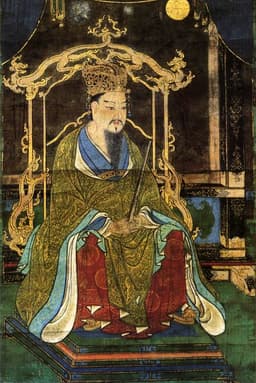
Emperor Kammu
Emperor · Medieval
64.9Total
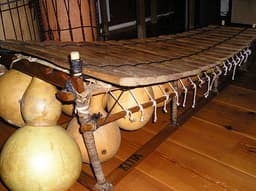
Sundiata Keita
Emperor · Medieval
65.5Total
Basic Information
Born
737
1217
Died
806
1255
Era
Medieval
Medieval
Nationality
Japan
Mali Empire
Occupation
Emperor
Emperor
Civilization
Eastern
Other
Score Comparison
Military (10%)
21.2
72.0
Political (20%)
72.0
70.0
Influence (20%)
82.0
40.0
Legacy (20%)
68.0
80.0
Leadership (15%)
72.0
72.0
Strategy (15%)
36.8
70.0
TOTAL
64.9
65.5
Emperor Kammu — Complete Timeline
789 AD
Campaign against the EmishiWar◆ Major
Kammu launched a major military campaign to subdue the Emishi people in northern Honshu. The campaign was initially unsuccessful, with a defeat at the Battle of Koromo River, but later efforts under Sakanoue no Tamuramaro achieved victory.
Military CampaignEmishiExpansion
Impact: national
794 AD
Moved the capital to Heian-kyoPolitical Action
Emperor Kammu moved the imperial capital from Nara to Heian-kyo (modern Kyoto). This relocation was intended to escape the influence of powerful Buddhist monasteries in Nara and marked the beginning of the Heian period.
Capital MoveHeian PeriodJapan
Impact: nationalconstructive
800 AD
Patronage of Buddhist templesCultural
Kammu commissioned the construction of several Buddhist temples in Heian-kyo, including To-ji and Sai-ji. These temples were intended to protect the new capital and promote Buddhism as a state religion.
BuddhismArchitectureReligion
Impact: nationalconstructive
Sundiata Keita — Complete Timeline
1235 AD
Battle of KirinaWar
Sundiata Keita led the Mandinka coalition against Soumaoro Kant
BattleMali EmpireSosso
Impact: regional
Proclamation as MansaPolitical Action◆ Major
After the Battle of Kirina, Sundiata was proclaimed Mansa (emperor) of the Mali Empire at the Kouroukan Fouga assembly. He established a constitution and divided the empire into provinces, laying the administrative foundation of Mali.
CoronationConstitutionAdministration
Impact: regionalconstructive
1240 AD
Conquest of GhanaWar◆ Major
Sundiata conquered the remnants of the Ghana Empire, incorporating its territory into Mali. This gave Mali control over the trans-Saharan gold trade routes, significantly increasing its wealth and power.
ConquestGhana EmpireGold Trade
Impact: regional
Establishment of Niani as CapitalPolitical Action
Sundiata established Niani as the capital of the Mali Empire. The city became a center of trade and governance, located near gold fields and on trade routes, facilitating the empire's economic growth.
CapitalNianiTrade Center
Impact: regionalconstructive
1245 AD
Introduction of Cotton CultivationReform
Sundiata promoted the cultivation of cotton and the weaving of cloth, which became a major industry in Mali. This economic reform diversified the empire's economy and increased its self-sufficiency.
AgricultureCottonEconomic Reform
Impact: regionalconstructive
Expert Analysis
Origins
Emperor Kammu (737–806) was born as Yamabe, the son of Prince Shirakabe (later Emperor Konin). His mother was of Korean descent. He ascended the throne in 781 after his father's death. Kammu was educated in Chinese classics and Buddhist scriptures, reflecting the strong influence of Tang China on the Japanese court. He was determined to strengthen imperial authority against powerful Buddhist monasteries in Nara.
Sundiata Keita (c. 1217–1255) was born into the Keita clan, rulers of the small kingdom of Kangaba in present-day Mali. According to oral tradition, he was a sickly child who later became a powerful warrior. Exiled with his family after his father's death, Sundiata grew up in the court of the Mema kingdom, learning military tactics. He returned to lead the Mandinka people against the Sosso Empire.
Rise to Power
Kammu became emperor in 781 after his father's abdication. His early reign focused on consolidating power and reducing the influence of Buddhist clergy, who had dominated Nara politics. In 784, he moved the capital to Nagaoka-kyo, but after floods and political intrigue, he relocated again in 794 to Heian-kyo (Kyoto). This move severed ties with Nara's monasteries and established a new imperial center.
Sundiata's rise began after the Sosso king Soumaoro Kanté conquered the Mandinka states. Sundiata returned from exile around 1235 and formed a coalition of minor kingdoms. At the Battle of Kirina, he defeated Soumaoro's forces, using superior tactics and archers. This victory led to the Kouroukan Fouga assembly, where Sundiata was proclaimed Mansa and issued a constitution outlining governance and laws.
Leadership & Governance
Kammu's governance was autocratic but reformist. He centralized tax collection, reorganized provincial administration, and sponsored Buddhist temples like To-ji to legitimize his rule. He also launched campaigns against the Emishi in the north, but these were costly and only partially successful. Kammu's political score of 72.0 reflects his effective consolidation of imperial power, though his military score of 21.2 indicates limited martial success.
Sundiata's leadership was both military and administrative. He established a centralized government with provinces ruled by appointed governors. He promoted agriculture, especially cotton cultivation, and controlled the trans-Saharan gold trade. His political score of 70.0 is similar to Kammu's, but his military score of 72.0 shows his prowess. Sundiata's strategy score of 70.0 contrasts with Kammu's 36.8, highlighting Sundiata's greater tactical acumen.
Triumph & Tragedy
Kammu's greatest triumph was founding Heian-kyo, which remained Japan's capital for over a millennium. He also reduced Buddhist political influence. However, his Emishi campaigns were a failure; his general was defeated at the Battle of Sufuse in 789. Kammu's legacy score of 68.0 reflects the enduring impact of Kyoto, but his military failures limited his overall influence.
Sundiata's triumph was founding the Mali Empire, which became one of Africa's largest empires. He conquered Ghana and controlled gold routes, boosting prosperity. His tragedy was his early death (possibly from drowning) and the lack of a stable succession, leading to later civil wars. His legacy score of 80.0 is high due to Mali's lasting prominence.
Character & Destiny
Kammu was determined and shrewd, using symbolic moves like the capital relocation to break entrenched interests. His personality was cautious and bureaucratic, favoring administrative reforms over military glory. This shaped his destiny: he secured the imperial line but did not expand Japan's borders.
Sundiata's character was charismatic and martial. He inspired loyalty through personal bravery and oratory. His destiny was to unify the Mandinka and build an empire. His total score of 65.5 edges out Kammu's 64.9, but the gap is narrow.
Legacy
Kammu's legacy is the city of Kyoto, cultural heart of Japan for centuries. He also influenced Japanese Buddhism by patronizing the Shingon and Tendai sects. However, his military failures meant no territorial expansion. His influence score of 82.0 reflects Kyoto's importance.
Sundiata's legacy is the Mali Empire, famous for its wealth and the later ruler Mansa Musa. The Kouroukan Fouga constitution influenced West African governance. His legacy score of 80.0 is high, but his empire declined after his death.
Conclusion
While both founders had comparable total scores (Kammu 64.9, Sundiata 65.5), Sundiata's greater military and strategic achievements give him a slight edge. However, Kammu's creation of Kyoto arguably had a longer-lasting cultural impact. The data indicates Sundiata scored higher in military (72.0 vs 21.2) and strategy (70.0 vs 36.8), but Kammu scored higher in influence (82.0 vs 40.0). Taking a stance: Sundiata Keita had greater impact as a founder of a vast empire that shaped trans-Saharan trade and West African history, while Kammu's influence was more localized to Japan. Sundiata's legacy as the 'Lion King' resonates more globally.
Rankings
🥇
Sundiata KeitaLeader
Mil: 72.0Pol: 70.0Inf: 40.0
65.5
🥈
Emperor Kammu
Mil: 21.2Pol: 72.0Inf: 82.0
64.9
+0.6 behind
How This Comparison Works
Algorithm
Each figure is scored on 6 dimensions (0—100 scale) based on structured historical data: Military (10%), Political (20%), Influence (20%), Legacy (20%), Leadership (15%), Strategy (15%). The weighted total produces the final ranking.
Data Sources
Scores are computed from structured sub-indicators in the database. Scale factors adjust for era (Ancient ×0.85, Modern ×1.0) and civilization size (Eastern ×1.05, Other ×0.80) to account for differences in population and military scale.
Maximum 3 Figures
Comparisons are limited to 2—3 figures to ensure readability and statistical meaningfulness.
Error Margins
±5 points per dimension — Sub-scores are derived from historical records with inherent uncertainty. Two figures within 5 points on a dimension should be considered roughly equivalent in that area.
Total Score Accuracy
±3 points overall — The weighted combination of 6 dimensions produces a total score with approximately ±3 points of uncertainty. Differences of less than 3 points are not statistically significant— the figures are effectively tied.
Known Limitations
- Historical records are incomplete and uneven across civilizations
- Figures from oral-tradition societies may be underrepresented
- Occupation labels can misclassify multi-role figures
- Scores measure capability and impact, not moral character
- Quantitative scoring is a comparison tool, not absolute truth
Capability Radar
Military (10%) — Battles & Warfare
Battles
10
75
Win Rate
10
85
Expansion
10
90
Political (20%) — Governance & Reform
Reform
75
80
Diplomacy
60
75
Economy
65
80
Influence (20%) — Cultural & Global Reach
Cultural
70
85
Global
60
80
Legacy (20%) — Historical Impact
Historical
75
90
Longevity
75
85
Leadership (15%) — Power & Stability
Tenure
70
70
Stability
60
75
Strategy (15%) — Tactics & Innovation
Strategy
10
85
Tactics
10
80
Reform
10
70
Similar Comparisons
Comments & Discussion
No comments yet. Be the first to share your thoughts!